
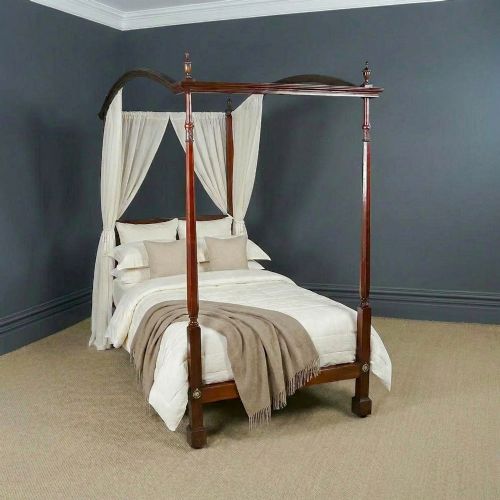


Brown Mahogany Bedstead
A brown mahogany bedstead anchors a room with deep timber grain and enduring presence, offering a solid sleeping frame built to last generations.
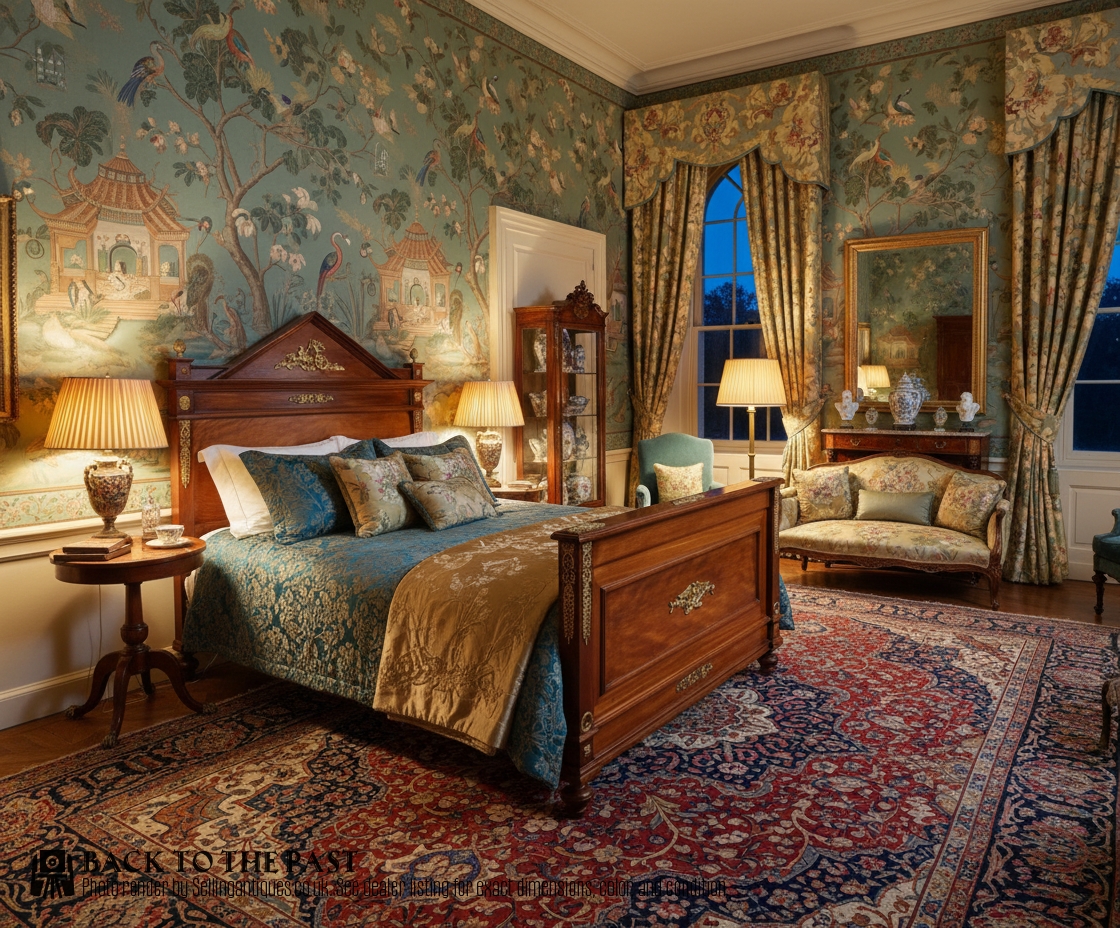
Brown Mahogany Bedstead
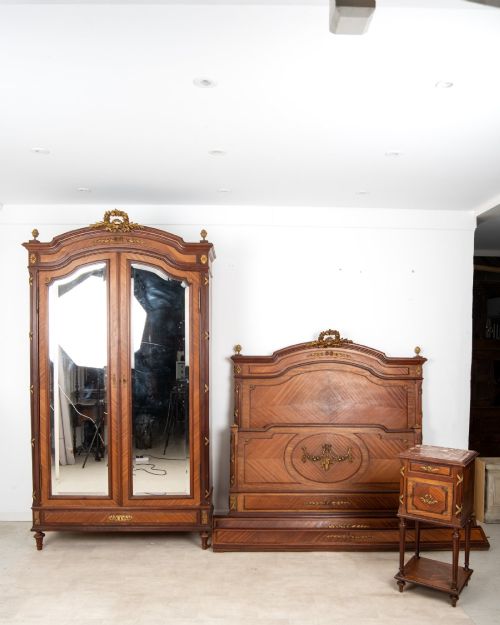
When you search for a brown mahogany bedstead, you encounter large wooden sleeping frames spanning several distinct eras from the eighteenth century through the Edwardian period. The selections here range from substantial four-poster structures to simpler panelled double beds and French empire designs.
You are most likely to meet Edwardian double and single bedsteads alongside nineteenth-century continental examples. These pieces frequently incorporate rich timbers and occasional revival styles such as Louis XVI or Georgian.
The forms vary from standard double and king size frames to specialised single beds, daybeds, and occasional four-poster constructions. Each specimen displays the characteristic reddish-brown tones of the primary wood used by period cabinet makers.
What varies in quality
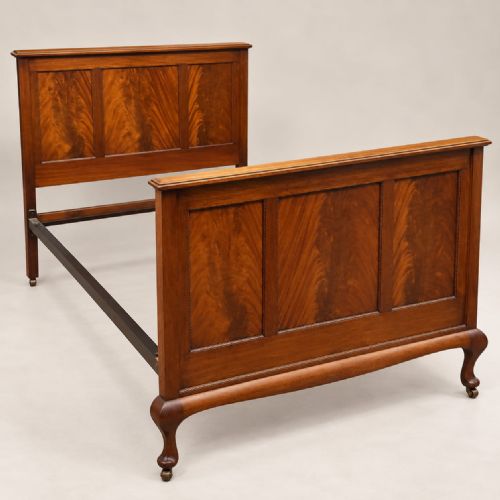
The depth and activity of the mahogany grain distinguish standard production from superior pieces, with flame veneers and burr sections adding visual complexity. The crispness of hand-carved ornamentation and the integration of cast bronze or ormolu mounts signal finer workshop origins.
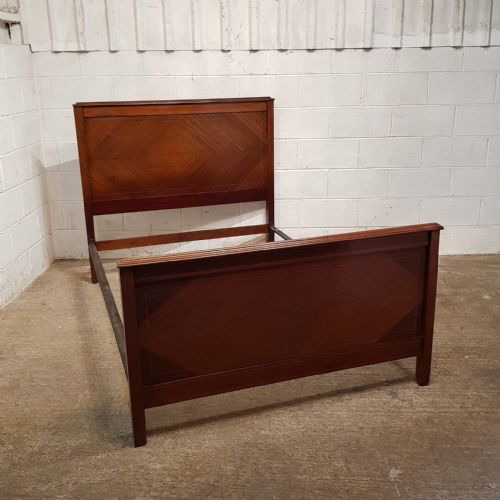
Structural integrity depends on the retention of original timber components, rails, and proprietary hardware rather than modern replacements. The precision of parquetry work and the condition of polished finishes reveal the level of care invested by the original makers.
The listings feature mahogany, brass, iron, ormolu, and walnut across Victorian, Edwardian, and eighteenth-century periods.
Heals of London·Louis Majorelle
The Brown Mahogany Bedstead Glossary
- Mahogany
- A durable tropical hardwood prized for its reddish-brown colour and stable grain. It forms the primary structural and visual material for these beds.
- Parquetry
- Geometric wood-mosaic work used for surface decoration on headboards and footboards. Artisans cut small pieces of contrasting timber to form patterns.
- Four poster
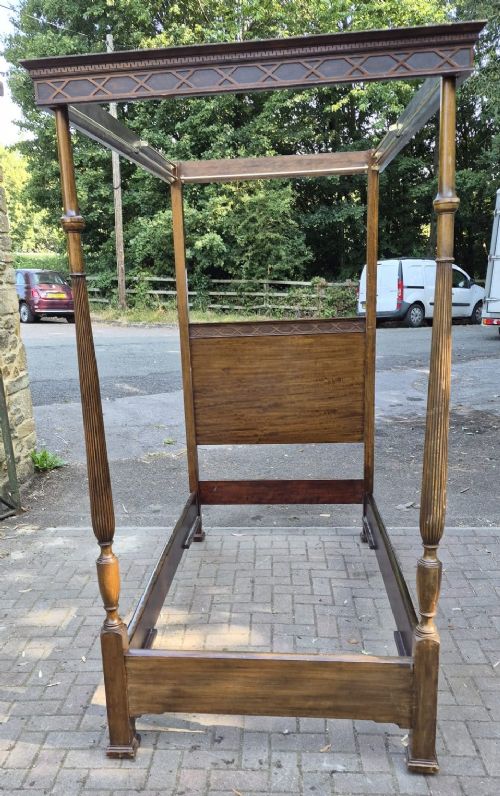
- A bed with four vertical columns supporting a tester or canopy top. These grand structures appear in eighteenth-century and Edwardian revival forms.
- Flame mahogany veneer
- A thin slice of timber cut from the fork of the tree to create a distinctive flame-like pattern. It decorates prominent surfaces on high-status frames.
Brown Mahogany Bedstead: Frequently Asked Questions
What periods do these brown mahogany bedsteads cover?
The listings span several centuries, starting from eighteenth-century examples and moving through the Regency, Victorian, and Edwardian eras. You will also find pieces from around nineteen hundred reflecting revival aesthetics.
These dates indicate when the workshops originally constructed the frames, encompassing both British and continental manufacturing traditions.
Are these beds standard modern sizes?
Period dimensions often differ slightly from contemporary mattress standards, encompassing various single, double, king, and super king formats. Some continental pieces follow historical sizing conventions.
Buyers should verify exact internal dimensions before purchasing a mattress to ensure a proper fit within the antique frame.
What materials accompany the mahogany?
Cabinet makers combined the primary timber with flame mahogany veneer, walnut, fruitwood, and occasional rosewood accents. Metal elements like brass, iron, and ormolu provide structural support and surface decoration.
Selected examples also incorporate glass components and marble elements on associated bedside furniture.
How do I identify a revival style piece?
Revival pieces borrow decorative motifs from earlier periods, such as the classical symmetry of Louis XVI or the robust proportions of Georgian design. Makers in the Edwardian era frequently recreated these historical aesthetics.
Examining the construction methods alongside the surface ornamentation helps distinguish original historical pieces from later reinterpretations.