



Empire Style Bed
An empire style bed brings grand architectural presence and rich mahogany timber to the bedroom, anchored by neoclassical mounts and stately headboards.
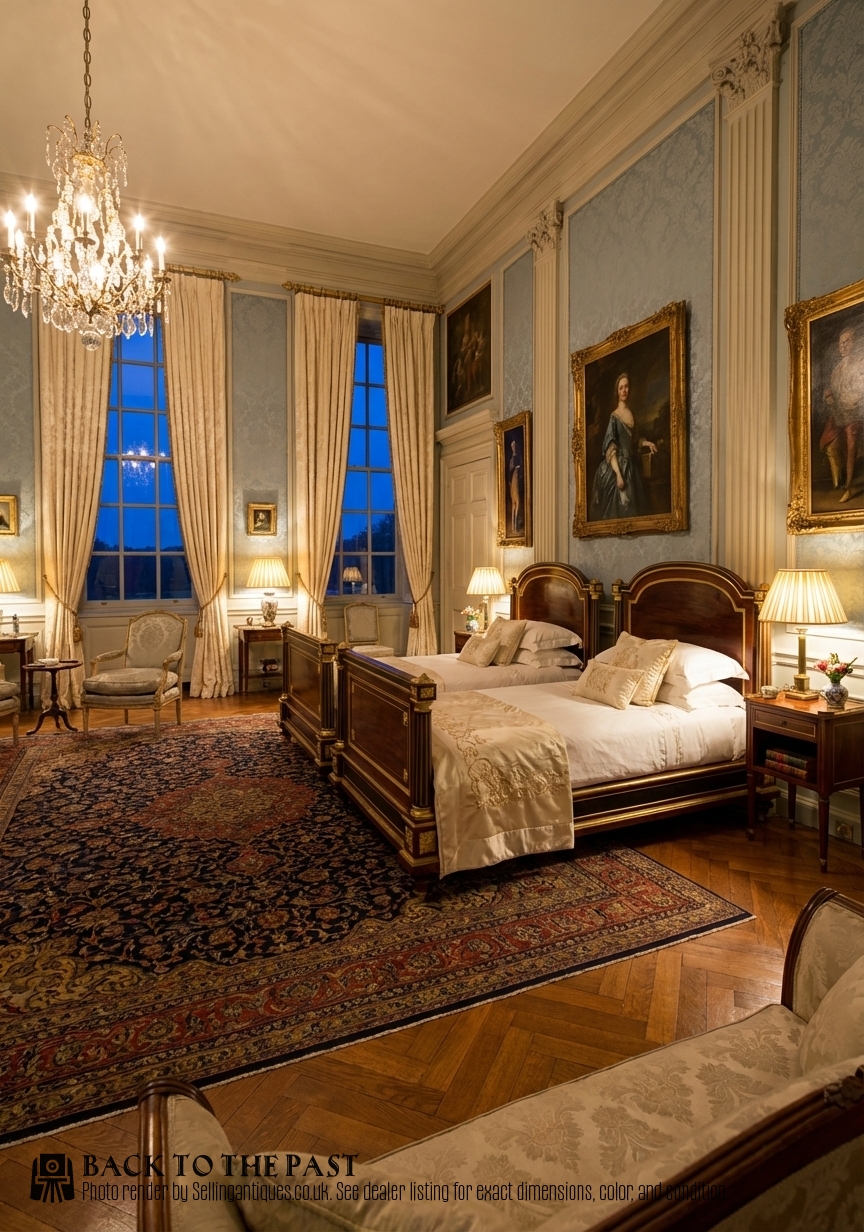
Empire Style Bed
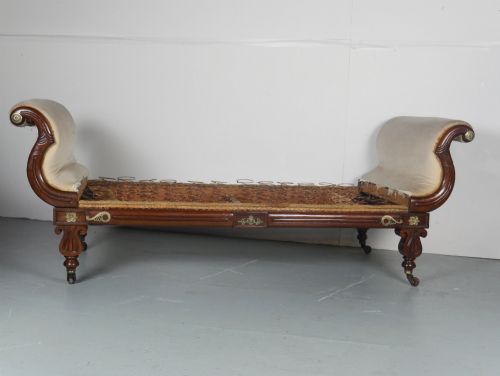
An empire style bed combines heavy timber frames with classical proportions, drawing directly from French neoclassical design and later revival periods. You will encounter double, king, and super-king sizes alongside single beds, day beds, and matched pairs designed for grand chambers.
The construction follows established continental forms, ranging from solid mahogany and burr walnut to painted wooden finishes. Many examples incorporate matching bedside cabinets or form part of larger bedroom suites recorded in nineteenth and early twentieth century workshops.
Makers drew on French Empire and Empire Revival traditions, producing frames with distinct foot and headboard heights. Pieces often feature distinct ormolu, brass detailing, and fabric upholstery that define the silhouette.
Materials and construction
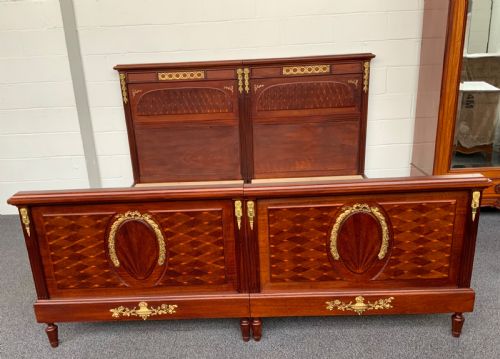
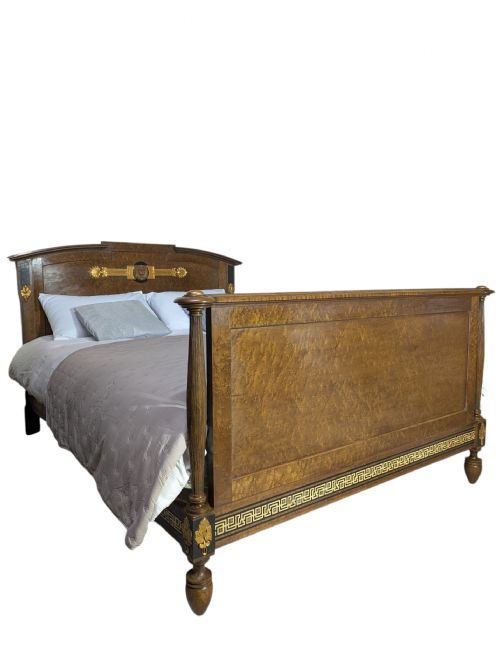
Cabinet makers built these frames primarily using dense hardwoods like mahogany, plum pudding mahogany, and burr walnut. Timber veneers and fruitwood parquetry added surface pattern to the large expanses of the headboards and footboards.
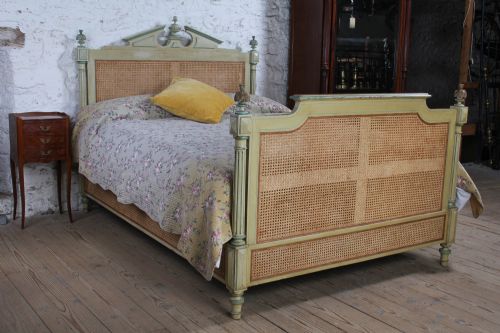
Cast bronze and brass mounts, often referred to as ormolu, were applied to corners, side rails, and crests. Painted wood finishes and original paint also appear, paired with fabric upholstery and caned panels.
Joinery methods relied on sturdy internal rails and bolted joints to support the substantial weight of the timber and metal ornamentation.
Empire Style Bed Retail Price Guide 2026
Typical asking prices for empire style bed among the pieces listed under this phrase on Sellingantiques today, from the lower quarter to the upper quarter. They describe what is for sale here now, not the wider market.
Materials recorded across the archive include mahogany, burr walnut, painted wood, ormolu, brass, and caned panels.
Judging quality
Quality rests on the crispness of the cast brass and ormolu mounts and the selection of the timber veneers. Finer pieces display heavily figured plum pudding mahogany or burr walnut paired with finely chased metalwork rather than plain cast replacements.
The integrity of the structural joinery and the balance of the neoclassical proportions distinguish the work. Better examples retain their original painted surfaces, matched timber grains, and integrated side cabinets that maintain the aesthetic of the suite.
The Empire Style Bed Glossary
- Ormolu
- Gilded bronze mounts applied to furniture to create neoclassical decorative highlights. These metal details often depict classical motifs, wreaths, and floral patterns.
- Parquetry
- Geometric wood patterns created by fitting small veneer pieces together. This technique appears on the flat surfaces of headboards and cabinets.
- Plum pudding mahogany
- A highly prized timber grain showing circular markings resembling festive pudding. It provides deep figuring on large panel surfaces.
- Bergere
- An enclosed upholstered armchair or bed frame featuring exposed wooden framing and woven cane panels. This style lightens the visual weight of heavy hardwood beds.
- Neoclassical
- A revival style drawing inspiration from classical antiquity, focusing on symmetry, strict proportions, and restrained ornamentation. It forms the basis of all empire design.
Empire Style Bed: Frequently Asked Questions
How do I fit a modern mattress?
Many older frames accommodate standard modern mattress dimensions through adjusted internal side rails or custom slats.
It remains wise to check the internal length and width specifications of the specific wooden frame before purchasing a mattress.
Are these beds heavy to move?
Solid mahogany, walnut, and attached metal ormolu mounts add significant weight to these large furniture pieces.
Disassembly is usually straightforward as headboards, footboards, and side rails separate into distinct transportable components.
How do I care for the wood?
Maintain polished hardwood and veneer surfaces using a soft cloth and micro-crystalline wax to protect the grain.
Keep polished wooden furniture away from direct heat sources and strong sunlight to prevent the timber from drying out.
How do I identify the period?
Examine the timber selection, construction joints, and the sharpness of the brass or ormolu mounts to gauge the date.
Nineteenth-century originals typically display deeper patination and hand-finished mounts, whereas revival pieces from nineteen hundred often use lighter veneers.