
Ormolu Mounted Accent Table
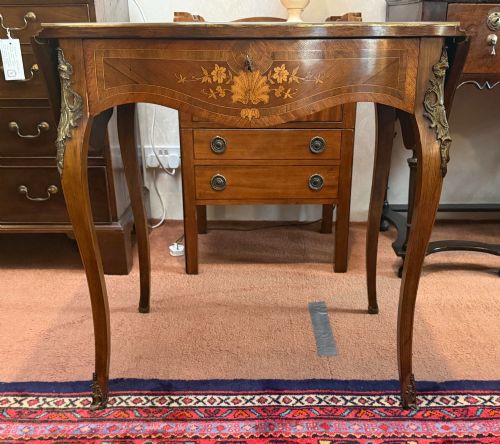
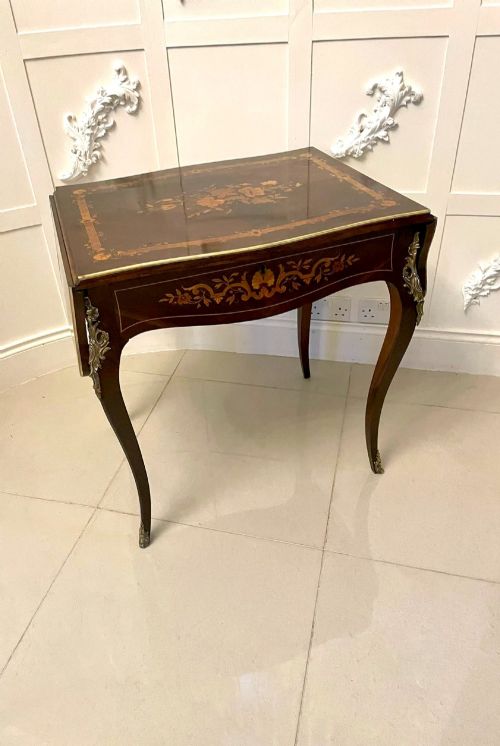
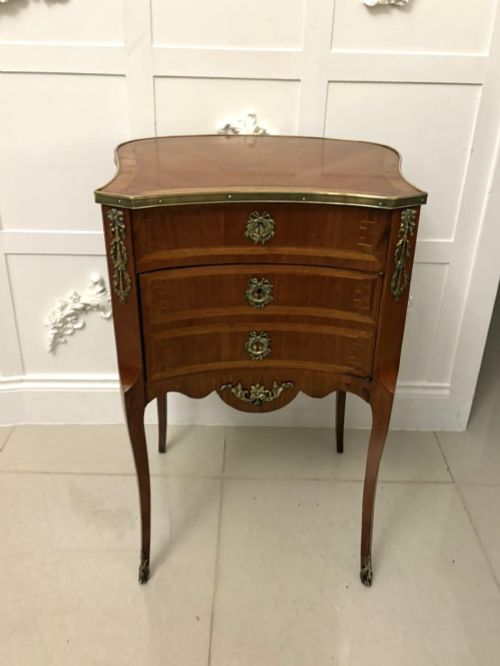
An ormolu mounted accent table brings nineteenth century French craftsmanship into a room through rich timber and gilt metal mounts.
Ormolu Mounted Accent Table
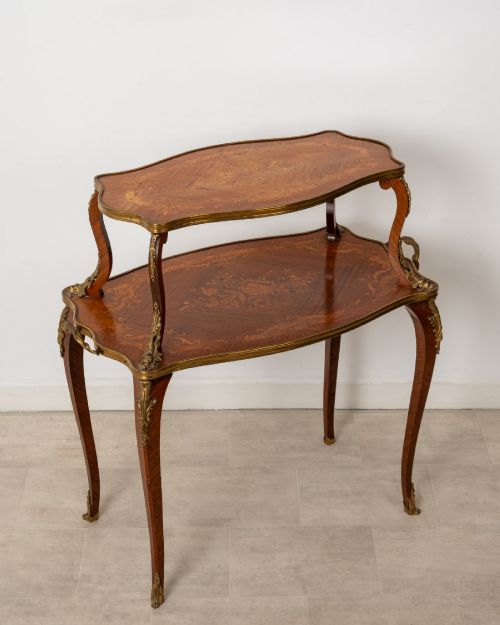
An ormolu mounted accent table encompasses side tables, occasional tables, centre tables, card tables and etageres produced primarily during the nineteenth century. These pieces emerge predominantly within French revival styles, including Louis XV, Louis XVI and Napoleon III, alongside Empire designs.
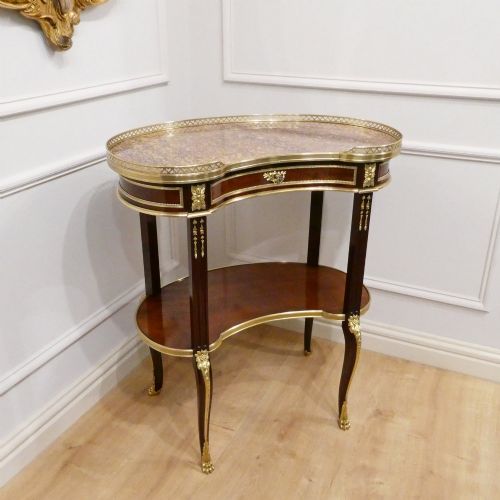
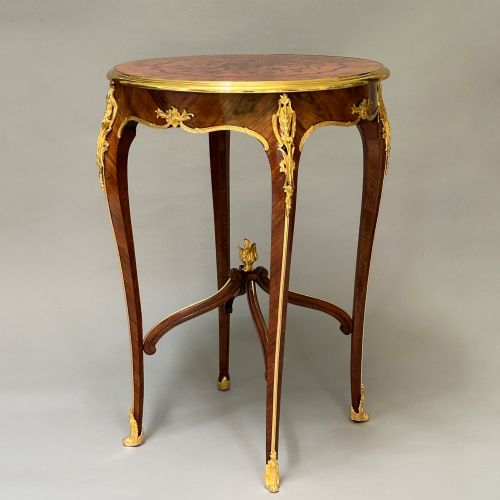
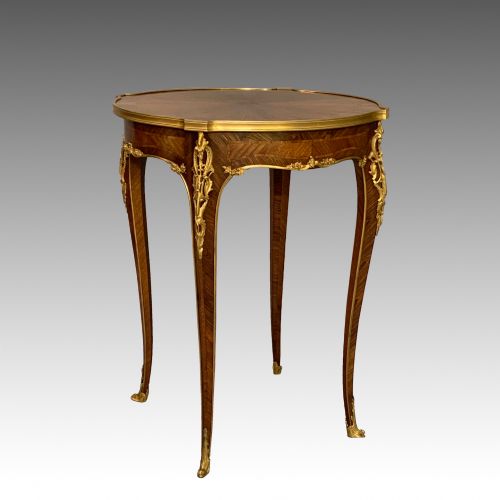
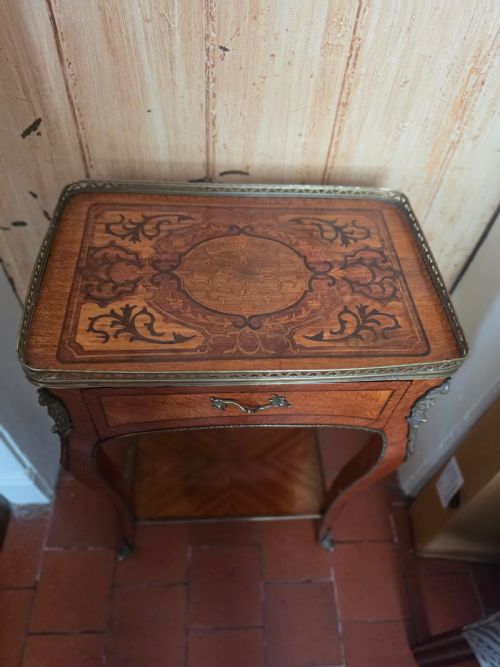
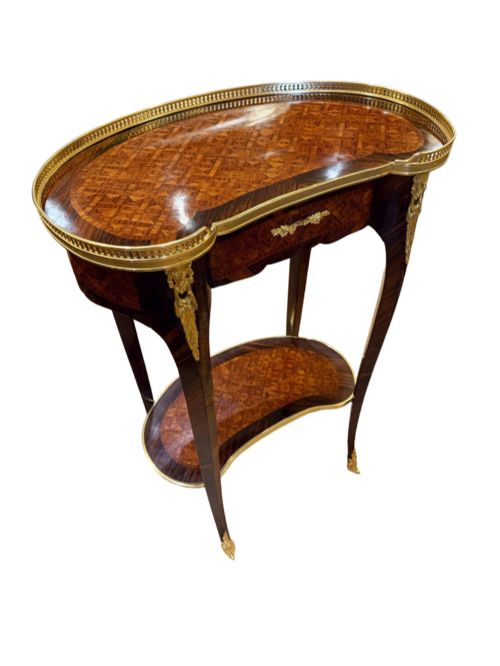
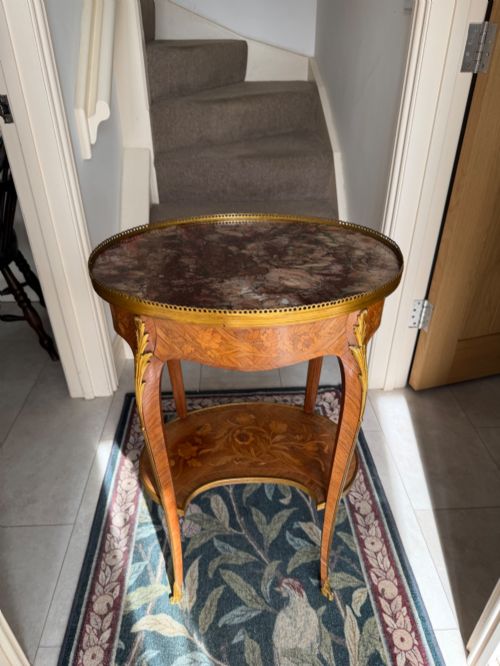
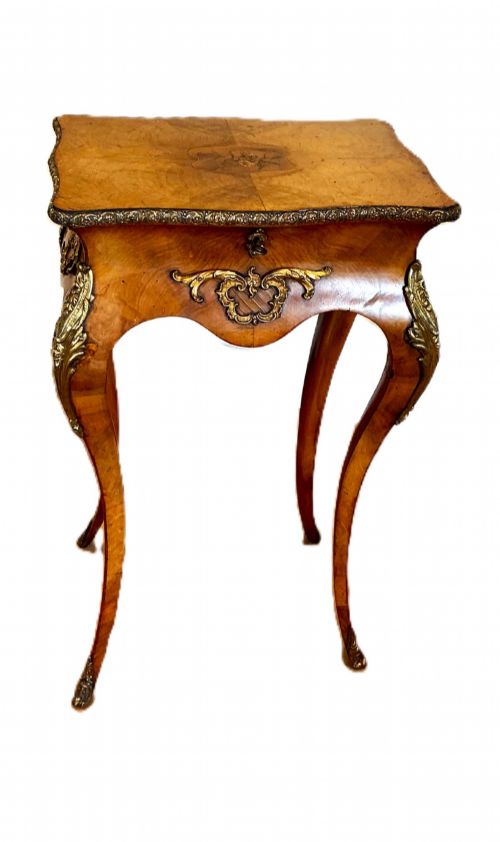
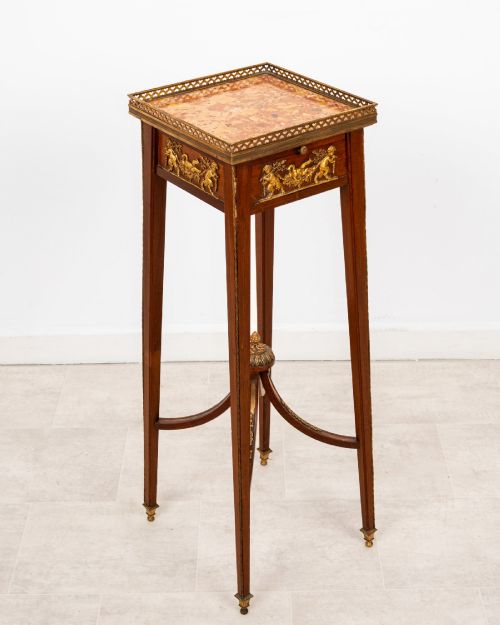
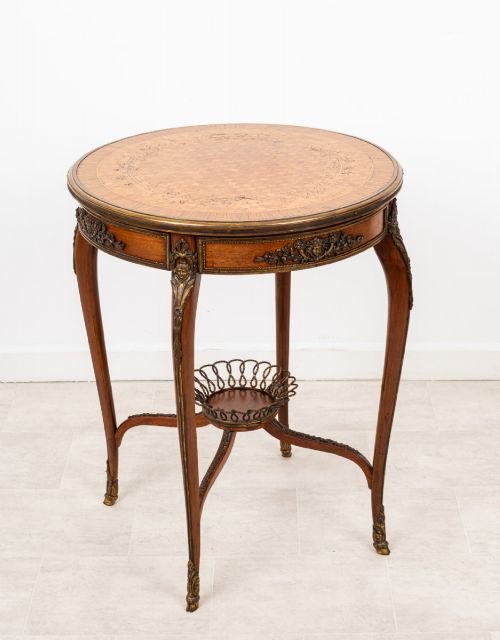
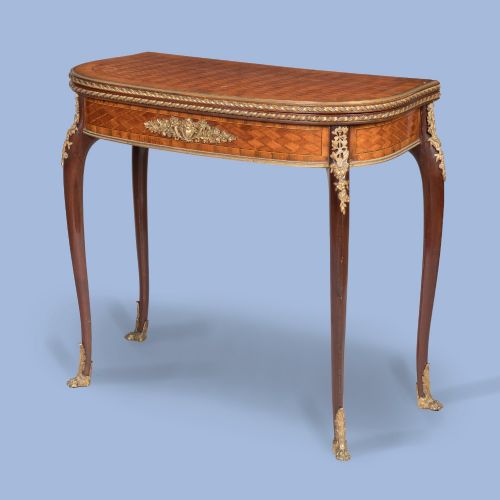
The version most commonly met on this page is the French side or occasional table constructed from kingwood, walnut or mahogany. These frequently display marquetry or parquetry inlay and rest upon slender cabriole legs finished with gilt bronze or brass mounts.
Materials and construction
Cabinet makers utilised dense hardwoods such as kingwood, rosewood, walnut and mahogany as the structural foundations for these tables. Surfaces often incorporate intricate marquetry and parquetry patterns formed from contrasting timber veneers.
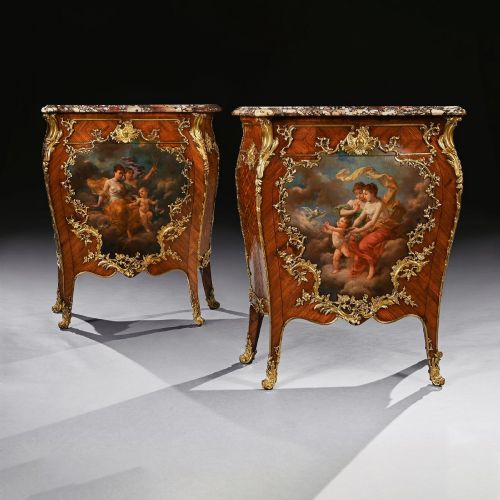
Cast and chased ormolu, or gilt bronze, mounts were applied to frame edges, legs and aprons, while select pieces incorporate marble tops, porcelain inserts or painted Vernis Martin panels.
The furniture spans Louis XV, Louis XVI, Empire and Napoleon III revival aesthetics produced across the 1850s to the early 1900s.
Standard of execution
Quality rests upon the crispness of the bronze chasing and the precision of the timber inlay. Finer examples display deeply chiselled ormolu mounts that integrate seamlessly with the contours of the carcase.
The choice of veneer and the complexity of the parquetry or marquetry work dictate the distinction between standard production and exhibition pieces. Subtlety in the curvature of legs and the harmony of proportion separate superior examples.
Maison Millet·Joseph-Emmanuel Zwiener·François Linke·Edwards & Roberts
The Ormolu Mounted Accent Table Glossary
- Ormolu
- Gilt bronze applied as a decorative mount to furniture. The technique involves a mercury gilding process on cast bronze.
- Marquetry
- Decorative veneer patterns arranged in pictorial or floral designs. Artisans cut various coloured woods to fit together within a surface.
- Parquetry
- Geometric wood veneer patterns such as cubes or lozenges. This technique creates structured surface designs on tabletops.
- Étagère
- An open tiered shelving unit used for display. These pieces often feature delicate supports and mirror the decorative style of the associated table.
- Vernis Martin
- A type of decorative lacquer finish developed in France. It mimics Asian lacquerwork through multiple layers of translucent varnish.
Ormolu Mounted Accent Table: Frequently Asked Questions
How do I identify a Louis XV style table?
A Louis XV style table is characterised by asymmetrical curves, cabriole legs and floral marquetry. These pieces rely on flowing lines rather than straight geometry.
Ormolu mounts on these tables typically accent the corners and feet, following the natural contours of the wood frame.
What is the difference between ormolu and brass?
Ormolu consists of cast bronze that has undergone a gilding process to produce a deep golden finish. It appears primarily on higher quality nineteenth century French furniture.
Brass is a copper and zinc alloy used for simpler mounts or internal hardware, possessing a lighter tone without the same depth of chasing.
Where should I place an etagere table?
An etagere functions well in a drawing room or study as a display surface for small objects. The multiple tiers provide vertical storage without occupying significant floor space.
Keep these tables away from direct sunlight to protect the polished timber veneers and any delicate marquetry work.
How do I clean marble top tables?
Clean marble surfaces with a soft, damp cloth and dry them immediately to prevent water marks. Avoid acidic cleaners that can etch the polished stone.
Treat the surrounding wood and ormolu mounts separately using dry, lint-free cloths suited for antique finishes.