

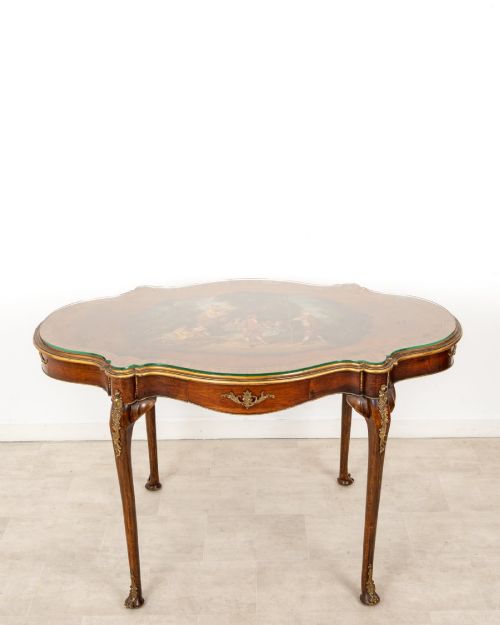
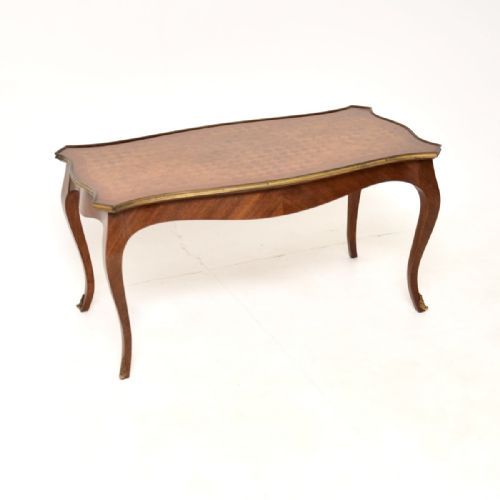
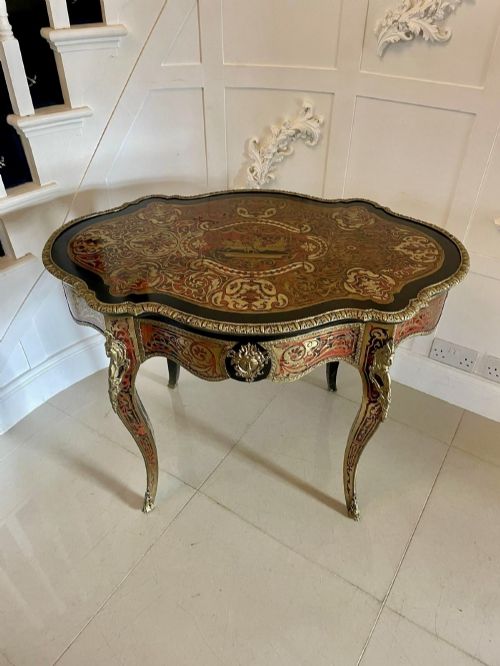
Ormolu Marquetry Table
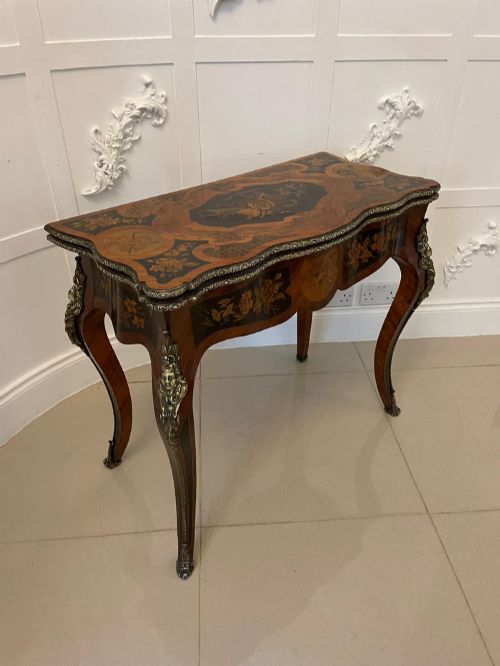
When you search for an ormolu marquetry table, you encounter nineteenth-century French and Victorian revival pieces combining floral wood inlay with gilt bronze mounts.
Ormolu Marquetry Table
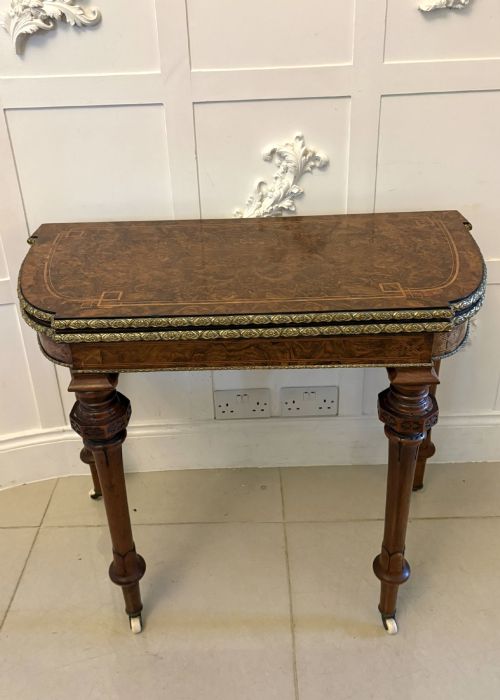
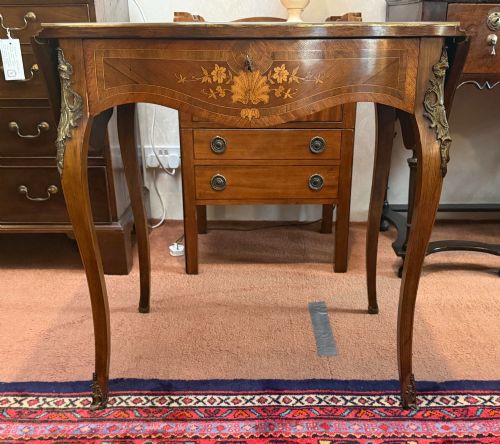
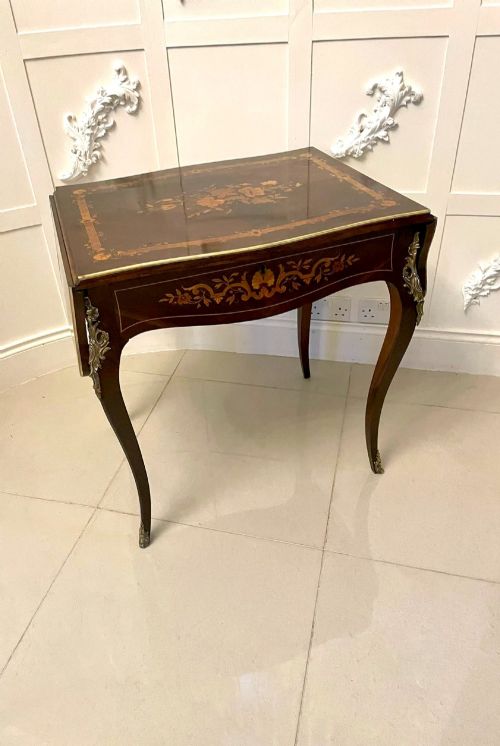
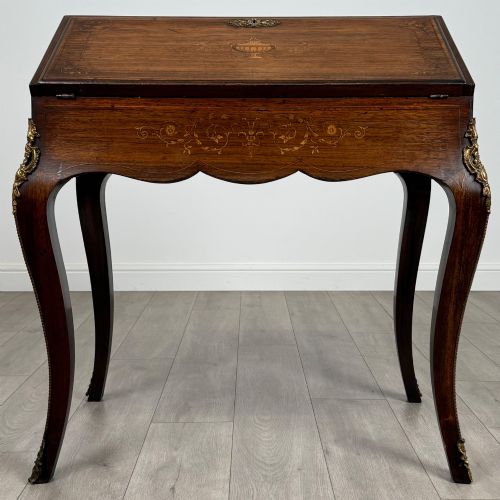
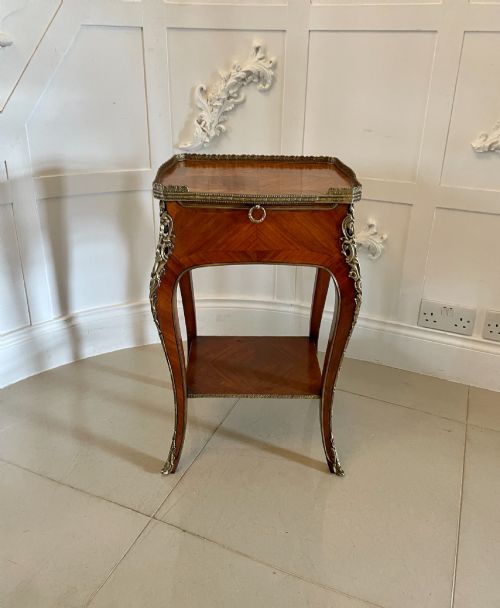
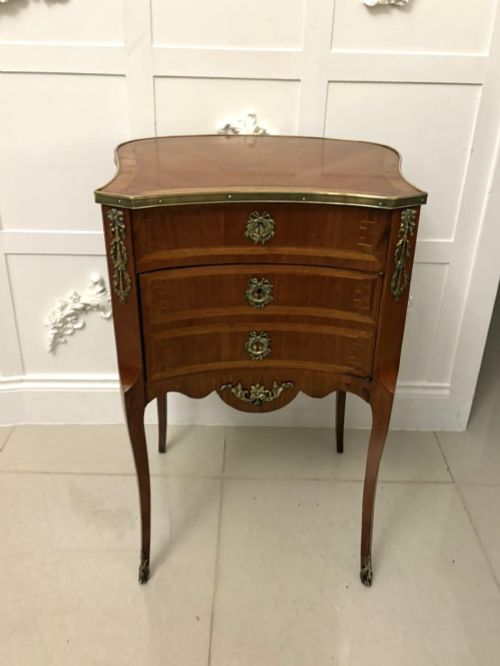
An ormolu marquetry table brings together decorative wood veneers and cast bronze mounts across forms such as centre tables, side tables, card tables and desks. Most examples date from the nineteenth century and the Victorian period, reflecting French revival styles including Louis XV and Louis XVI designs.
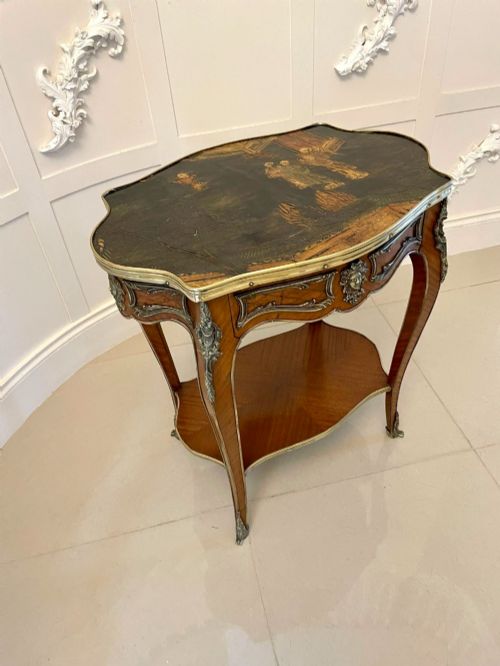
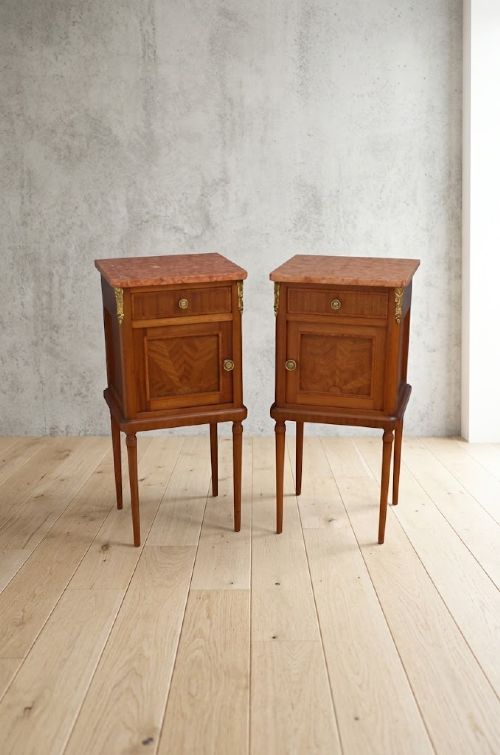
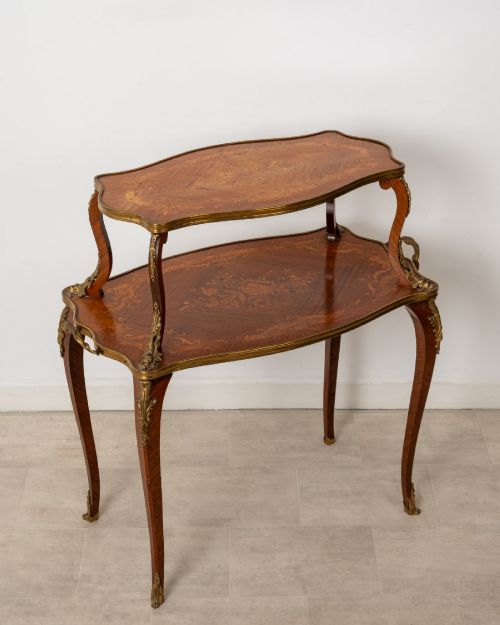
The primary forms on this page include freestanding centre tables, occasional tables, writing desks, and bedside cabinets. These pieces often feature serpentine edges, shaped aprons, and multi-tiered shelving structures like étagères.
Makers and designers working in these styles utilised exotic woods combined with metalwork mounts to create functional surface furniture for drawing rooms and boudoirs. Buyers select these tables for their combination of patterned surface veneers and sculptural metal enrichment.
How they were made
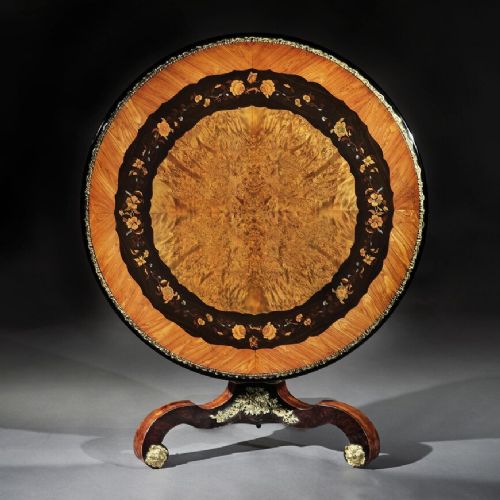
Craftsmen built the carcases using foundational timbers such as oak or pine, applying decorative face veneers of kingwood, rosewood, walnut, mahogany, and satinwood. Marquetry patterns were cut from contrasting veneer sheets to form floral or geometric designs, while parquetry created geometric tile arrangements.
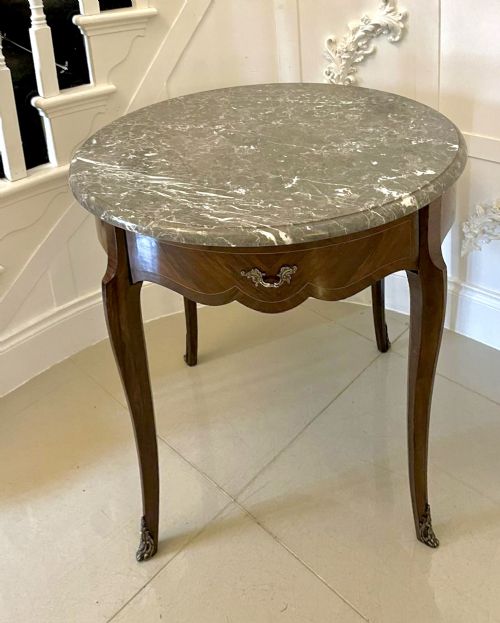
Ormolu mounts, cast in bronze and gilded, were hand-chased and fitted to protect corners, edge aprons, and legs. Marble tops, frequently white or coloured with veining, were fitted into recessed wooden frames on specific centre and bedside tables.
Listings feature nineteenth-century and Victorian pieces utilising kingwood, rosewood, walnut, and ormolu mounts.
What varies in quality
The distinction between standard production and exhibition-grade work lies in the crispness of the bronze chasing and the complexity of the veneer cutting. Finely cast ormolu exhibits sharp detail in foliage and scrollwork rather than soft, blurred edges from worn moulds.
Cabinetwork quality shows in the precision of the marquetry joints and the stability of the timber carcase across seasonal humidity changes. Superior examples maintain flush veneer surfaces without lifting, alongside smoothly operating mechanisms in desks and envelope card tables.
Edward Holmes Baldock·François Linke·Joseph-Emmanuel Zwiener
The Ormolu Marquetry Table Glossary
- Ormolu
- Gilt bronze mounts applied to furniture edges, feet, and corners for decoration and protection. The technique involves applying a gold amalgam to cast bronze before heating.
- Marquetry
- Decorative veneer work forming pictures or floral patterns using various coloured woods. Craftsmen cut multiple veneer layers simultaneously using a fretsaw.
- Parquetry
- Geometric wood inlay arranged in repeating patterns such as cubes, lozenges, or squares. This technique creates structured surface textures without pictorial floral motifs.
- Bureau Plat
- A freestanding partners or writing desk with a flat top, often lined with leather, fitted with drawers along the frieze. These desks typically display extensive bronze mounts and veneer panels.
- Étagere
- An open tiered display stand with multiple shelves supported by slender uprights or columns. These pieces function as side tables or corner display units.
Ormolu Marquetry Table: Frequently Asked Questions
What is an ormolu marquetry table?
An ormolu marquetry table is a nineteenth-century decorative surface featuring inlaid wood veneers and cast gilt bronze mounts. These pieces draw heavily on French Louis XV and Louis XVI revival aesthetics.
They serve as centre tables, writing desks, and occasional furniture, combining patterned wood surfaces with sculptural metal details.
How do I identify the period?
Dating relies on timber selection, construction methods, and stylistic revival markers from the nineteenth century and Victorian eras. Kingwood and rosewood veneers paired with heavy bronze casting typically indicate mid to late nineteenth-century manufacture.
Cabinet construction details, such as hand-cut dovetails and secondary framing timbers, further narrow down the production decade.
Where were these tables used?
These tables were designed for formal reception rooms, drawing rooms, and private boudoirs in grand nineteenth-century homes. Centre tables stood in the middle of rooms to display decorative objects or lamps.
Smaller variants functioned as bedside cabinets, card tables for evening gaming, or writing desks for correspondence.
How do I care for wood and ormolu?
Maintenance requires keeping tables away from direct sunlight and steady temperature fluctuations to prevent veneer cracking. Dusting with a dry, soft cloth preserves the polished wood surface without chemical buildup.
Ormolu mounts should remain unpolished with abrasive cleaners to protect the original gilding layers.