



French Etagere Shelf
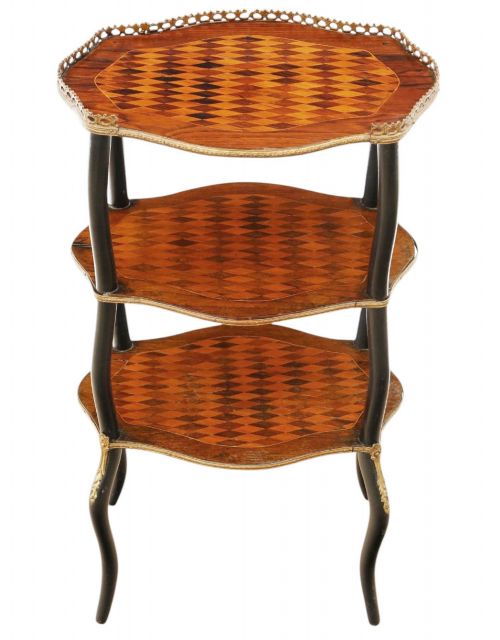
A french etagere shelf brings open tier display and ornamental structure into a room, offering multiple levels for books, ceramics or plants.
French Etagere Shelf
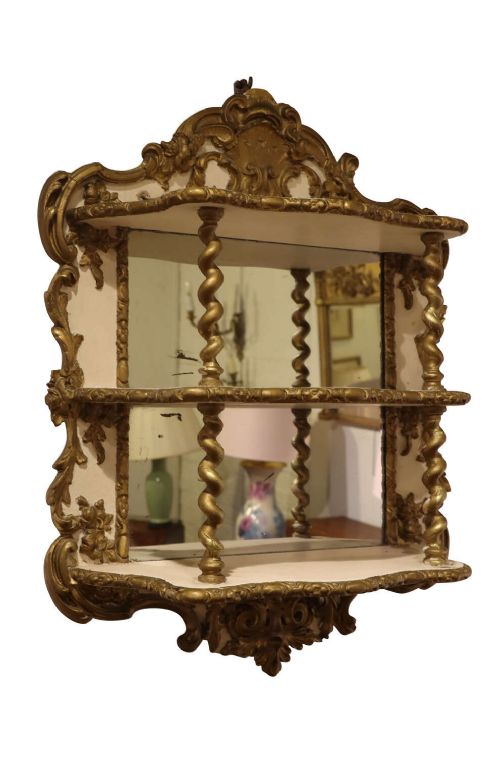
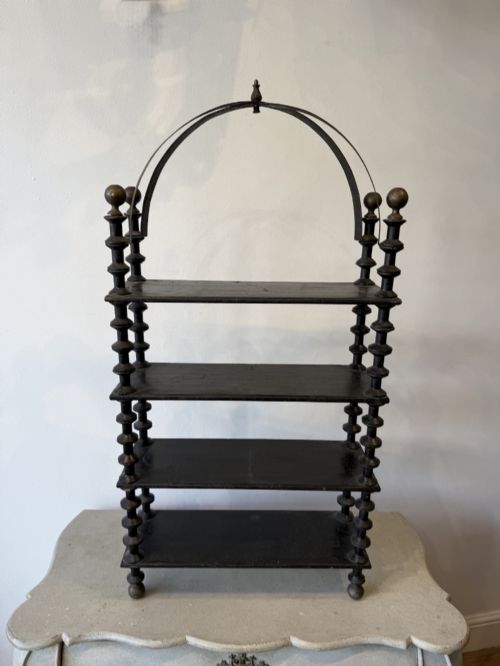
When you search for a french etagere shelf, you encounter tiered open furniture designed for display and storage, ranging from floor-standing étagères and whatnots to wall-hanging shelves.
The pieces appearing on this page span the nineteenth century through the early twentieth century, incorporating Victorian, Edwardian, and specific French revival styles.
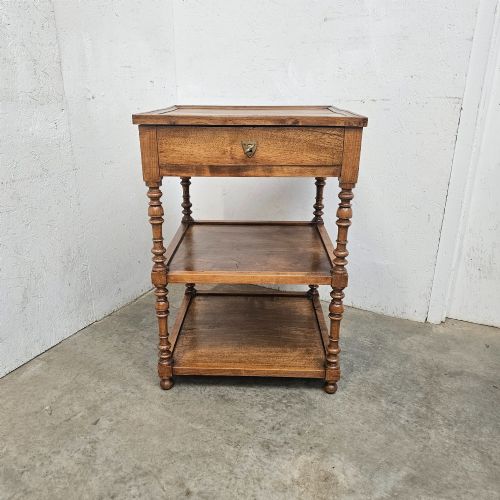
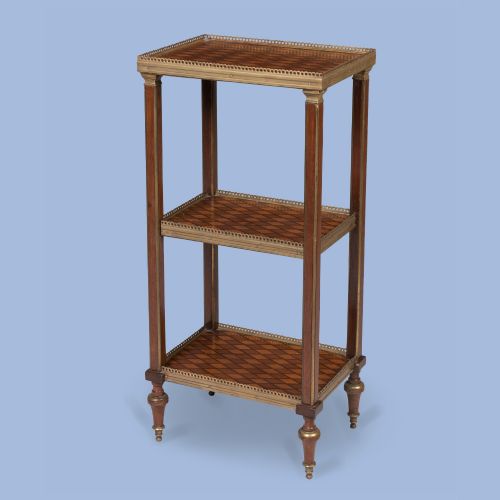
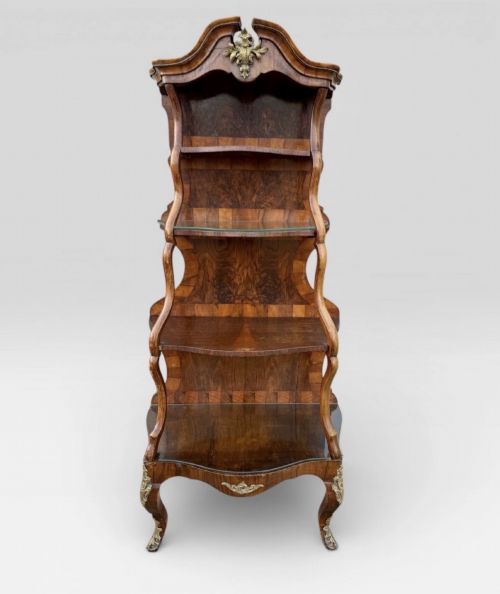
Forms include multi-tiered walnut display tables, serpentine cabinets, and brass-mounted pieces originating from Parisian workshops and provincial makers alike.
Materials and technique
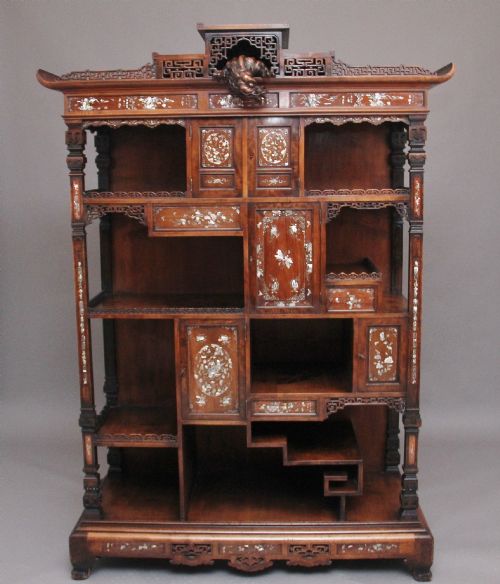
Constructed primarily from timber frames in walnut, mahogany, rosewood, and ebonised wood, these pieces utilise contrasting veneers and detailed parquetry or marquetry inlay.
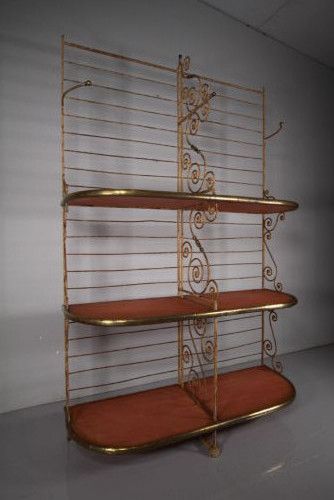
Metal mounts in brass, ormolu, and wrought iron provide structural support and decorative accents around glass panels, marble tops, and turned or carved wooden legs.
Listings feature pieces spanning the nineteenth century, the Victorian era, and the early twentieth century, utilising walnut, mahogany, brass, and marble.
Factors of quality
Quality rests upon the precision of the timber joinery, the crispness of hand-carved details, and the integration of ormolu mounts and brass banding.
Finer examples display careful grain selection in walnut or mahogany alongside intricate marquetry, whereas simpler pieces rely on basic turned supports and plain painted surfaces.
Gabriel Viardot
The French Etagere Shelf Glossary
- Etagere
- A piece of furniture consisting of a set of open shelves for displaying small objects or ornaments. These tiers rise vertically to maximise display space without heavy cabinetry.
- Whatnot
- A nineteenth-century multi-shelved piece of furniture used for storing or displaying ornaments. It functions similarly to an étagère and often stands in a corner or against a wall.
- Ormolu
- Gilded bronze applied as a decorative mount on furniture. This technique gained widespread use in French cabinet making during the nineteenth century.
- Marquetry
- Decorative veneer applied to furniture in patterns using different woods, metals, or shells. Artisans cut these materials precisely to form floral or geometric pictures.
- Parquetry
- Geometric mosaic woodwork used for floors or furniture surfaces. Small blocks of timber create repeating patterns like cubes or herringbone.
French Etagere Shelf: Frequently Asked Questions
What is a french etagere shelf used for?
These pieces serve primarily to display decorative objects, porcelain, books, and small collections across multiple open tiers.
Historically placed in reception rooms and boudoirs, they allow items to be viewed from several angles while adding architectural interest to a blank wall or corner.
How do I identify the period of an etagere?
Dating relies on observing the combination of timbers, mounts, and stylistic revival cues. Nineteenth-century pieces frequently employ solid walnut or mahogany with heavy brass or ormolu mounts.
Later Victorian and Edwardian examples incorporate lighter inlays, ebonised surfaces, or painted finishes reflecting changing interior fashions.
Where should I place wall hanging shelves?
Wall-mounted etageres and shelves work well above sideboards, desks, or in hallways where floor space is limited. Their open tiers keep rooms feeling spacious while providing vertical storage.
Ensure secure fixings into wall studs or masonry to support the weight of the timber and displayed items safely.
Are these shelves structurally sturdy?
Most antique pieces utilise traditional joinery designed to bear the weight of books and ceramics across their tiers. Walnut and mahogany frames provide inherent strength.
Because they rely on slender turned legs or hanging brackets, checking the stability of joints helps ensure safe everyday use in modern homes.