



Ormolu Mantel Clock Candelabra
These ormolu mantel clock candelabra assemblies bring together gilded metal timepieces and matching light fittings to anchor a grand room scheme.
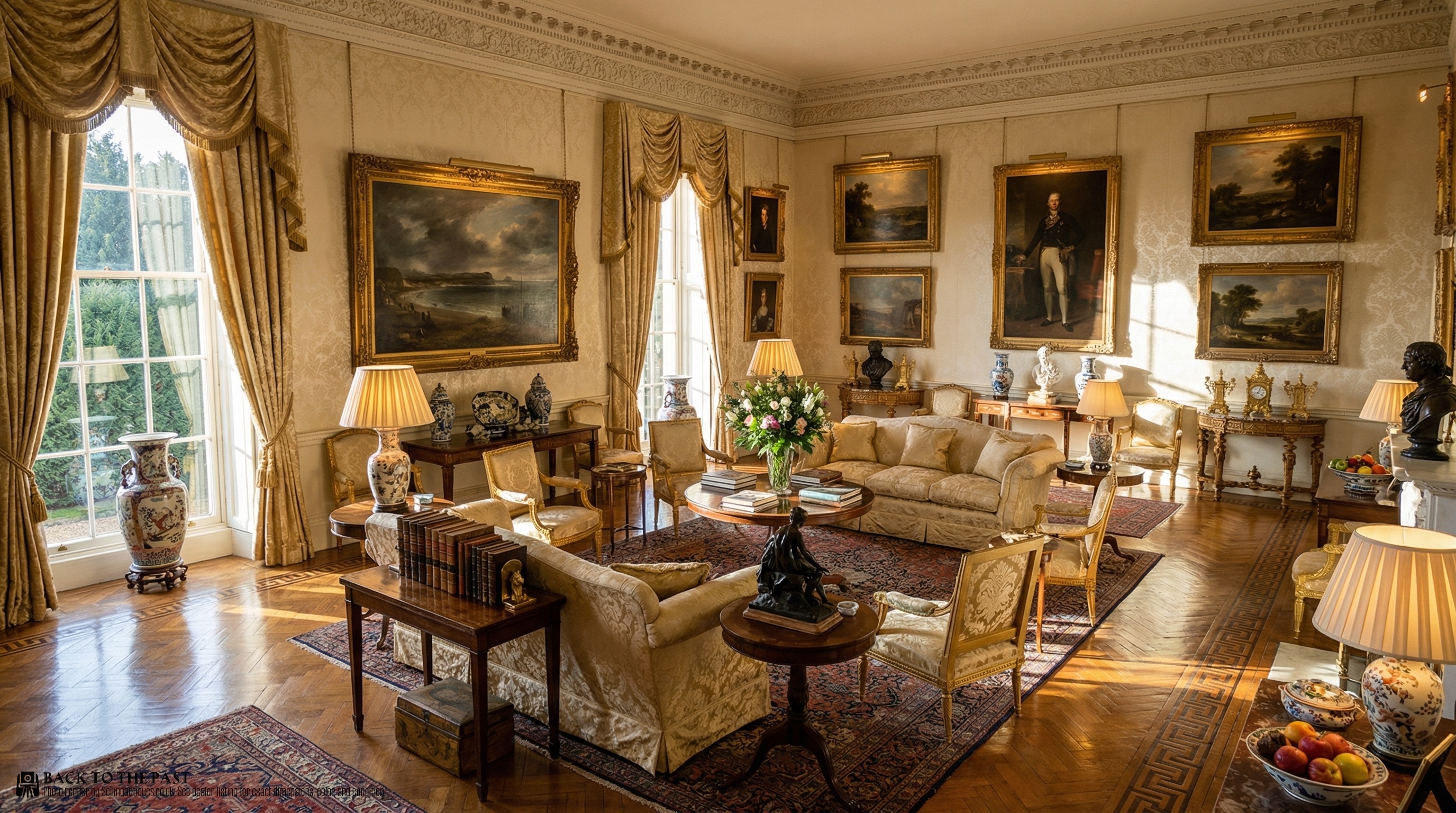
Ormolu Mantel Clock Candelabra
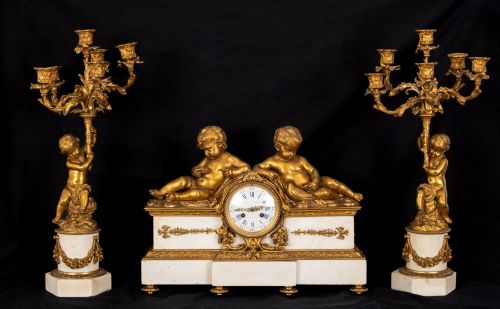
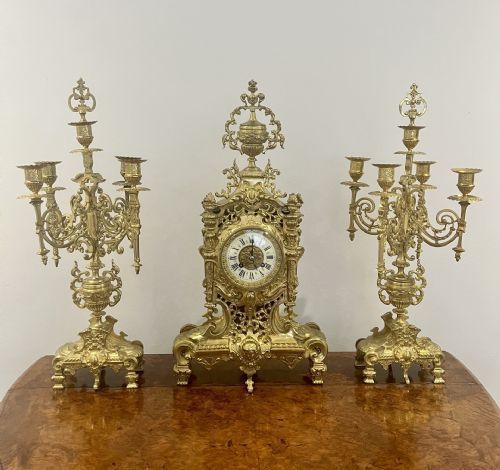
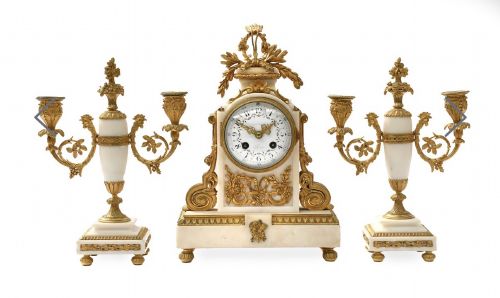
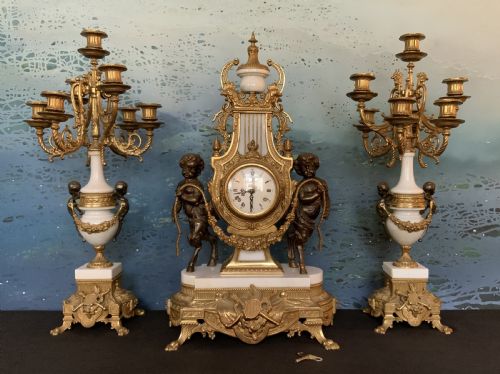
When you search for ormolu mantel clock candelabra, you encounter elaborate multi-piece sets designed to sit as a unified focal point on a fireplace. These ensembles typically comprise a central mantel clock flanked by matching candelabras or side urns, forming a complete garniture set.
The pieces appearing on this page date predominantly from the nineteenth century, including Victorian periods and specific years like 1860, 1880, 1890, and 1900, alongside occasional twentieth-century iterations. French workshops generated the vast majority of these compositions, often adopting Louis XVI style, French Empire, or Rococo revival aesthetics.
How they were made
Makers utilised gilt bronze and ormolu to create the brilliant, durable golden surfaces that define these mantel clock candelabra sets. Artisans combined these cast metal elements with natural materials such as white marble, onyx, and porcelain, frequently incorporating enamel dials and glass components into the clock faces.
Foundry work involved casting bronze or brass components before applying mercury gilding or modern electroplating techniques to achieve the characteristic ormolu finish. Stonemasons shaped the marble and onyx bases to support the substantial weight of the metalwork.
Listings feature white marble, onyx, and porcelain combined with gilt bronze and ormolu across nineteenth-century French styles.
What varies in quality
The distinction between ordinary and exceptional ormolu mantel clock candelabra sets lies primarily in the crispness of the bronze casting and the depth of the gilding. Superior examples exhibit finely chiselled details on foliage, cherubs, and classical motifs, whereas lesser pieces display softer contours from worn moulds.
The integration of the garniture set also dictates its standing, with top-tier assemblies showing harmonious proportions between the central clock and its matching candelabras. The quality of the underlying marble or porcelain panels and the presence of named maker signatures further elevate the stature of an ensemble.
Henry Dasson·Raingo Fres Paris·H Luppens Paris·AD Mougin Paris·Deniere Paris
The Ormolu Mantel Clock Candelabra Glossary
- Ormolu
- A method of applying finely ground high-carat gold to a bronze object, creating a rich golden finish. This technique was extensively utilised by French bronze-makers.
- Garniture
- A set of matching decorative objects designed to be displayed together on a mantelpiece or sideboard. A clock garniture typically includes a central clock and two matching side pieces such as candelabras or urns.
- Candelabra
- A branched candlestick holder designed to hold multiple candles simultaneously. In these sets, they repeat the decorative motifs of the central clock.
- Louis XVI Style
- A neoclassical design movement characterised by symmetry, straight lines, and classical Roman or Greek motifs. Pieces in this style often feature urns, swags, and fluted columns.
- Bleu De Roi
- A deep, rich cobalt blue ceramic glaze frequently found on porcelain panels incorporated into French clock sets. It provides a striking contrast against gilded ormolu mounts.
Ormolu Mantel Clock Candelabra: Frequently Asked Questions
How do I style ormolu mantel clock candelabra sets?
Place the central clock at the exact centre of a mantelpiece to create visual balance in the room. Flank the timepiece with the matching candelabras spaced evenly on either side.
Ensure the surface is sturdy enough to support the heavy marble and bronze materials typical of these nineteenth-century sets.
What periods do these clock sets represent?
The listings on this page span the nineteenth century, with strong representation from the Victorian era and decades such as 1860, 1880, 1890, and 1900. You will also encounter twentieth-century examples alongside specific design revivals.
French workshops dominated this production, drawing heavily on Louis XVI style and Rococo aesthetics.
What materials make up these garniture sets?
These ensembles combine gilt bronze and ormolu metalwork with substantial marble or onyx bases. Many pieces also incorporate porcelain panels, enamel clock dials, and glass elements.
White marble and contrasting dark stone frequently serve as the foundational support for the gleaming metal figures.
How do I identify a Louis XVI style set?
Look for architectural symmetry, straight structural lines, and classical motifs such as urns, ribbons, and acanthus leaves. These designs eschew the heavy asymmetrical curves of earlier Rococo work in favour of neoclassical restraint.
The ormolu mounts on these pieces will typically display geometric precision and formal balance.