


Ormolu Games Table
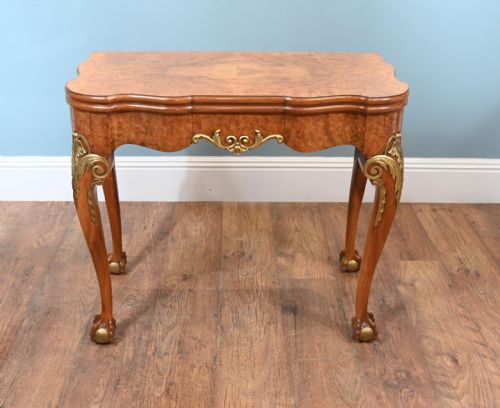
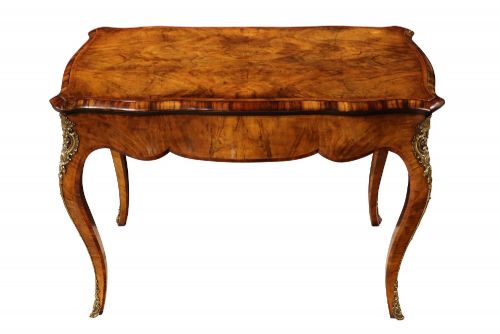
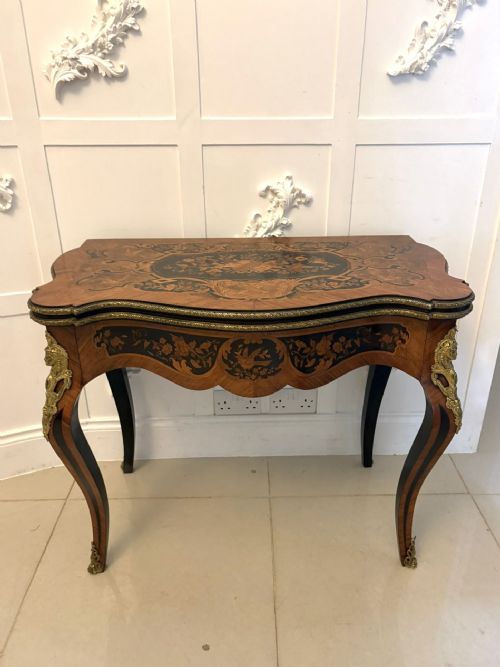
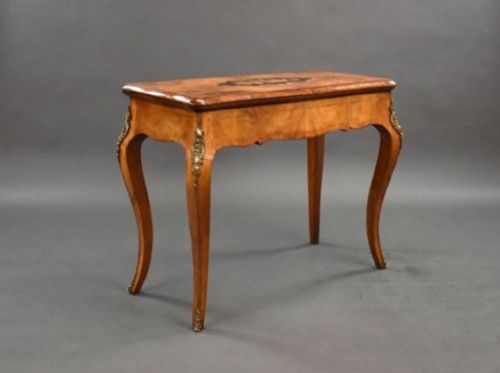
An ormolu games table brings sophisticated French revival splendour into a room, combining rich timber veneers with finely cast gilt mounts.
Ormolu Games Table
An ormolu games table is a piece of formal furniture designed for card playing and social gatherings, featuring a folding or swivelling top that reveals a baize-lined interior. These tables date primarily from the nineteenth century and reflect a strong preference for French eighteenth-century designs.
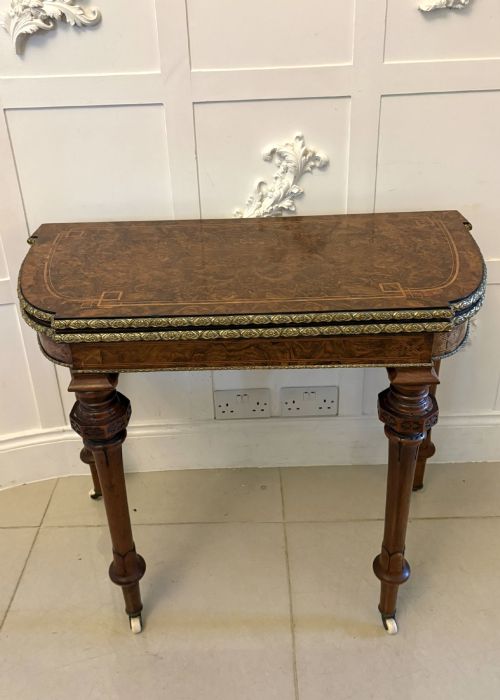
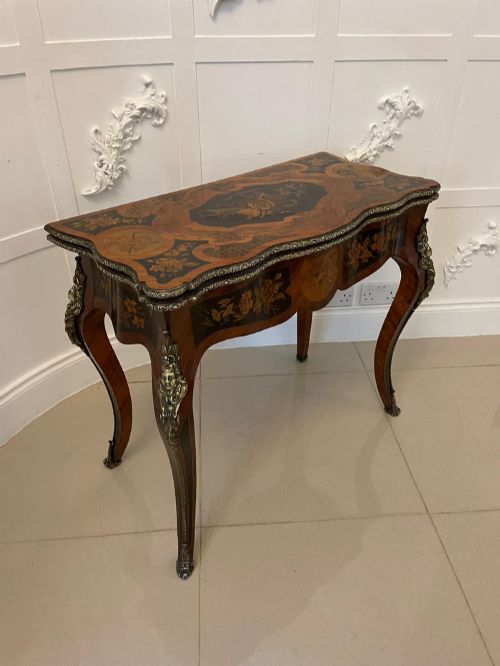
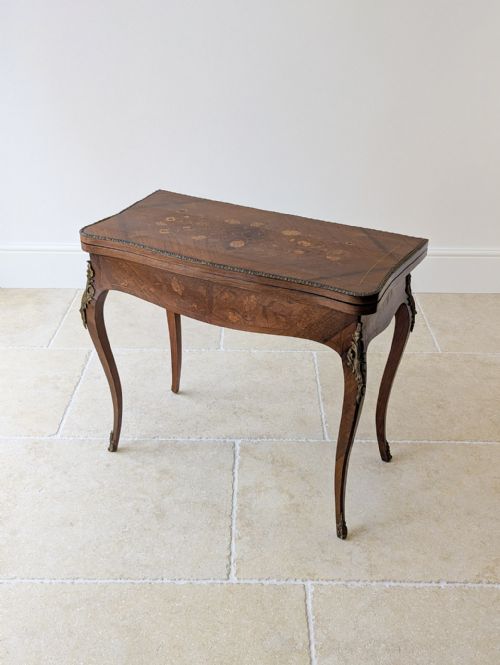
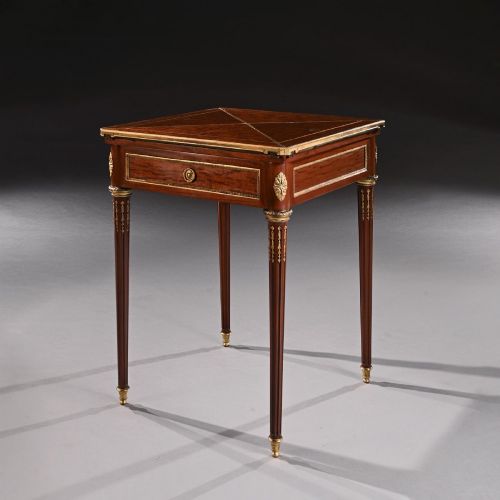
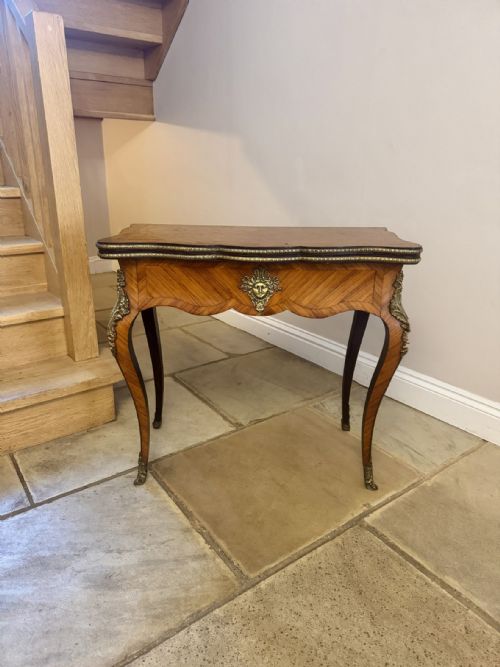
The versions most common on this page are the Victorian and nineteenth-century French pieces built in the Louis XV and Louis XVI revival styles. Makers combined folding walnut, kingwood or rosewood structures with elaborate gilt bronze mounts, creating dual-purpose furniture that served as a console when closed.
How they were made
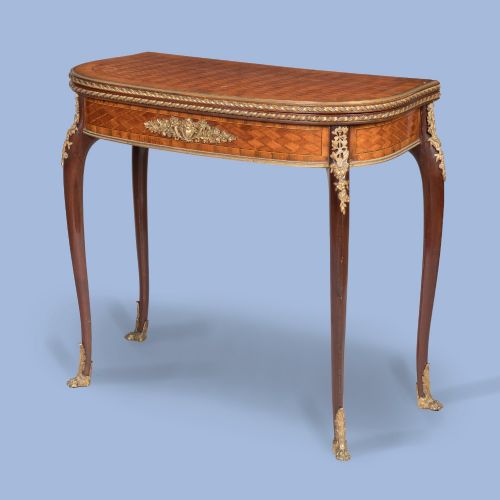
Cabinetmakers constructed the carcases using dense native timbers like walnut or mahogany as a foundation, applying decorative veneers of kingwood, rosewood and burr walnut across the surfaces. Marquetry and parquetry patterns utilised contrasting exotic woods to form geometric designs and floral motifs.
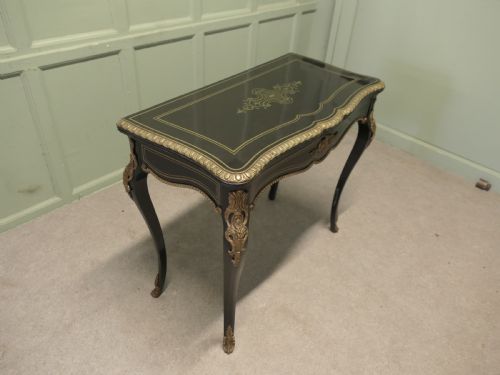
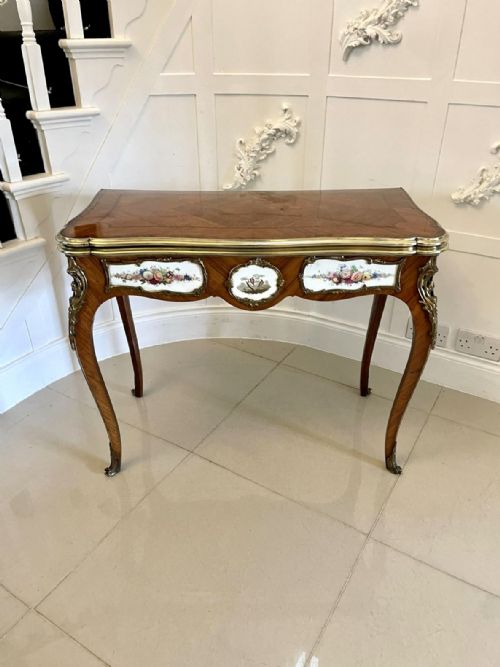
Gilt bronze, known as ormolu, was cast, chased and fire-gilt before being applied to the corners, apron and legs to accentuate the contours of the piece. Brass inlay and porcelain plaques occasionally supplemented the mounts, adding further decorative contrast to the timber.
Listings demonstrate a strong preference for Kingwood and walnut as the primary timbers, frequently paired with gilt bronze ormolu mounts.
What varies in quality
Quality rests significantly on the crispness of the bronze chasing and the depth of the fire-gilding on the ormolu mounts, where sharper details distinguish superior workshop output. The complexity and precision of the marquetry inlay across the top and sides further separate standard production from exceptional pieces.
The choice of underlying veneers and the stability of the folding mechanism dictate the structural integrity and visual richness of the table. Tables bearing signatures or attribution to notable makers display a higher standard of cabinetmaking craftsmanship throughout.
Antoine Lampre·G T Morant·François Linke·Epstein and Co·Maple and Co·Maison Mottheau·Joseph-Emmanuel Zwiener·Maison Millet·Edwards and Roberts·Henry Dasson
The Ormolu Games Table Glossary
- Ormolu
- Gilt bronze ornamentation applied to furniture. The technique involves coating base metal with a mercury and gold amalgam before heating.
- Marquetry
- Decorative veneer work forming pictures or patterns using various coloured woods. Craftsmen cut thin sheets of timber to fit exact puzzle-like recesses.
- Parquetry
- Geometric mosaic woodwork used for repeating patterns on tabletops. It relies on precise angles of contrasting wood veneers.
- Boulle
- A style of marquetry using tortoiseshell and brass inlay. It was named after the master cabinetmaker André-Charles Boulle.
Ormolu Games Table: Frequently Asked Questions
How do you open an ormolu games table?
Most examples feature a fold-over top supported by a swinging rear leg or a pivoting mechanism that rotates ninety degrees to reveal the playing surface.
Users should lift the top gently and guide the supporting structure into place to avoid putting undue strain on the hinges and ormolu mounts.
Where were ormolu games tables used?
These pieces sat primarily in drawing rooms and reception spaces where hosts entertained guests with card games and social assemblies.
When not in use for gaming, the tables stood against walls as console or side tables displaying decorative objects.
How do you care for wood and ormolu?
Polishing requires soft cloths and high-grade wax suitable for antique veneers while avoiding harsh chemical cleaners that damage the timber finish.
Ormolu mounts benefit from gentle dusting with a dry brush to preserve the gilt surface without wearing away the delicate metalwork.
How do you distinguish Louis XV and Louis XVI styles?
Louis XV revival pieces exhibit asymmetrical curves, cabriole legs and flowing floral rococo motifs derived from mid-eighteenth-century French design.
Louis XVI revival pieces turn toward neoclassical restraint with straight tapered legs, fluted columns and symmetrical geometric parquetry.