


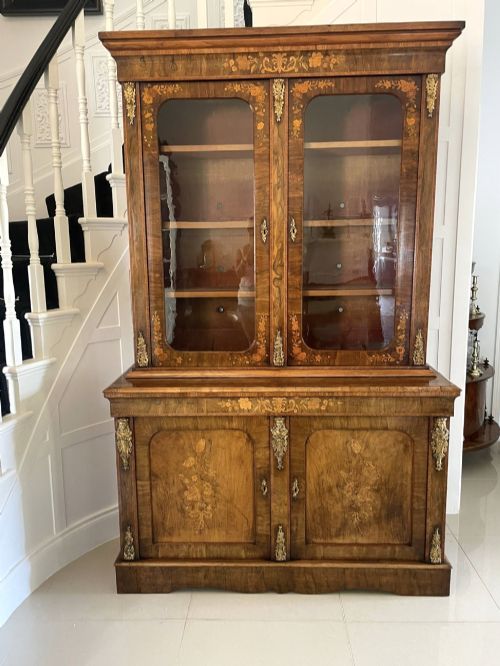
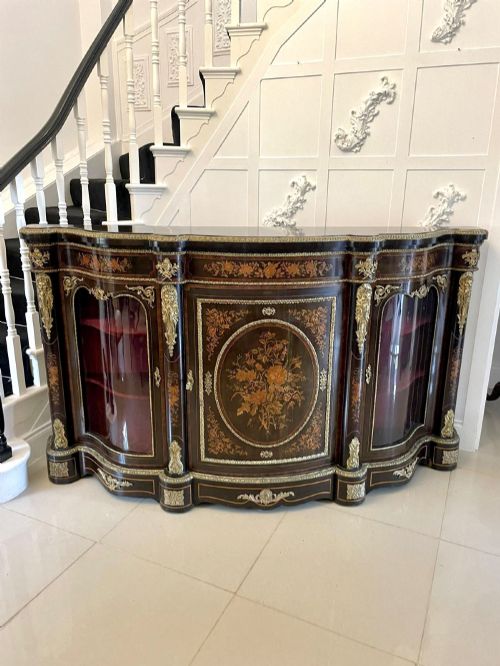
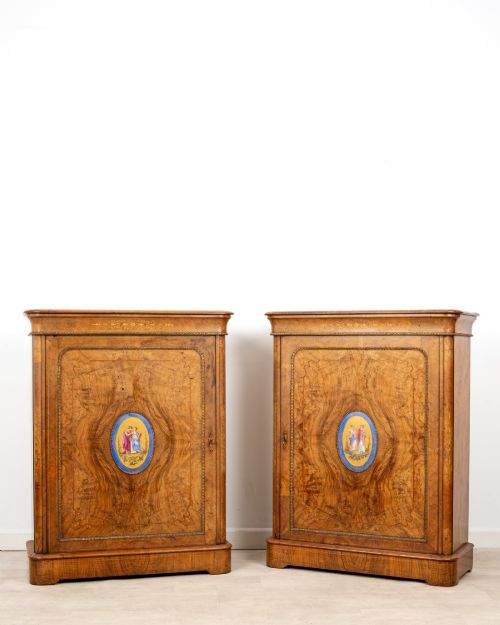
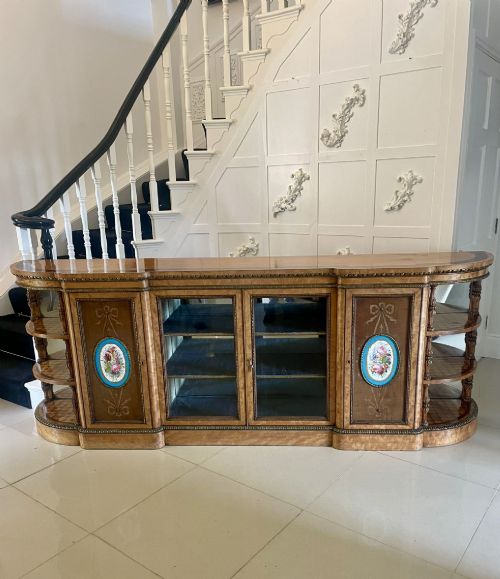
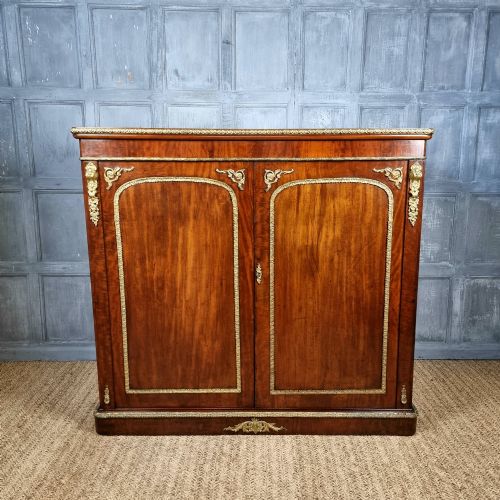
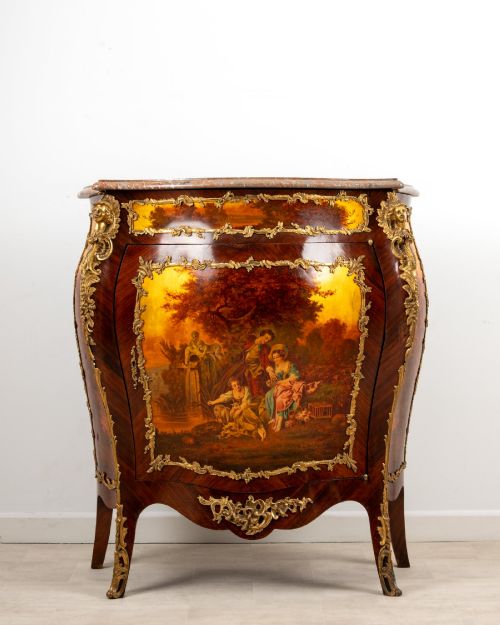
Ormolu French Credenza Cabinet
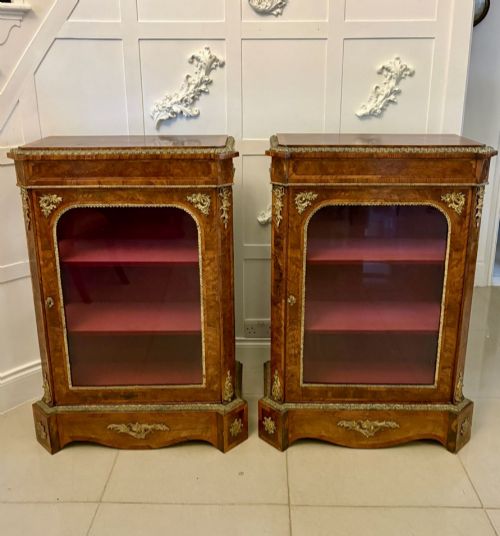
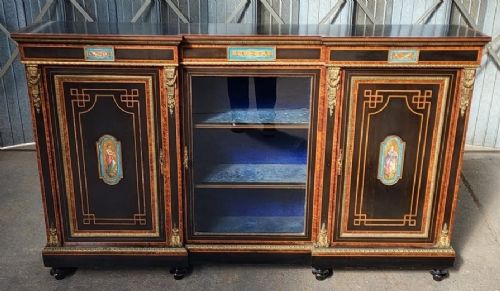
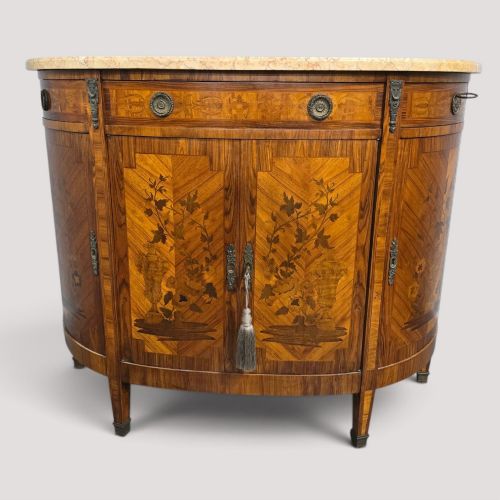
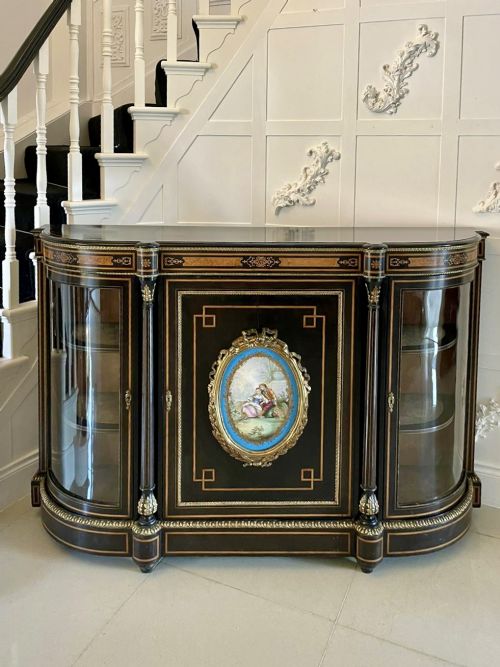
These ormolu french credenza cabinet examples bring together nineteenth-century marquetry, rich timber veneers and gilt bronze mounts to anchor a formal interior.
Ormolu French Credenza Cabinet
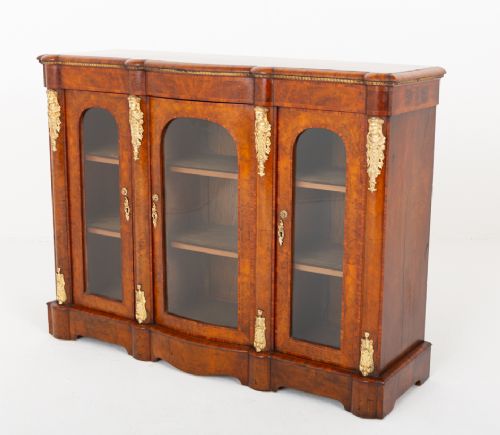
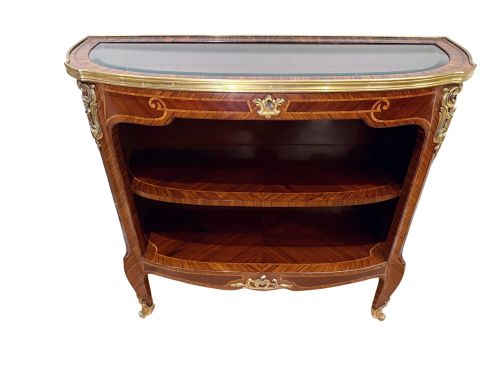
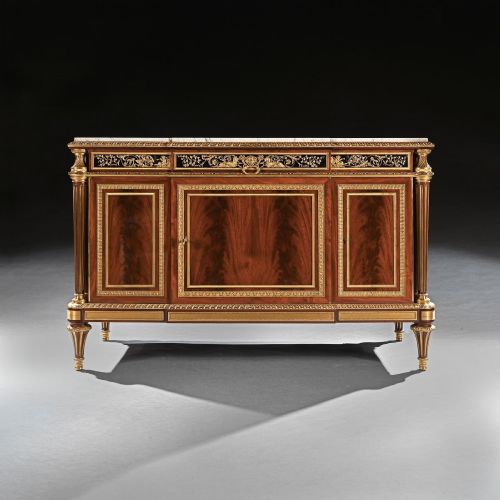
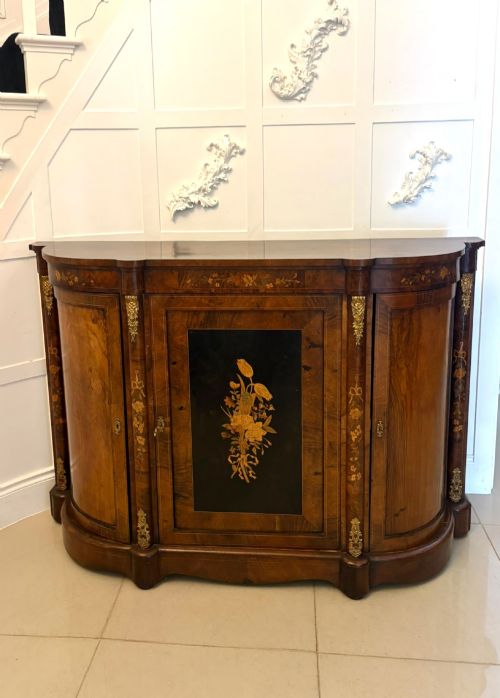
An ormolu french credenza cabinet combines low timber storage with decorative mounts, appearing frequently across nineteenth-century Victorian and French revival periods. Pieces range from serpentine fronted credenzas and side cabinets to pier cabinets, bookcases and marble topped commodes.
Makers and workshops of the period utilise burr walnut, ebonised wood, kingwood and mahogany, often enhanced by floral marquetry, porcelain plaques and boullework. The form serves as a display surface and a cabinet, grounding a room with architectural presence.
How They Were Made
Craftsmen construct carcases from foundational timbers like walnut or mahogany, applying decorative veneers such as burr walnut, kingwood, amboyna and tortoiseshell in complex marquetry patterns. Ebonising wood provides a dark, uniform ground for intricate brass inlay and Boullework.
Cast and gilt ormolu mounts punctuate corners, framing panels and feet, while marble slabs form heavy, polished tops on commodes and side cabinets. Hand-painted porcelain plaques and Sevres style inserts frequently supplement the timber and metal surfaces.
Tortoiseshell and brass team up in Boullework to reflect every flicker of nineteenth-century candlelight.
What Varies in Quality
The refinement of the ormolu casting separates standard production from exhibition pieces, as sharper chisel work and deeper gilding define superior mounts. The complexity and precision of the floral marquetry and veneer matching indicate the skill invested in the cabinetwork.
Material selection dictates overall grade, with dense burr walnut, figured kingwood, genuine tortoiseshell and heavy white or coloured marble slabs marking the higher tier of manufacture.
Henry Dasson·Edward Holmes Baldock·Maison Gagneau·Weisweiler·Gillows
The Ormolu French Credenza Cabinet Glossary
- Ormolu
- Gilt bronze applied as decorative mounts to furniture. The technique involves treating brass or bronze with an amalgam of gold, creating a bright metallic finish.
- Marquetry
- The art of applying pieces of veneer to a structure to form decorative patterns. Craftsmen use contrasting woods to build pictorial or floral motifs.
- Boulle
- A type of marquetry consisting of tortoiseshell and brass inlaid together. Developed in France, this technique creates a striking contrast of dark shell and polished metal.
- Pier Cabinet
- A low display cabinet designed to sit against a wall between windows. These pieces often feature glass doors and rich ormolu mounts.
- Serpentine
- A curved shape resembling a snake's movement, featuring a convex centre flanked by concave curves. This contour appears frequently on the front of high-grade credenzas and commodes.
Ormolu French Credenza Cabinet: Frequently Asked Questions
How do I identify a credenza?
A credenza is a low cabinet designed for storage and display, frequently featuring a central door flanked by curved glass side cabinets or open shelving. They sit low to the ground and carry heavy decorative surfaces.
In nineteenth-century examples, these pieces often incorporate marble tops, porcelain plaques and intricate marquetry across walnut or ebonised foundations.
What is ormolu?
Ormolu refers to gilt bronze furniture mounts cast in detailed floral, scroll or figural patterns. It provides a bright metallic contrast against dark timbers like walnut, kingwood and ebonised wood.
On higher quality pieces, these mounts are hand-chased after casting to sharpen the details before gilding is applied.
Where were these cabinets placed?
These cabinets sat against principal walls in nineteenth-century drawing rooms and reception spaces, functioning as both storage and display surfaces. Pier cabinets occupied narrow wall spaces between windows.
Their polished marble tops and glazed doors allowed them to hold decorative porcelain, bronzes and books while reflecting light within the room.
How do I care for marble and wood?
Marble tops require gentle cleaning with mild, non-acidic soap and water to prevent staining or etching the polished surface. Timber and ormolu need dusting with a dry cloth and occasional application of appropriate wax.
Keep these cabinets away from direct sunlight and severe temperature changes to protect the delicate wood veneers and glue joints.