



Serpentine Front Cupboard
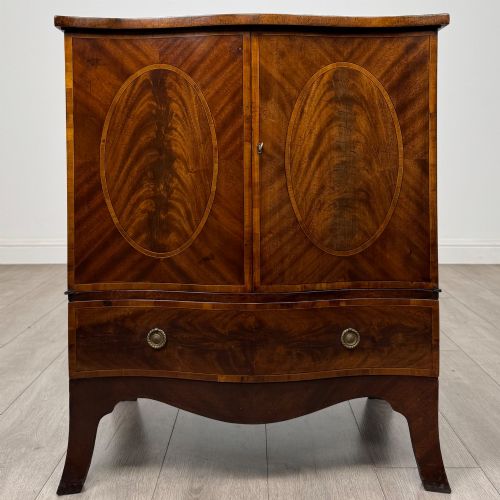
A serpentine front cupboard brings a distinct curved silhouette to a room, offering practical storage through gentle, undulating lines that catch the light.
Serpentine Front Cupboard
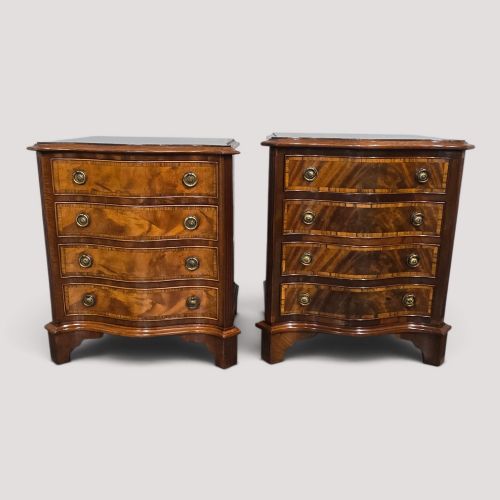
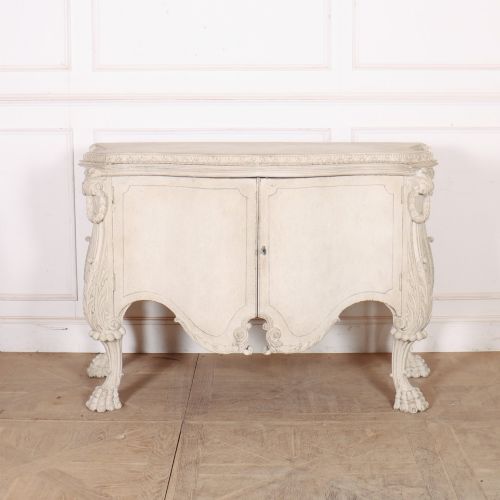
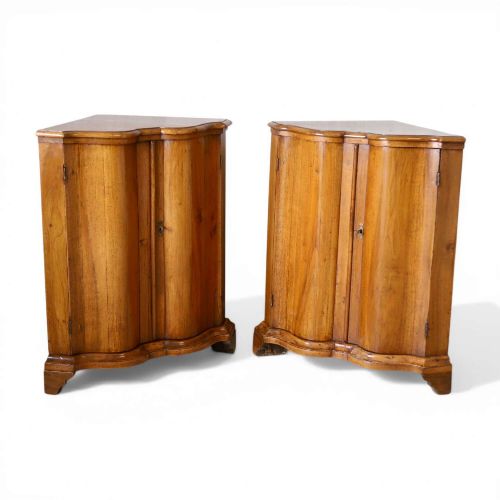
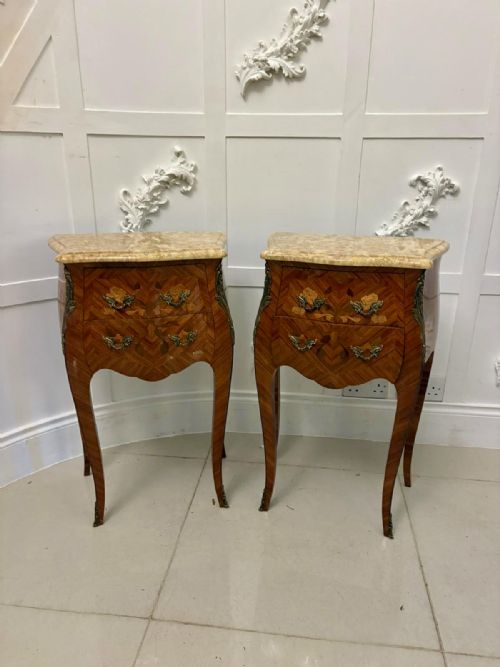
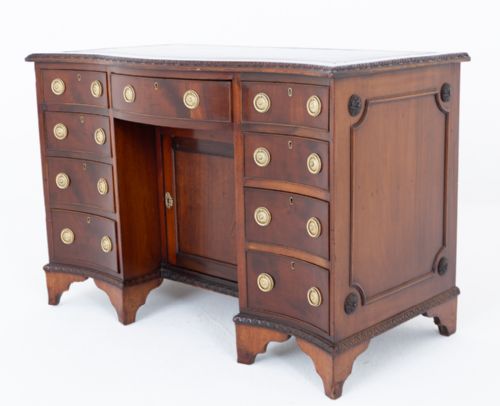
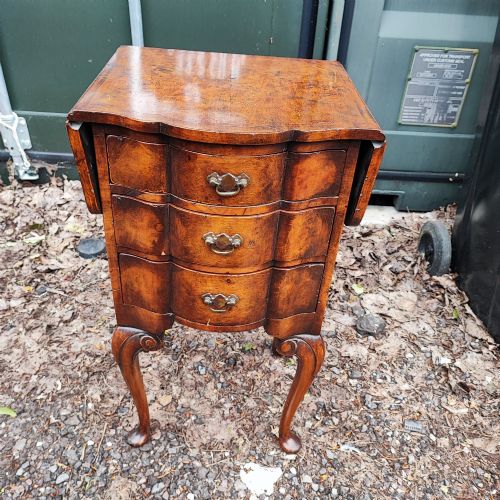
A serpentine front cupboard takes many domestic shapes, appearing as bedside tables, compact commodes, corner cabinets, and larger sideboards or display units. These pieces span several centuries, moving from eighteenth-century Georgian and Italian workshops to Victorian revivals and twentieth-century interpretations.
The layout frequently combines enclosed door storage with drawers or open display space, accommodating varied rooms while maintaining a compact footprint. Buyers meet pieces ranging from modest Edwardian bedside chests to substantial Italian walnut and French marquetry furniture.
Materials and Construction
Cabinetmakers constructed these undulating carcasses primarily using dense timbers such as mahogany, walnut, and burr walnut, often enhanced with satinwood, rosewood, or maple veneers. Shaping a curved front required skilled timber selection and precise carpentry to ensure the wood tolerated structural tension without warping.
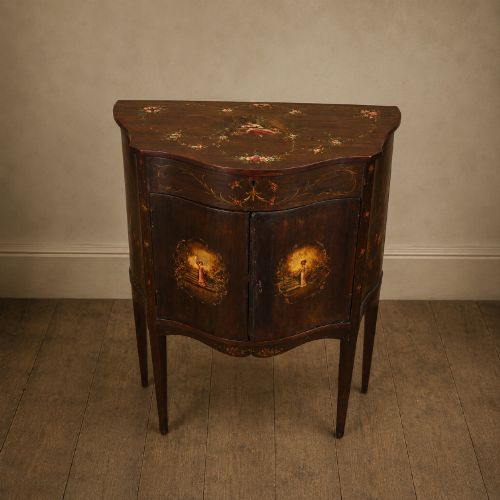
Surface enrichment involved detailed marquetry inlay, hand painting, or applied brass mounts, paired occasionally with fitted marble tops on commodes and side cabinets. These decorative elements demand patient craftsmanship to follow the complex contours of the undulating woodwork.
The archive of sold items demonstrates a steady demand for marquetry inlaid corner cabinets and burr walnut bedside chests.
Markers of Excellence
Quality rests in the harmony of the undulating timber grain and the precision of the curved joints, where lesser pieces show stiffness while superior examples achieve fluid movement. The integration of marquetry or hand-painted details reveals the hand of skilled workshops rather than mass production.
Hardware weight and internal secondary timber choice further separate standard utility furniture from exhibition pieces. Structural integrity beneath the veneer ensures the curved doors and drawers continue to operate smoothly over generations.
Edwards and Roberts·Waring and Gillow
The Serpentine Front Cupboard Glossary
- Serpentine
- A shape featuring a convex centre flanked by concave curves, creating an undulating front line. This contour requires advanced carpentry to execute across doors and drawer fronts.
- Marquetry
- The art of applying decorative veneer pieces to a structural surface to form geometric or pictorial designs. Craftsmen cut contrasting woods together to achieve tight, seamless fits.
- Commode
- A low French storage cabinet or chest with doors or drawers, frequently topped with marble. The form gained prominence in European salons and bedrooms during the eighteenth century.
- Credenza
- A sideboard or low cabinet lacking legs, designed for display and storage. The term often describes nineteenth-century English and continental variations with glazed or panelled doors.
- Bombe
- A swollen or bulging convex form found on continental furniture sides and fronts. This curved profile demands complex shaping of the underlying timber frame.
Serpentine Front Cupboard: Frequently Asked Questions
Where do I place a serpentine front cupboard?
These cabinets suit hallways, bedrooms, or living spaces where a softened silhouette breaks the rigidity of straight walls. Their curved profile allows them to fit neatly into corners or stand effectively as focal points against flat surfaces.
Because the footprint varies from compact bedside tables to larger sideboards, measuring the clearance for swinging doors or drawers remains essential before positioning.
How do I identify an eighteenth-century piece?
Eighteenth-century examples display hand-cut joinery, secondary timbers appropriate to their geographic origin, and natural wear patterns accumulated over centuries of use. The construction of the drawer linings and the depth of the timber patination offer reliable clues to genuine age.
Revival pieces from the Victorian and Edwardian eras often mimic these earlier Georgian silhouettes, making timber inspection and construction analysis vital for accurate dating.
Are marble tops original to these cabinets?
Marble tops frequently appear on continental commodes and specific Victorian side cabinets to provide a durable, decorative surface. The stone was selected to complement the walnut or mahogany carcasses beneath.
Inspect the seating of the marble slab within the wooden frame to ensure it rests correctly without modern alterations or replacement fixings.
How do I care for polished veneer surfaces?
Polished mahogany and walnut veneers respond best to regular dusting with a soft, dry cloth and protection from direct sunlight and extreme humidity changes. Avoiding silicone sprays preserves the integrity of traditional wax or French polish finishes.
Applying a quality cabinet wax occasionally nourishes the timber and maintains the subtle sheen characteristic of antique furniture.