

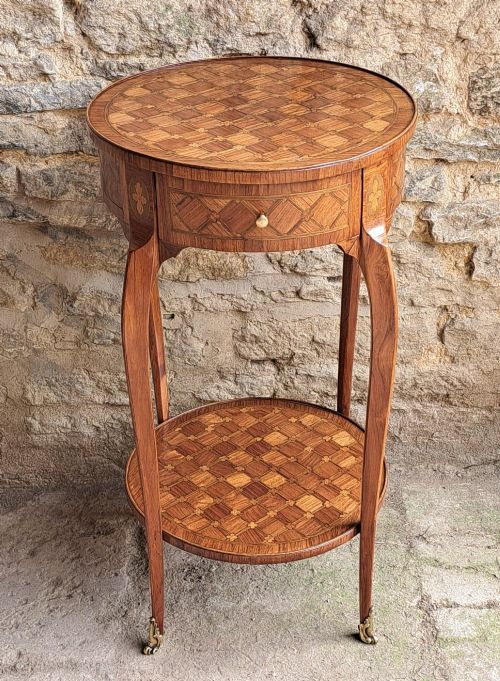
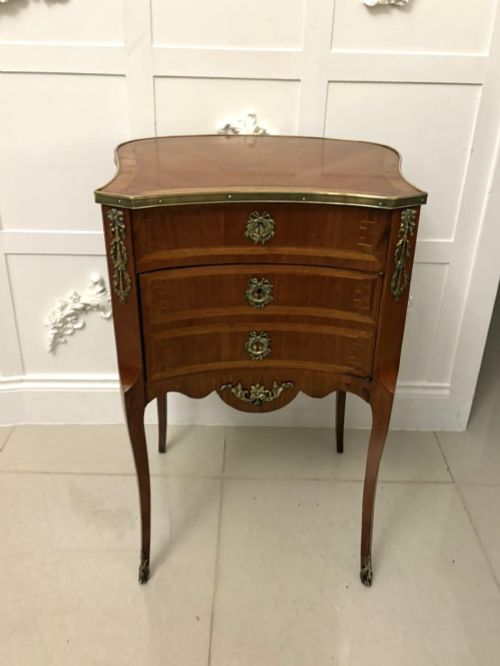
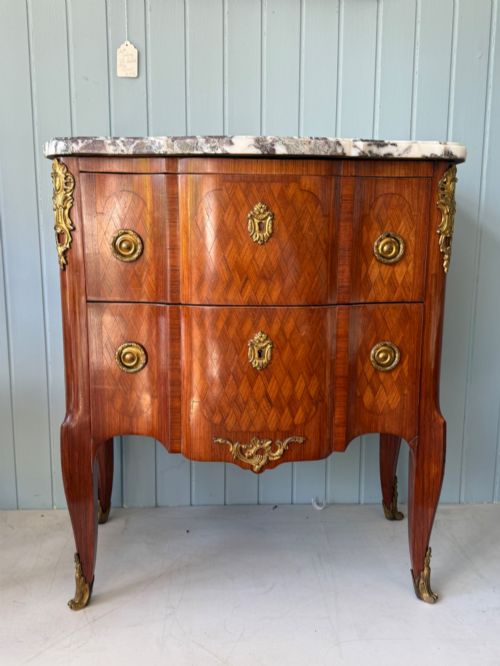
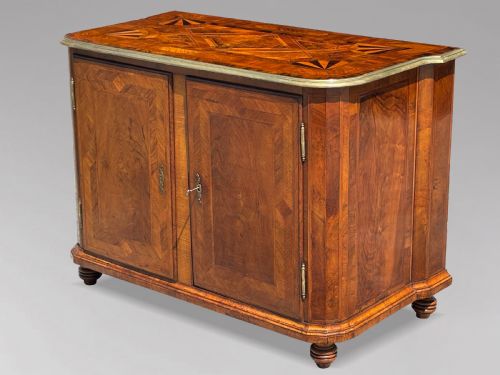


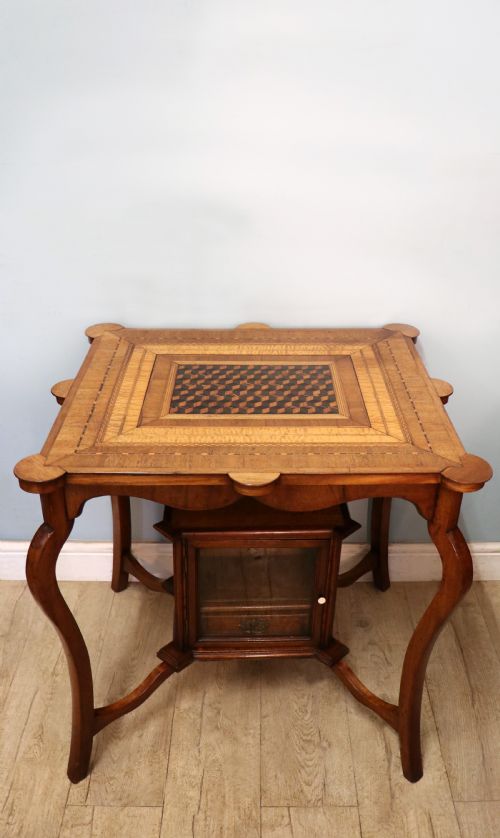


Parquetry Inlaid Side Cabinets
These parquetry inlaid side cabinets bring intricate geometric wood patterns and period French design straight to your room.
Parquetry Inlaid Side Cabinets
When you search for parquetry inlaid side cabinets, you encounter compact case furniture designed for storage beside a bed or alongside a reception room wall. These pieces frequently draw upon French Louis XV and Louis XVI styles, manifesting as bedside cabinets, commodes, and lamp tables.
The versions most commonly met on this page date from the nineteenth century up to nineteen thirty, often taking the form of paired bedside tables or serpentine side cabinets. Walnut, kingwood, and cherrywood form the primary bodies, enriched with contrasting geometric timber veneers.
How they were made
Cabinetmakers constructed these pieces using solid wood carcases overlaid with fine timber veneers such as kingwood, satinwood, and walnut, cut and fitted precisely to form geometric parquetry patterns. Many examples incorporate cast or chased ormolu mounts, marble tops, and brass details to accent the wooden structure.
Makers applied traditional hand-polished finishes to seal the timber and highlight the natural grain contrasts inherent in the various wood veneers. Joinery relied on period techniques appropriate to French and continental workshops of the eighteenth, nineteenth, and early twentieth centuries.
Parquetry Inlaid Side Cabinets Retail Price Guide 2026
Typical asking prices for parquetry inlaid side cabinets among the pieces listed under this phrase on Sellingantiques today, from the lower quarter to the upper quarter. They describe what is for sale here now, not the wider market.
Listings feature pieces spanning the eighteenth, nineteenth, and early twentieth centuries, constructed in materials including kingwood, marble, ormolu, and walnut.
What varies in quality
The precision and complexity of the geometric parquetry work distinguish the finer pieces from simpler production, particularly where multiple exotic timbers meet at sharp angles. The selection of the underlying veneer grain and the crispness of any ormolu mounts or marble slab tops also dictate the overall standard of the cabinet.
Proportion and structural integrity separate standard utility pieces from high-status examples, as seen in the balanced curve of a serpentine front or the seamless fit of drawer linings. Refined details like original brass mounts and well-figured kingwood indicate a higher grade of manufacture.
The Parquetry Inlaid Side Cabinets Glossary
- Parquetry
- Geometric patterns formed by fitting small pieces of veneered wood together on a surface. This technique creates a tiled effect often seen on table tops and cabinet doors.
- Ormolu
- Gilded bronze mounts applied to the corners, feet, and aprons of period furniture. These decorative elements add metallic contrast to the wooden surfaces.
- Meuble d'appui
- A French term for a sideboard or support cabinet designed to stand against a wall. These pieces often incorporate marble tops and elaborate veneering.
Parquetry Inlaid Side Cabinets: Frequently Asked Questions
Where should I place a side cabinet?
These cabinets suit bedrooms as bedside tables or reception rooms as lamp tables and small storage units. Their compact proportions allow them to fit easily beside seating or against smaller wall spaces.
Because many feature finished backs and detailed parquetry on multiple sides, certain pieces can also stand relatively free within a room rather than strictly against a wall.
How do I care for inlaid wood?
Keep inlaid wooden furniture away from direct sunlight and steady heat sources to prevent the underlying veneers from drying and lifting. Dust gently with a dry, soft cloth and avoid chemical polishes.
Applying a traditional beeswax occasionally helps nourish the timber surface and maintain the natural lustre of the various wood veneers.
Are marble tops original?
Many French and continental side cabinets and commodes were manufactured with fitted marble tops to provide a durable, decorative surface. These stone slabs often match the period of the wooden carcase.
Examining the underside of the marble and the rebate in the wood helps confirm whether the top belongs to the original construction of the cabinet.
What is the difference between parquetry and marquetry?
Parquetry consists of geometric arrangements using angled blocks of wood to create patterns like cubes, chequers, and triangles. It relies strictly on regular lines and repeating shapes.
Marquetry, by contrast, forms pictorial or curvilinear designs using varied veneer slices to depict flowers, landscapes, or scrolls across the surface of the furniture.