






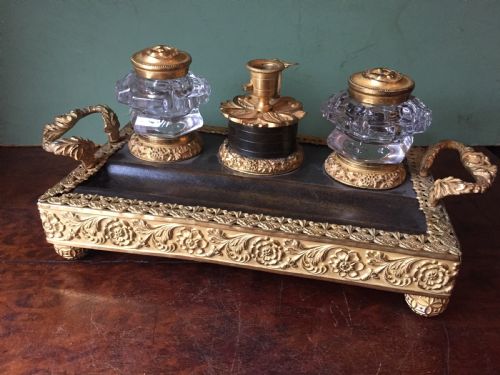
Ormolu Desk Accessory
An ormolu desk accessory brings gilt warmth and heavy stone to a writing table, combining nineteenth-century utility with classical metalwork.
Ormolu Desk Accessory
An ormolu desk accessory serves as a functional piece of nineteenth-century desk furniture, incorporating gilded bronze alongside marble, brass, and glass. These items appear most frequently as inkstands, inkwells, candlesticks, and decorative boxes originating from French and English workshops.
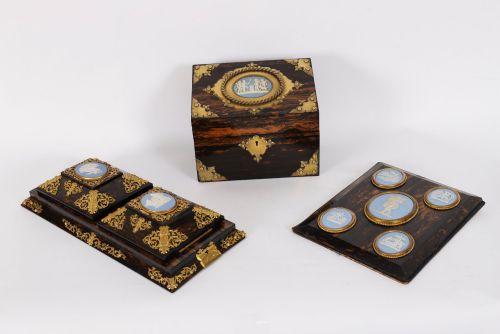
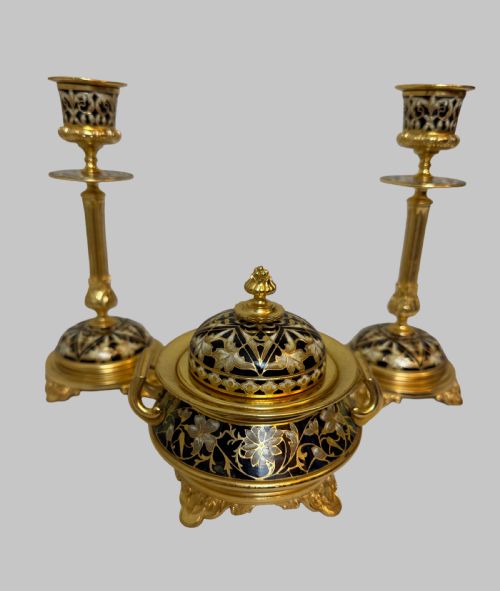
The selection on this page centres heavily on nineteenth-century French pieces, particularly those bearing the hallmarks of the French Empire, Napoleon III, and Victorian styles. Buyers encounter everything from simple marble inkwells mounted in ormolu to multi-piece desk sets featuring coromandel-wood and champleve enamel.
How they were made
Makers formed these items by casting bronze or brass before applying a mercurial gilt finish to create the distinctive ormolu surface. This metalwork was then mounted onto heavy carved stone bases, predominantly Sienna, vert, or onyx marble, and occasionally paired with mahogany or coromandel-wood.
Detailing involved manual chasing of the cast bronze alongside specialised glass blowing for inkwell inserts. Artisans combined these mixed media elements using hidden pins and screws to secure the heavy metal mounts to the stone plinths.
Ormolu Desk Accessory Retail Price Guide 2026
Typical asking prices for ormolu desk accessory among the pieces listed under this phrase on Sellingantiques today, from the lower quarter to the upper quarter. They describe what is for sale here now, not the wider market.
Desk sets occasionally incorporate playful animal subjects, including bronze cats at play and emu-shaped inkwells.
What varies in quality
Quality rests upon the crispness of the bronze chasing and the weight of the cast metal components. Finer examples display deep, deliberate chiselling in the ormolu that catches the light cleanly, whereas lesser pieces rely on softer, shallower casting.
The choice and preparation of the associated materials also set pieces apart, such as the selection of richly figured Sienna marble or exotic coromandel-wood rather than plain stone. Complete matching desk sets with original glass inserts demonstrate superior original commissioning compared to cobbled-together assemblages.
Albert Marionnet·Asprey Of London
The Ormolu Desk Accessory Glossary
- Ormolu
- Gilded bronze produced through a process of applying mercury and gold to a base metal casting. The technique creates a warm, satin-gold finish characteristic of nineteenth-century decorative metalwork.
- Encrier
- A French term for an inkstand or inkwell. These desk accessories typically incorporate one or more glass ink inserts alongside pen rests.
- Champleve
- An enamelling technique where troughs are dug into a metal surface and filled with vitreous enamel before firing. It appears on nineteenth-century bronze desk sets alongside ormolu mounts.
- Coromandel-wood
- A dense, heavy timber featuring dark brown grain with dramatic black stripes. Cabinet makers utilised it for nineteenth-century desk stands and boxes.
- Sienna marble
- A decorative yellow and ochre marble quarried in Italy. Makers mounted ormolu desk accessories onto bases cut from this distinctive stone.
Ormolu Desk Accessory: Frequently Asked Questions
What is an ormolu desk accessory used for?
These items were designed to assist with correspondence and record-keeping on nineteenth-century writing desks. They held ink, provided a firm surface for blotting, or held candles to illuminate evening writing.
Today, collectors use them to anchor traditional desk displays or as decorative objects on mantlepieces and side tables. Their heavy stone bases and gilded metal mounts retain their functional presence.
How do I care for ormolu metalwork?
Clean ormolu gently with a dry, soft microfiber cloth to remove dust from the recessed areas of the casting. Avoid harsh chemical cleaners and metal polishes that strip the historic gilt layer.
Keep these pieces away from direct moisture and humid environments to protect the underlying bronze and marble from staining or corrosion.
How do I date a French inkstand?
Examine the stylistic cues, such as neoclassical motifs pointing to the early nineteenth century or ornate floral chasing typical of the Napoleon III period. Materials like Sienna marble and coromandel-wood also help anchor the piece within the eighteen-fifties and sixties.
Look closely at the construction methods, including the style of the screws and the clarity of the bronze casting, which shift between the Empire era and the later Victorian decades.
Are inkwell inserts usually original?
Many surviving inkstands retain their original blown or cut glass inserts, which fit precisely into the ormolu collars. Finding matching glass adds significantly to the completeness of the piece.
Replacements are common due to the fragile nature of glass over more than a century of use. Collectors look for period-appropriate glass that sits flush within the bronze mount.