


Ormolu Cherub Candelabra
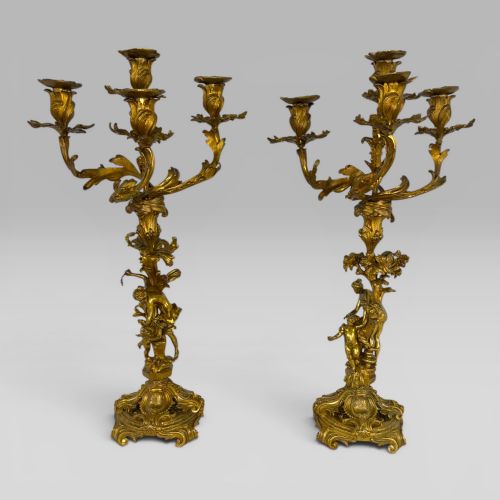
These ormolu cherub candelabra bring elaborate Continental lighting and figural bronze work to a mantelpiece or side table.

Ormolu Cherub Candelabra
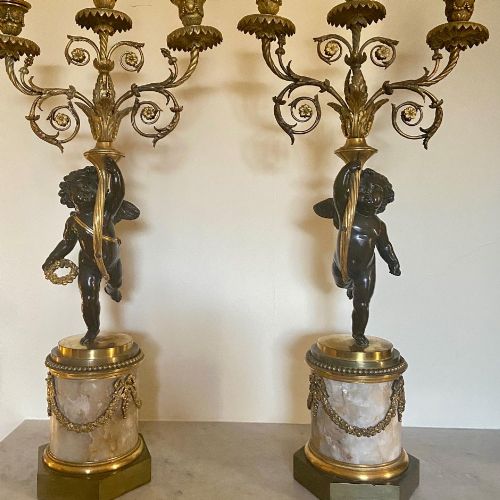
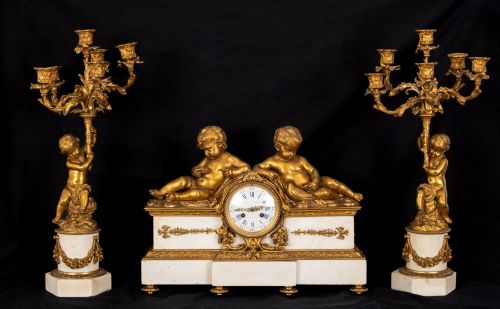
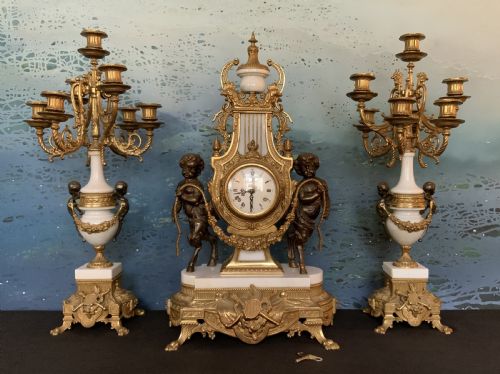
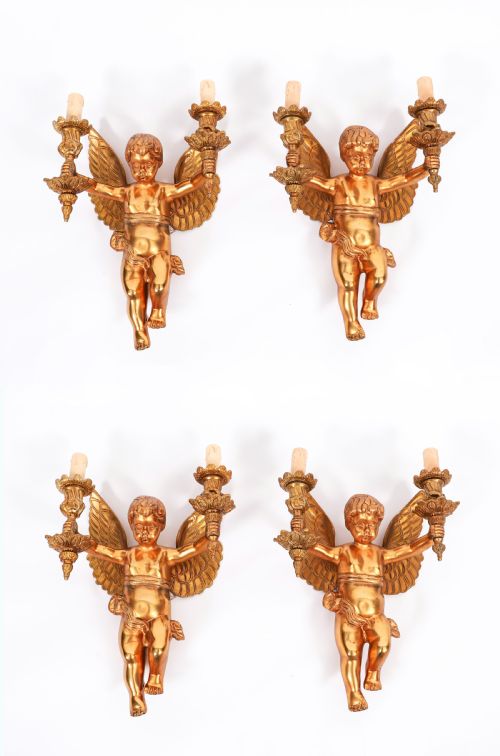
When you search for ormolu cherub candelabra, you encounter elaborate figural lighting from the nineteenth century, predominantly French in origin. These pieces combine cast metal figures of winged putti with multi-branch candle holders, often forming part of larger garniture sets that include matching clocks.
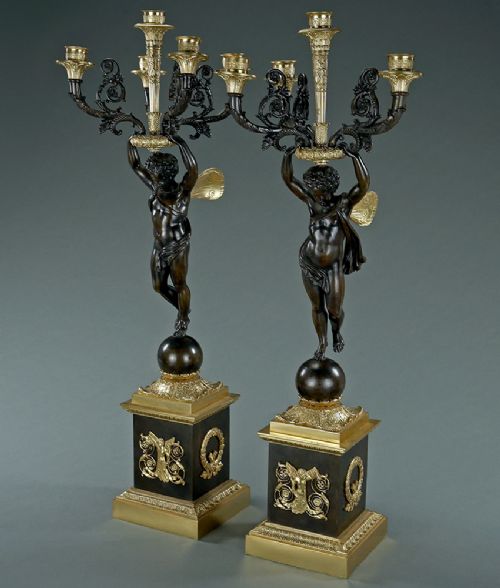
The prevailing style draws heavily on the Louis XVI and Rococo revivals, translating eighteenth-century design vocabulary into nineteenth-century domestic ornamentation. You most frequently meet matched pairs designed to sit symmetrically upon marble bases, incorporating patinated bronze alongside gilded elements.
How they were made
Maker workshops employed lost-wax and sand casting techniques to render the detailed forms of cherubs and acanthus-wrapped arms in bronze. These metal components then underwent mercury gilding or electroplating to achieve the bright ormolu surface finish characteristic of the period.
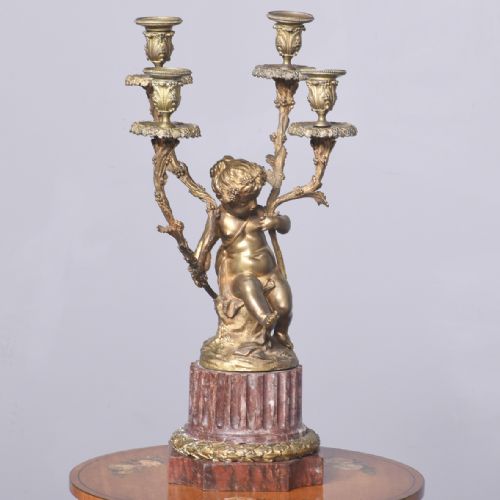
Sculptural elements combine cast gilt bronze with turned white marble, red marble, or porphyry plinths, frequently secured by internal threaded rods. Patinated bronze often provides a dark, contrasting tone for the cherub figures against the shining ormolu mountings and pale stone bases.
Listings demonstrate a strong preference for nineteenth-century French manufacturing, dominated by Louis XVI and Rococo revival styles utilising gilt bronze and marble.
What varies in quality
Material selection also dictates the hierarchy, with heavy white marble or porphyry bases and substantial bronze weight marking out the more ambitious commissions. Original gilding depth and the integrity of the structural joints further separate standard production from exceptional salon pieces.
Francois Redmond·Claude Clodion·H Luppens Paris
The Ormolu Cherub Candelabra Glossary
- Ormolu
- Finely chopped gold leaf amalgamated with mercury and applied to bronze, then heated to drive off the mercury. This technique creates a durable golden surface finish typical of luxury French decorative arts.
- Putti
- Plump, winged child figures used extensively in classical and revival sculpture. They appear frequently supporting candle arms or seated upon marble plinths.
- Garniture
- A coordinated set of ornamental objects designed for display together, usually comprising a central clock flanked by matching candelabra or vases.
- Patinated bronze
- Metal treated with chemical solutions to produce a controlled dark or greenish surface colour. This contrasts with the bright reflection of the adjacent ormolu mounts.
- Louis XVI style
- A neoclassical design movement characterised by symmetry, straight lines, and classical motifs such as urns, ribbons, and floral garlands. It experienced a major revival during the nineteenth century.
Ormolu Cherub Candelabra: Frequently Asked Questions
Are these candelabra meant for everyday use?
These decorative objects served primarily as formal reception room ornaments during the nineteenth century rather than everyday light sources. Using them with real taper candles requires care to prevent wax drippings from staining the delicate ormolu surfaces.
Many examples survive in pristine condition because owners treated them as sculptural works rather than functional hardware. If you choose to light them, use snug-fitting candles and keep them away from drafts.
What is the difference between ormolu and gilt brass?
Ormolu consists of a gold-mercury amalgam fired onto a bronze base, yielding a warm, deep lustre that resists simple tarnishing. Gilt brass or gilt metal utilises a cheaper base alloy with modern electroplating, presenting a lighter, brassy reflection.
Under close inspection, ormolu exhibits hand-chasing marks where artisans refined the metal after casting. Gilt brass often displays a uniform flatness characteristic of industrial production.
How should I clean marble and bronze?
Dust marble and bronze components gently with a soft, dry microfibre cloth to prevent accumulation in recessed crevices. Avoid commercial metal cleaners or abrasive liquids, which can strip the thin gold layer from ormolu surfaces.
Natural stone bases benefit from occasional wiping with a damp cloth followed by immediate drying. Protect the metal finish by maintaining stable room humidity away from direct heat sources.