






Original Victorian Marine Landscape
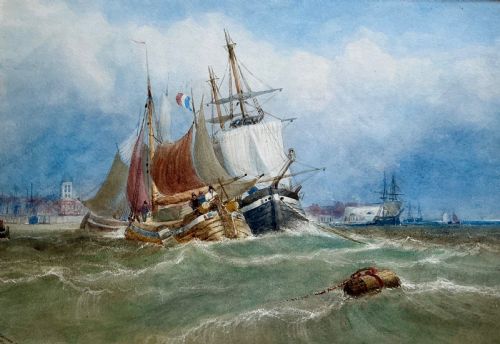
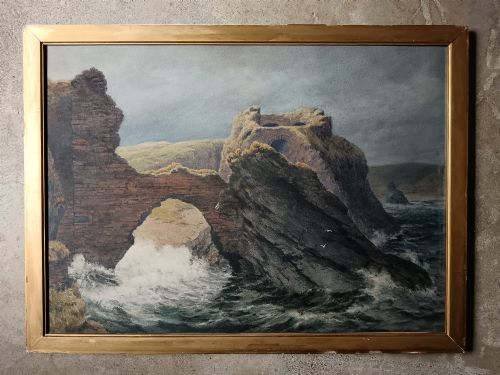
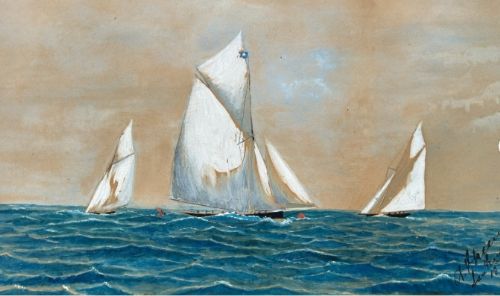
An original victorian marine landscape brings nineteenth-century coastal life, bustling harbours and dramatic seas into a room with genuine period atmosphere.
Original Victorian Marine Landscape
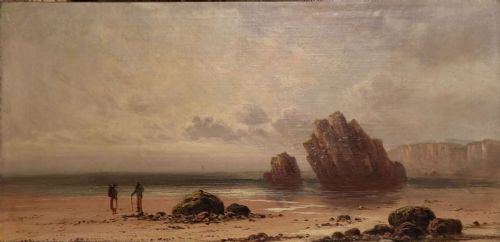
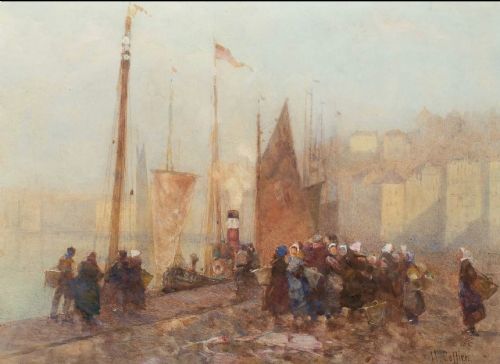
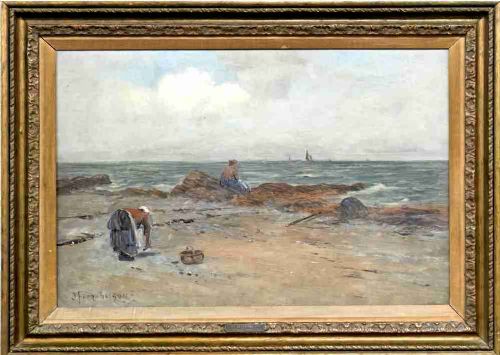
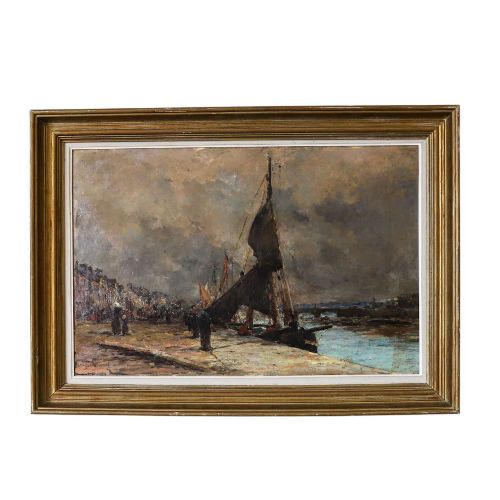
An original victorian marine landscape captures the nineteenth-century coast, from busy fishing harbours and rocky shores to quiet estuaries and open sea views. These works record maritime life across Britain and beyond during a period of immense artistic output.
The selections available range from detailed watercolours on paper to substantial oil paintings on canvas or wood panel. Many pieces depict specific locations such as Whitby, St Ives, Scarborough and Venice, often framed in period gilt wood.
How they were made
Artists utilised traditional mediums such as oil on canvas, oil on board, and watercolour pigment applied to paper. Canvas works often employ layered oils to capture the weight of water and the play of light on stormy seas.
Watercolour paintings rely on washes and fine brushwork on paper to render atmospheric skies and translucent coastal water. Many of these historical works are housed in their original gilt wood frames, sometimes featuring glass protection.
Artists frequently braved bitter North Sea gales on Yorkshire beaches just to capture the exact grey of a stormy wave.
What varies in quality
Quality rests upon the artist's ability to command atmosphere, light and movement within a marine setting. Stronger works demonstrate confident brushwork and precise topographical observation rather than formulaic composition.
The preservation of the pigment and paper or canvas also marks the grade of a piece. Original gilt frames that complement the painting add to the integrity of the surviving object.
James Orrock·William Banks Fortescue·Hector Caffieri·Joseph Farquharson·Henry Barlow Carter·John Moxon·William Frederick Settle·Alfred George Morgan·John Bedloe Goddard·Gustave De Bréanski·William Greaves·John McDougal·Frederick William Hattersley·James Thomas Watts·John Mitchell·Frederick William Booty·Charles Harmony Harrison·Kate E Booth·R P Noble·Clara Montalba·Alfred Pollentine·Alfred Henry Vickers·Thomas Rose Miles·E Tucker·Sam Bough
The Original Victorian Marine Landscape Glossary
- Seascape
- A work of art depicting the sea, coastal views, shipping or maritime activity. These scenes focus heavily on water, weather and shoreline topography.
- Watercolour
- A painting method where fine pigment is suspended in a water-soluble binder on paper. It allows for delicate washes and luminous effects.
- Gilt wood
- Wood carved and coated with a thin layer of gold leaf or metallic gilt. It was commonly used for framing nineteenth-century fine art.
- Oil on canvas
- A technique utilising pigments bound in drying oil applied to a stretched fabric support. This method permits rich texture and deep colour blending.
Original Victorian Marine Landscape: Frequently Asked Questions
What subjects appear in these marine paintings?
These works typically show coastal scenes, fishing boats, harbour entrances, stormy seas and shipping vessels. Artists recorded both British coastal towns and continental locations like Venice.
The human element frequently appears through figures landing the catch, gathering seaweed or managing sailing craft along the shore.
How should I care for a period watercolour?
Watercolours require protection from direct sunlight to prevent the pigments from fading over time. Keeping them in stable indoor humidity conditions preserves both the paper support and the pigments.
Displaying them away from damp exterior walls ensures the paper and framing materials remain in sound condition.
Are these paintings signed by the artists?
Many of the listed works feature signatures, monograms or contemporary attributions to nineteenth-century painters. These signatures help anchor the pieces to specific regional British and European schools of art.
Unsigned works nevertheless carry clear stylistic markers of the Victorian period through their handling of maritime subjects.
What framing do these antique artworks come with?
A large proportion of these paintings are preserved in their original gilt wood frames. These frames often reflect nineteenth-century framing styles with decorative mouldings and gilding.
Some watercolours also retain historic glass and backing boards that complement the age of the paper painting inside.