



Antique Sailing Ship Picture
An antique sailing ship picture brings the drama of nineteenth and early twentieth century maritime trade directly onto the wall.
Defining the antique sailing ship picture
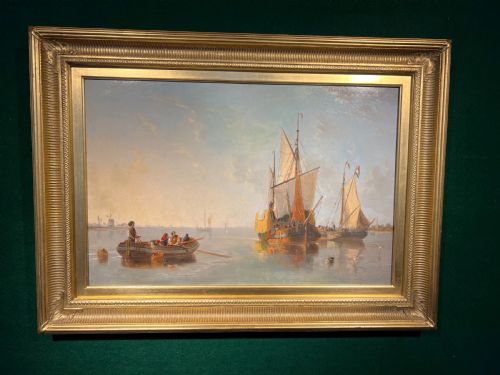
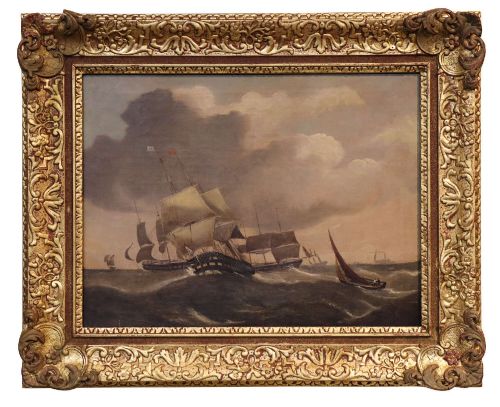
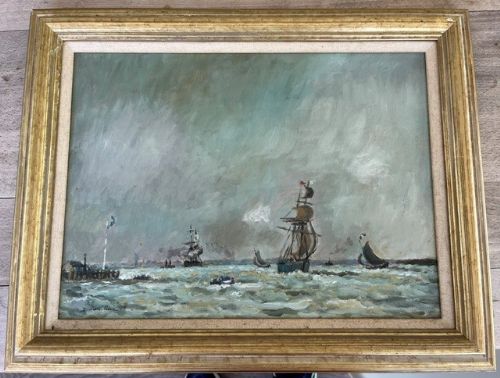
An antique sailing ship picture captures maritime scenes through traditional fine art paintings and oil paintings from periods such as eighteen sixty and the Edwardian era. These works frequently depict named vessels like the Scottish ship Mary Wylie and the Carradale barque alongside harbour views.
The objects span nineteenth century marine art, Victorian styles, and British Impressionism. Buyers will encounter both intimate framed works and substantial historical canvases that record the era of sail.
Materials and construction
These works rely on oil paint applied to stretched canvas, capturing coastal light and sea spray with rich pigment depth. The painted surfaces are housed within traditional frames fashioned from wood and finished with gold leaf or gilded wood.
Makers utilised glass to protect delicate painted surfaces from atmospheric soot and damp environments. The combination of timber framing and oil on canvas ensures physical endurance across the centuries.
Retail Price Guide 2026
Typical UK retail prices for sailing ship picture, calculated from the Sellingantiques database of over a million retail prices indexed since 2003. This retail price guide relies exclusively on Sellingantiques data; no external sources or auction records are used, so the figures do not describe the wider market.
Listings feature oil on canvas works framed in gilded wood from the Edwardian period and eighteen sixty.
Judgements of quality
Superior quality rests in the artist's handling of water, wind, and rigging detail rather than mere scale. Works attributed to known nineteenth century painters demonstrate a rigorous understanding of nautical architecture.
The integration of the gilded wood frame with the canvas dictates the overall visual harmony. Original frames carrying appropriate patination elevate the standing of the marine art.
John Wilson Carmichael·E Tucker·Henry Scott Tuke
The Antique Sailing Ship Picture Glossary
- Barque
- A sailing vessel with three or more masts having the fore and mainmasts square-rigged and the mizzenmast fore-and-aft rigged. This specific rig appears frequently in maritime paintings from the Edwardian period.
- Marine art
- Fine art depicting ships, the sea, and coastal views. This genre demands precise technical knowledge of naval architecture from the artist.
- Gilded wood
- Wood treated with a thin layer of gold leaf or gold paint. Such frames provide a traditional decorative border for nineteenth century oil paintings.
- British Impressionism
- A painting style focusing on light and loose brushwork adopted by British artists around the turn of the twentieth century. It often brings a luminous atmospheric quality to coastal scenes.
Frequently Asked Questions
What periods do these paintings come from?
The available works span the mid nineteenth century through to the Edwardian era. These pieces reflect the final decades of commercial sail.
Key dates represented include eighteen sixty and nineteen ten, capturing distinct phases of maritime painting.
How should I hang a marine oil painting?
Position the painting away from direct sunlight to protect the oil pigments and the gilded wood frame. Stable room temperatures prevent the canvas and wooden stretcher from warping.
Ensure the wall fixings match the substantial weight of timber framed oil paintings.
Are the ships in these pictures real vessels?
Many paintings record specific historical ships, such as named barques and Scottish vessels. Artists often documented active commercial ships of their time.
Inscribed titles on the canvas or frame frequently identify the exact ship and location.
What framing is typical for these works?
Original frames are typically constructed from wood and embellished with gold leaf or gilded wood. These ornate borders complement the maritime subject matter.
Glass is sometimes fitted over the painting to provide additional protection to the canvas.