
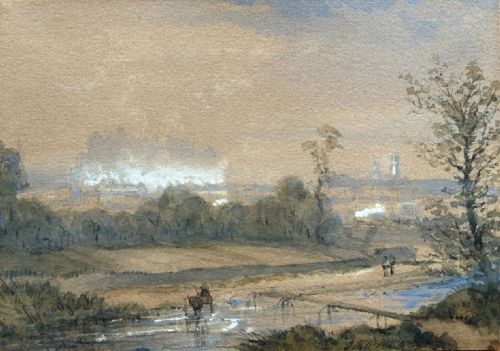

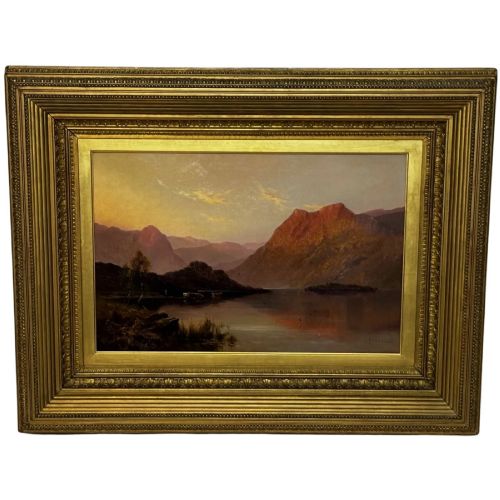
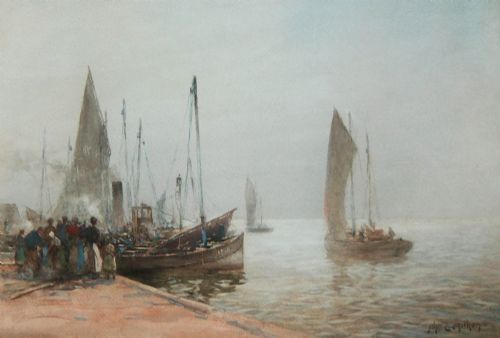
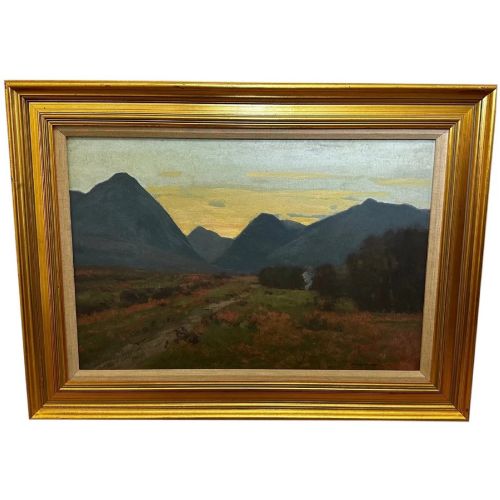
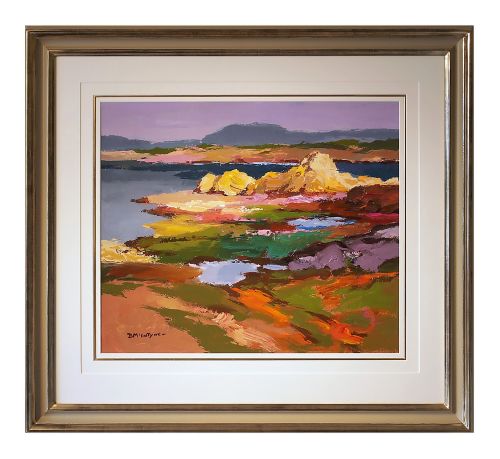
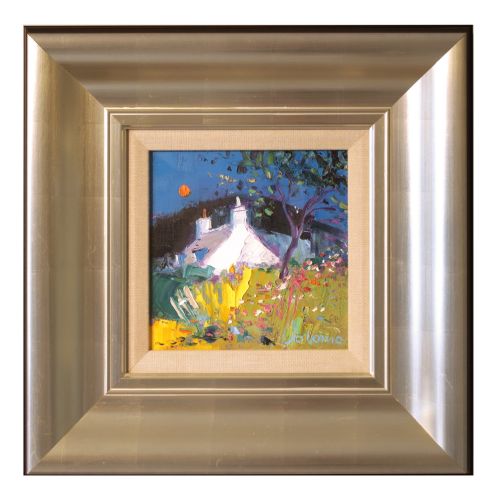
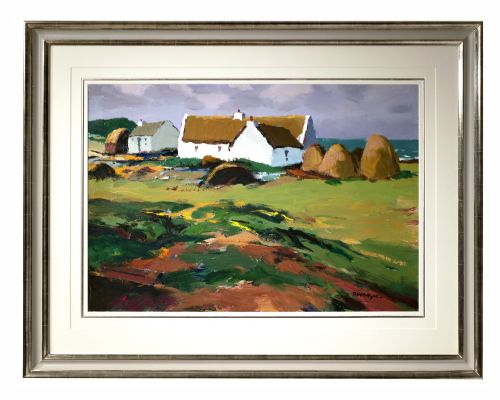
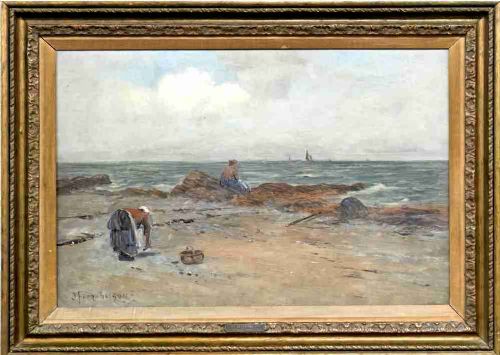
Original Scottish Landscape Painting
An original scottish landscape painting captures dramatic highland vistas, tranquil lochs, and rugged coastlines through the eyes of artists spanning the Victorian era to the mid-twentieth century.
Original Scottish Landscape Painting
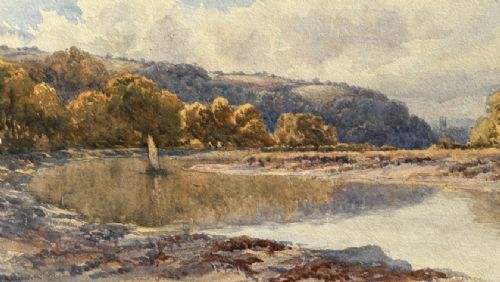
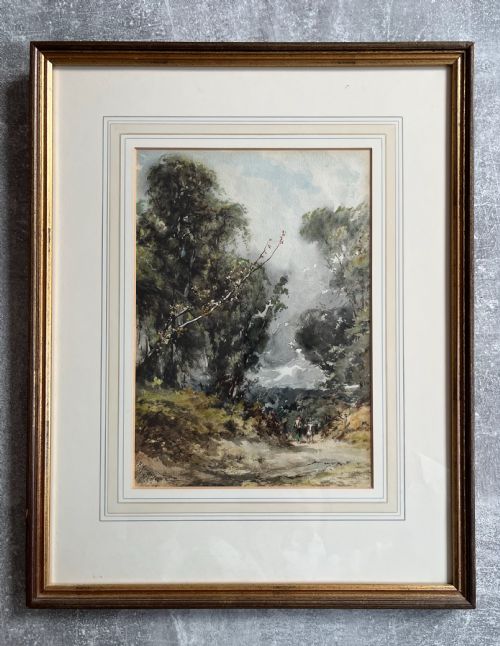
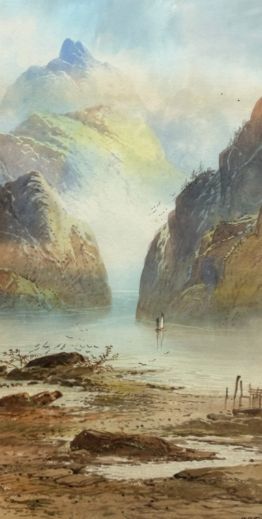
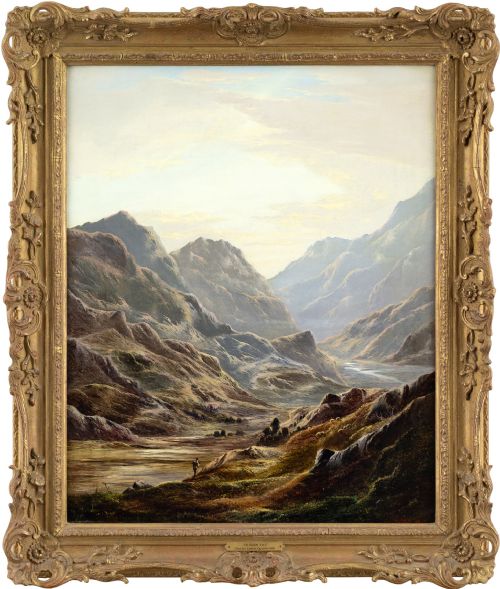
An original scottish landscape painting portrays the distinct topography of Scotland, ranging from mountain ranges and misty lochs to coastal castles and pastoral glens. These artworks span multiple generations of British art, encompassing detailed Victorian watercolours and robust Edwardian oil panels.
Buyers encountering these pieces will find both intimate works on paper and large framed canvases designed for prominent display. The historical range bridges meticulous nineteenth-century topographical views with freer, texturally rich twentieth-century board paintings.
How They Were Made
Artists painted primarily with oil or watercolour, applying pigment to prepared wood panels, stretched canvas, or heavy art paper. Oil mediums allowed for deep layering and rich impasto textures, particularly favoured in later Scottish impressionist works.
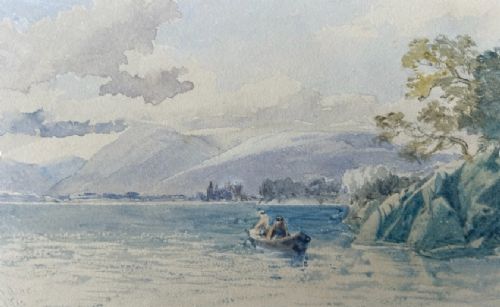
Watercolour works utilised washes on paper to capture the soft, atmospheric light characteristic of northern lochs and coastal weather. Many nineteenth-century oils were executed on sturdy wood panels or canvas laid onto board to ensure structural stability during outdoor plein air painting sessions.
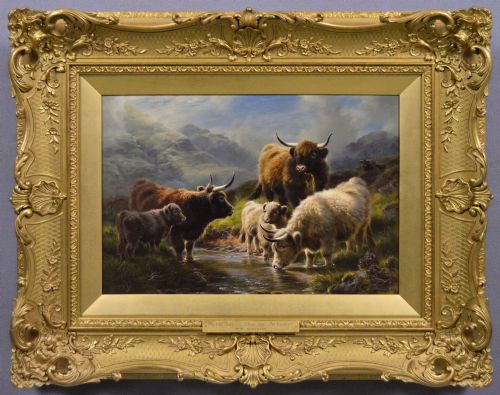
Highland cattle stare from multiple canvases across the decades, seemingly unimpressed by shifting artistic movements from realism to mid-century abstraction.
What Varies in Quality
Quality rests upon the artist's ability to command light, atmosphere, and spatial depth within the difficult terrain of the Scottish Highlands. Superior works demonstrate confident brushwork and precise atmospheric perspective, avoiding flat or formulaic representations of scenery.
Condition and presentation also influence the standing of a piece, particularly the survival of original period gilt frames and the stable adhesion of canvas to board. Masterpieces exhibit distinct character through assured handling of paint and pigment, distinguishing accomplished professional works from routine amateur studies.
George Fotherly Hargitt·Thomas Miles Richardson Jnr·William Henry Earp·John R Prentice·Tom Campbell·Alfred Fontville de Breanski Jr·James E Aitken·George Houston·Donald McIntyre·John Lowrie Morrison·Joseph Farquharson·William Watson Jnr·Charles Leslie·Alexander Jamieson·Everett Watson Mellor·John Moxon·William George Tennick·Archibald Kay·Sir David Murray·Henry Hillier Parker·William Littlejohn·Frank Hider·H Wallace·William Grant Murray·Robert Buchan Nisbet
The Original Scottish Landscape Painting Glossary
- Impasto
- Paint applied thickly to a canvas or panel, standing out in relief from the surface. This technique allows brush marks and knife strokes to catch the light, adding physical depth to skies and water.
- Plein air
- The practice of painting outdoors to capture direct natural light and atmospheric conditions. It became central to nineteenth-century landscape artists working on location in the Scottish Highlands.
- Watercolour
- A painting method in which pigment is suspended in a water-soluble binder and applied to paper. Transparent washes create luminous effects suited to misty lochs and coastal views.
- Gilt frame
- A wooden picture frame coated with gold leaf or metallic paint. Period examples often feature ornate moulded ornamentation that complements nineteenth-century oil and watercolour paintings.
- Oil on panel
- A painting executed directly onto a prepared wooden board rather than fabric canvas. This rigid support offers a smooth, stable surface favoured by artists depicting fine architectural details or distant hills.
Original Scottish Landscape Painting: Frequently Asked Questions
What subjects appear most often?
The most frequent subjects include highland cattle near loch shores, ruined castles, sweeping moorlands, and coastal fishing villages. Artists repeatedly returned to famous Scottish bodies of water such as Loch Awe, Loch Lomond, and the Trossachs.
These motifs reflected contemporary romantic interest in the untamed wilderness and agricultural heritage of rural Scotland. Painters utilised these dramatic backdrops to explore changing northern light and atmospheric weather.
How do I date a painting?
Dating relies on stylistic clues, artist signatures, framing methods, and stretcher materials. Victorian and Edwardian works often feature detailed brushwork and ornate gilt frames, while mid-century pieces display looser impasto or abstract tendencies.
Examine the reverse of the canvas or board for handwritten inscriptions, gallery labels, or artist signatures. Comparing the handling of pigment against known exhibition dates provides a reliable chronological anchor.
Are watercolours as durable as oils?
Watercolours require careful conservation behind glass to protect the paper and pigments from ultraviolet light and humidity. While oil paintings on canvas or panel tolerate environmental shifts better, both mediums survive centuries when kept away from direct sunlight.
Properly framed works on paper maintain their vibrant colour if mounted with acid-free materials. Collectors should inspect the paper for foxing or damp stains when assessing archival condition.
How do I display these paintings?
Display landscapes on interior walls away from direct sunlight, heating vents, and damp conditions to protect canvas, wood panels, and paper. Period frames require stable humidity to prevent the cracking of traditional gesso and gold leaf ornamentation.
Pairing a nineteenth-century Highland scene with traditional lighting highlights the depth of the oil glazes. Ensure the hanging hardware securely supports the weight, particularly for larger framed canvases.