



Cattle Landscape Artwork
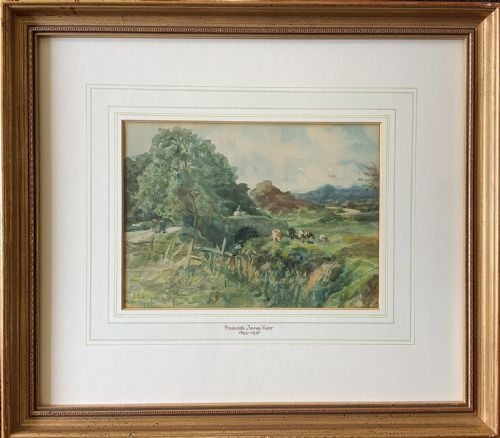
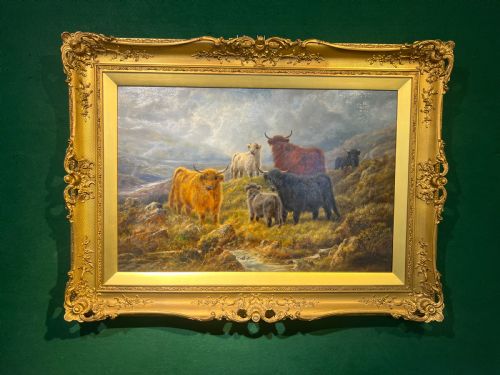
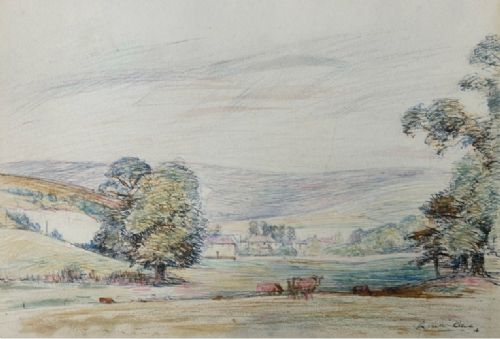
These cattle landscape artwork pieces capture rural pastoral life across Britain and Europe through oils and watercolours.
Cattle Landscape Artwork
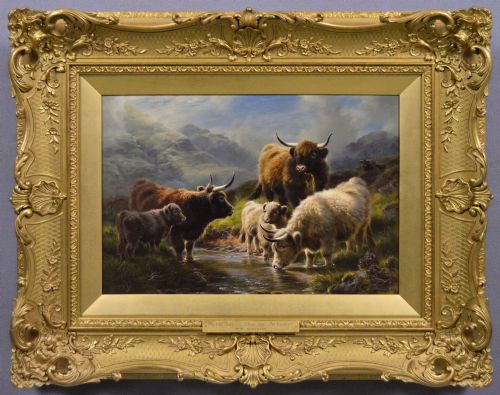
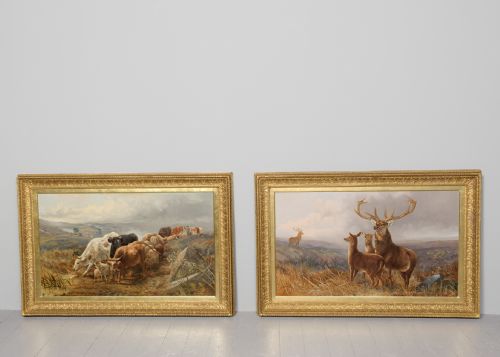
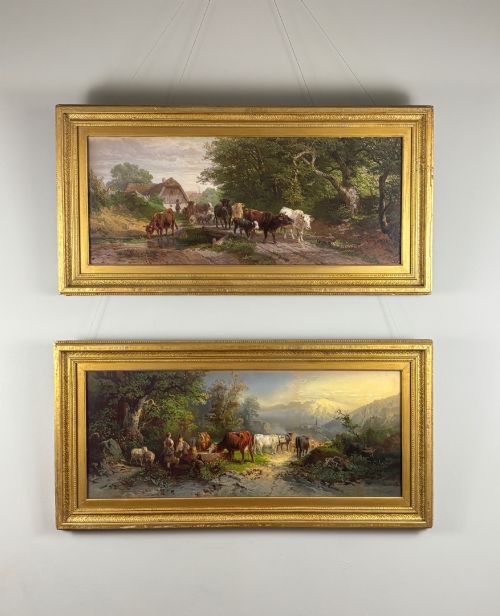
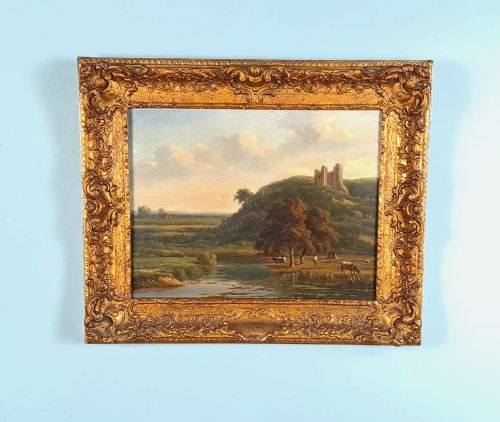
A cattle landscape artwork depicts rural scenes involving cows, bulls, and calves integrated into pastoral British, Scottish, or continental settings. These pieces primarily date from the nineteenth century through the early twentieth century, spanning Victorian, Edwardian, and early modern periods.
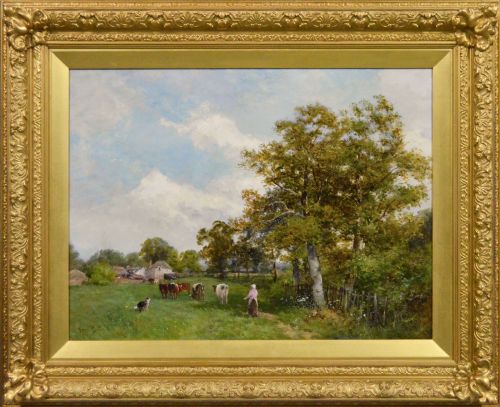
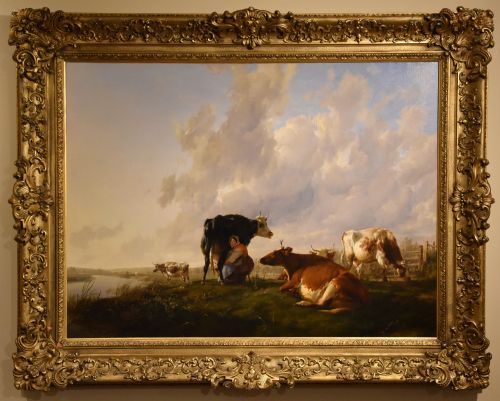
Buyers encounter oil paintings on canvas or board alongside watercolours on paper, often framed in period wood, gesso, and giltwood. The subjects range from Highland cattle beside lochs to milkmaids, ploughing teams, and cattle resting in woodland or riverside pastures.
How They Were Made
Artists painted primarily with oil paint on stretched canvas or wooden panels, or applied watercolour pigments onto paper. Canvases received preparatory grounds before brushwork built up the pastoral scenery and animal anatomy.
Frames combined carved or moulded wood with applied gesso layers, frequently finished in gilt to complement the interior display of the artwork.
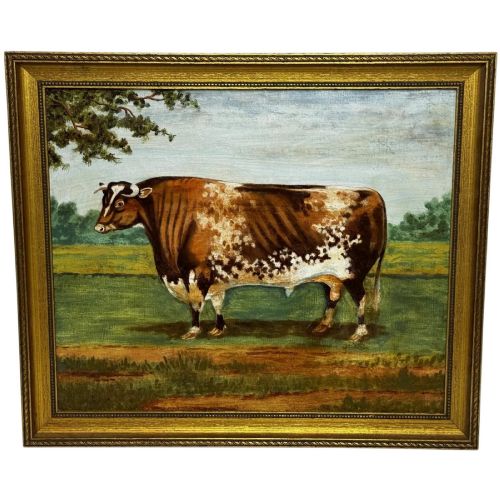
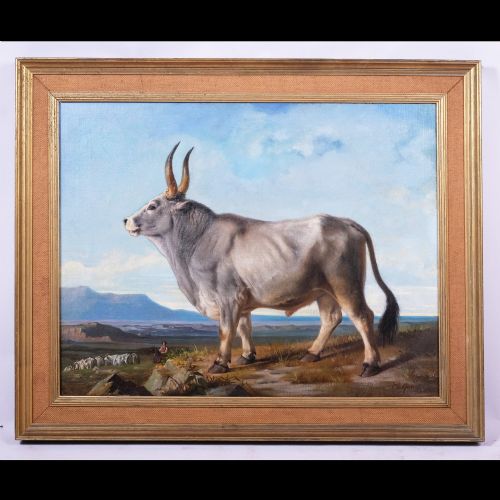
Several canvases record specific prize-winning bulls with distinct facial expressions and impressively groomed horns.
What Varies in Quality
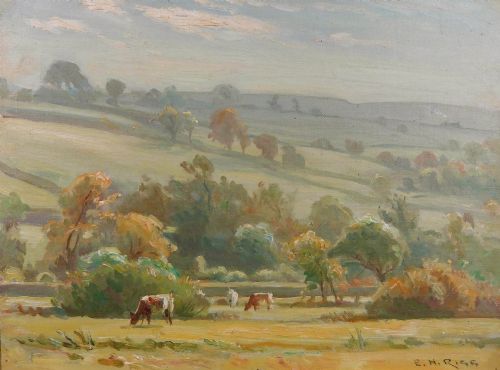
Quality rests in the anatomical accuracy of the cattle and the atmospheric depth of the surrounding landscape. Skilled painters capture light on hides and texture in pasture rather than relying on formulaic repetition.
The preservation of the original painted surface, alongside the integrity of period frames utilising matching wood and gesso, distinguishes finer examples from heavily restored or later re-framed items.
William H Myers·David Bates·Thomas Sidney Cooper·Ernest Higgins Rigg·Frederick James Kerr·Robert Watson·Russell Sidney Reeves·William Watson Jnr·Robert Cleminson·Johann Friedrich Voltz·T C Hofland·A M Gauci·Oswald Garside·Henry Robinson Hall·Henry Hillier Parker·Frederick Septimus Lewis·Ernest Pile Bucknall·Samuel Joseph Clark·Thomas Hunn·George Vicat Cole·Andre de Moller·Sidney Richard Percy·Frederick James Knowles·Robert Thorne Waite·Heinrich Harder
The Cattle Landscape Artwork Glossary
- Oil on Canvas
- Pigment suspended in drying oil applied to a woven fabric support. This medium allowed artists to build rich textures and deep tones for pastoral scenes.
- Watercolour
- Paint consisting of transparent pigment suspended in a water-based solution applied to paper. It created luminous washes suited to delicate atmospheric effects in rural views.
- Giltwood
- Wood carved and coated with gold leaf or gold paint, typically seen on nineteenth-century frames. It provided an ornamental border that enhanced the artwork within.
- Gesso
- A paint mixture consisting of a neutral binder mixed with chalk, gypsum, or pigment used on frames. It created a smooth surface for subsequent gilding.
- Victorian Pastoral
- A nineteenth-century artistic style focusing on idealized rural life, agricultural work, and farm animals. These works reflected contemporary romanticism about the countryside.
Cattle Landscape Artwork: Frequently Asked Questions
What periods do these cattle artworks come from?
The available pieces predominantly date from the nineteenth century and the early decades of the twentieth century. This encompasses Victorian and Edwardian eras.
Artists working during these periods documented rural life, agricultural labour, and pastoral scenery across Britain and continental Europe.
How were these landscape paintings displayed originally?
These works were framed in custom wooden surrounds, often finished with gesso and giltwood to complement Victorian and Edwardian domestic interiors.
The original frames provide context for how these pieces were intended to be showcased on drawing room and parlour walls.
How do I distinguish oil paintings from watercolours?
Oil paintings utilise pigment bound in drying oil applied to canvas or wood panels, presenting a heavier texture and opaque finish. Watercolours use water-soluble pigments on paper under glass, offering a translucent quality.
Examining the surface under magnification reveals the weave of the canvas versus the absorbent texture of paper.
What subjects besides cattle appear in these scenes?
Alongside herds of cattle, Highland beasts, and pried shorthorn bulls, the compositions often incorporate milkmaids, shepherds, ploughing horses, and farmyard workers.
Natural elements like rivers, lochs, woodlands, and mountain ranges frequently frame the animals to establish a complete rural atmosphere.