




Traditional Pastoral Landscape
Traditional pastoral landscape paintings capture rural life with cattle, sheep and figures, offering a connection to the historic British and European countryside.
Traditional Pastoral Landscape
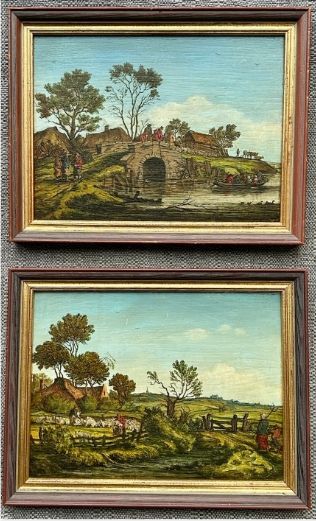
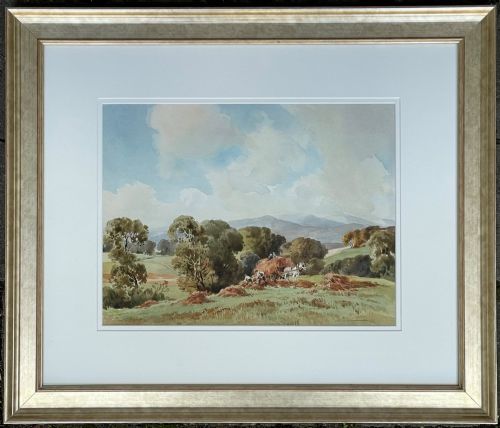
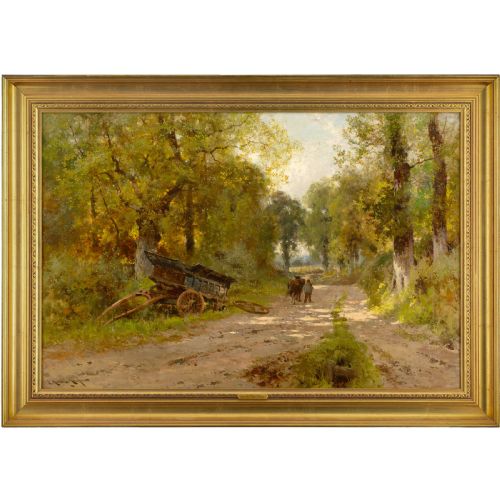
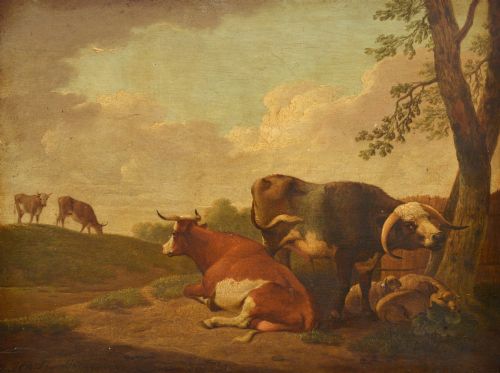
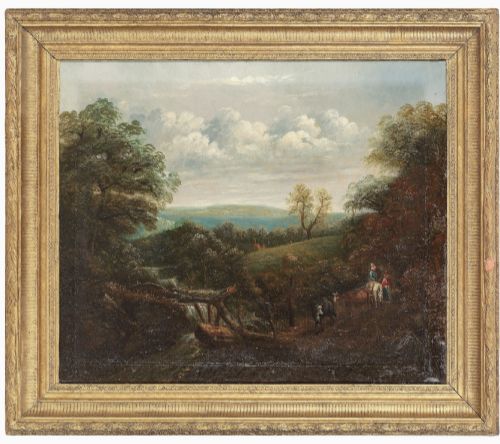
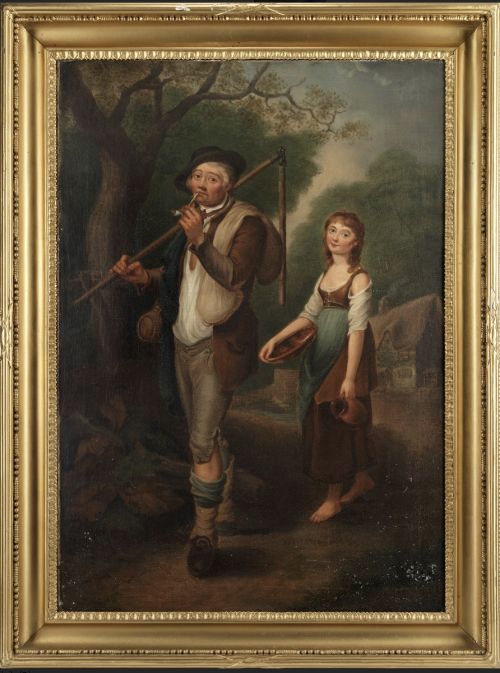
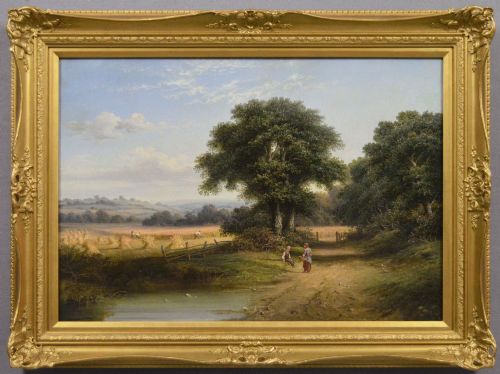
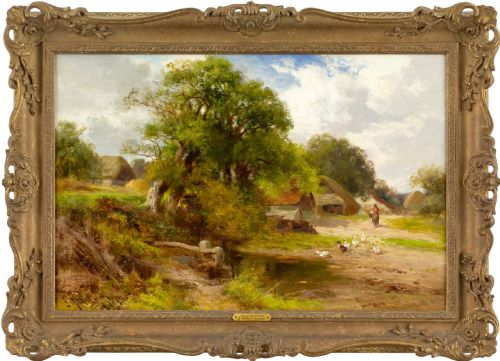
Traditional pastoral landscape works present idealised rural scenes populated by farm animals, river banks, figures harvesting and woodland paths. The core of this selection spans the eighteenth century through to the early twentieth century, taking in Victorian and Edwardian interpretations.
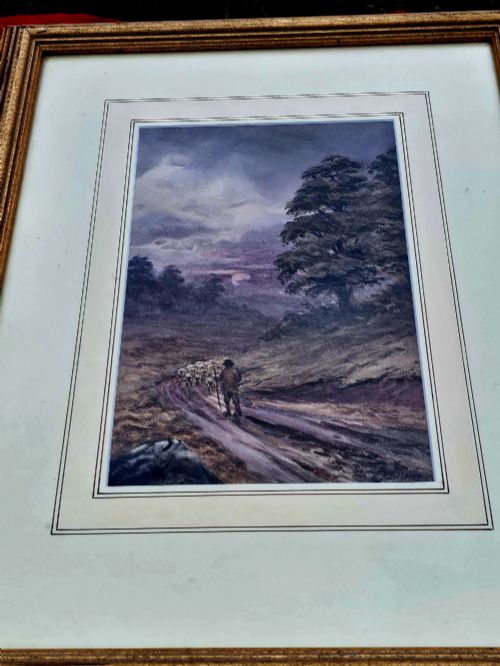
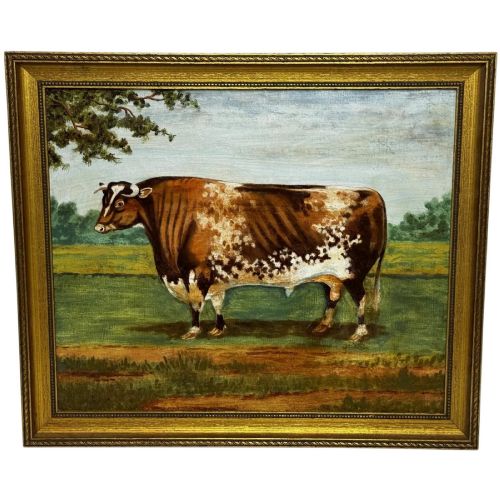
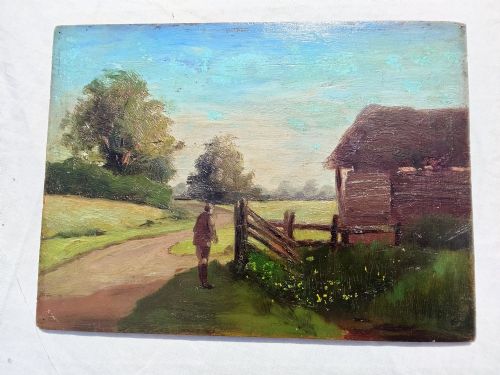
Most pieces encountered on this page are oil paintings on canvas or wood panel, alongside watercolours on paper. Subjects frequently feature herdsmen, cattle by rivers, and sheep grazing under calm skies in British, Scottish and continental settings.
Materials and techniques
Makers utilised oil paint applied to canvas or prepared wooden boards, building depth through layered glazes and detailed brushwork. Watercolours on paper capture lighter atmospheric effects with transparent washes.
Framing often involves giltwood and gesso mouldings that complement the period aesthetic of the artworks.
Listings feature works created across the eighteenth, nineteenth and early twentieth centuries, using oil on canvas, wood panels and paper watercolours.
Factors determining quality
The division between average and superior works rests on the confidence of the brushwork and the naturalism of the figures and animals. Finer examples display meticulous attention to light, shadow and atmospheric perspective.
Condition of the canvas, stability of the wood panel and originality of the surface pigment further distinguish finer pieces from standard decorative works.
William H Myers·Tom Campbell·W Klombeck·Percy Lancaster·John Horace Hooper·William Joseph Shayer Senior·Hendrik Willem Schweickhardt·EJ Letheren·Thomas Barker of Bath·David Bates·Walter Heath Williams·Thomas Sidney Cooper·George Oyston·Robert Watson·Albert Rieger·Russell Sidney Reeves·William Watson Jnr·Johann Friedrich Voltz·T C Hofland·Henry H Parker·Miles Birkett Foster·Henry Schouten·George Morland·Charles Edward Wilson·A M Gauci
The Traditional Pastoral Landscape Glossary
- Oil on Canvas
- A painting medium where pigments suspended in drying oil are applied to stretched fabric. This technique allows for rich colour blending and textured brushwork.
- Wood Panel
- A rigid support base made from timber used by artists before canvas became standard. Panels provide a smooth surface for minute detail.
- Giltwood
- Timber carved and coated with gold leaf or gold-coloured metallic finish. It frames many traditional paintings from the eighteenth and nineteenth centuries.
- Watercolour
- A painting method where water-soluble pigments are applied to paper. It produces translucent washes suited to capturing shifting weather.
- Gesso
- A plaster-like mixture applied to wood panels or picture frames to prepare a smooth surface for gilding and paint.
Traditional Pastoral Landscape: Frequently Asked Questions
What subjects define a traditional pastoral landscape?
These works typically depict rural idylls, including cattle, sheep flocks, rivers, harvest fields and figures engaged in country labour. The scenes evoke a peaceful connection to agrarian life.
Artists drew inspiration from British, Scottish, Dutch and Italian countryside settings, focusing on animals and agriculture.
How can I date an antique oil painting?
Dating relies on examining the stretcher frames, canvas type, pigment composition and style of dress worn by any figures in the composition. Nineteenth-century works often show distinct Victorian framing and canvas stamps.
Comparing signatures and known artist biographical dates found in the titles provides further chronological accuracy.
Where should I hang these paintings at home?
Traditional pastoral landscape pieces suit living rooms, studies and hallways where lighting can highlight the giltwood frames and oil textures. Keep them away from direct sunlight and damp walls to protect the canvas.
Pairing watercolours behind glass with subdued ambient lighting preserves the paper from fading over time.
What is the difference between oil and watercolour versions?
Oil paintings utilise thick pigments on canvas or wood, offering rich textures and deep colour saturation that endure well. Watercolour works utilise transparent washes on paper, creating lighter, more luminous atmospheric effects.
Oils generally required heavier giltwood and gesso frames, whereas watercolours traditionally sat behind protective glass.