



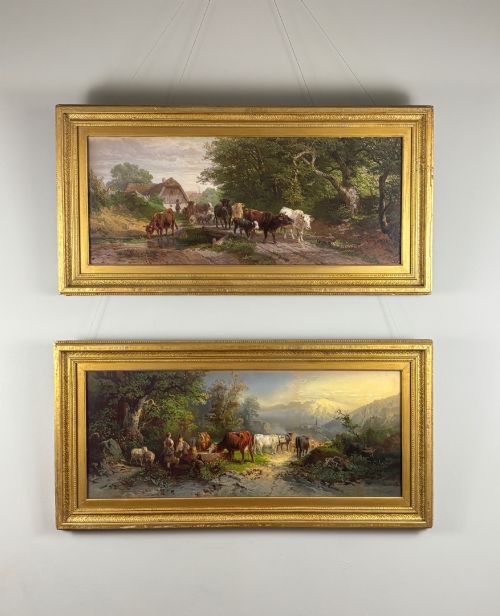
Original Nineteenth Century Painting
When you search for original nineteenth century painting, you find works on canvas and paper spanning landscape, portrait and marine subjects.
Original Nineteenth Century Painting
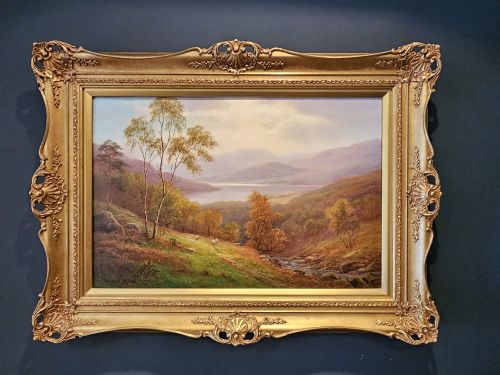
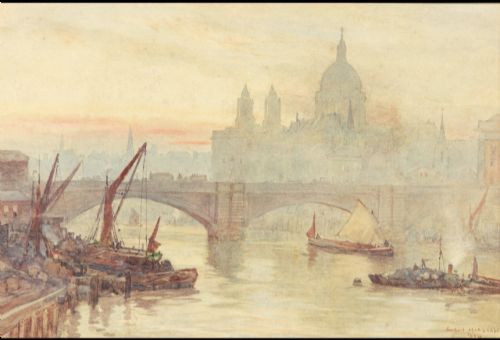
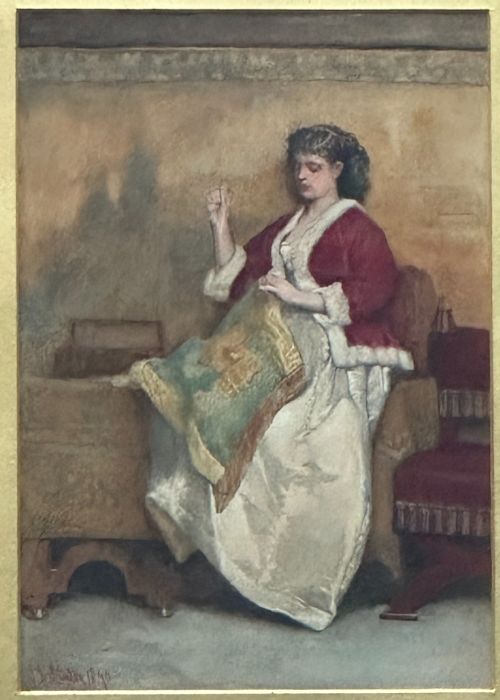
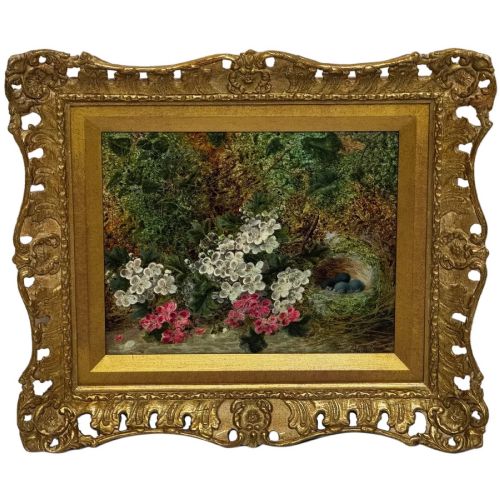
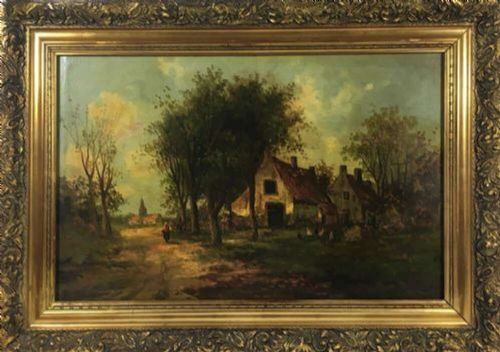
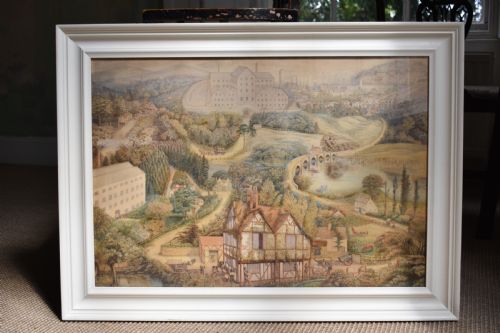
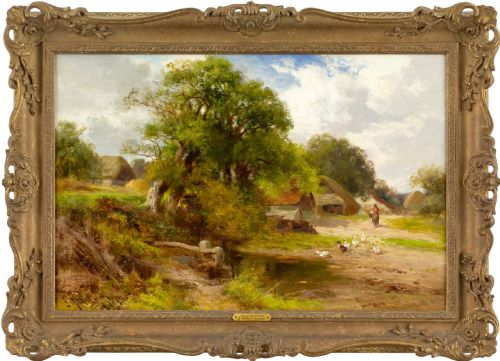
An original nineteenth century painting brings the visual culture of the Victorian and Edwardian eras directly into a room, capturing landscapes, townscapes and portraits in pigment. The examples found here range from detailed British country scenes to continental coastal views and forest interiors.
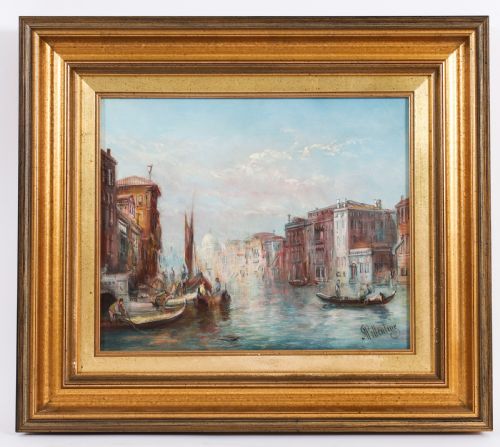
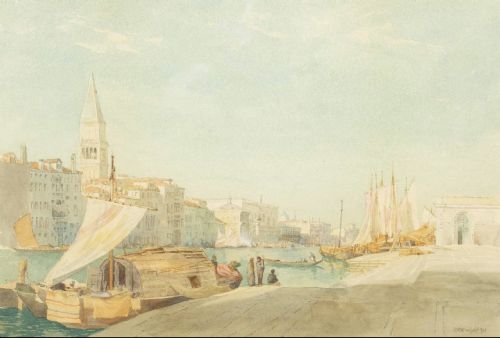
The version most likely to be met on this page is a framed oil on canvas or a watercolour on paper, often signed by the artist and dated between the early decades of the eighteen hundreds and the early nineteen hundreds. These works frequently depict pastoral life, Venetian canals or maritime subjects with descriptive precision.
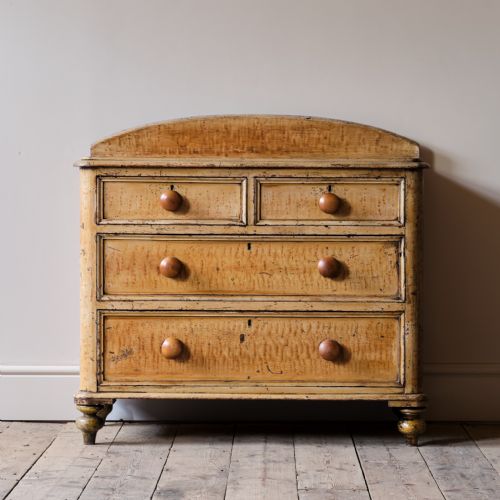
Beyond standard framed pictures, the wider material record includes related furnishings and household items in original paint finishes, though the core of the selection remains framed fine art. Buyers select these works for their period authenticity and the direct hand of the painter.
Materials and Techniques
Painters of this era predominantly utilised oil on canvas, oil on panel, or watercolour on paper, supported by wooden stretchers and housed within gilt wood or simple moulded frames. Pigments were mixed with binding oils or water-based binders, sometimes finished with protective varnish layers that have aged to warm tones.
Paper works on this page frequently incorporate pen, ink, wash or gouache alongside watercolour, creating tonal depth within landscapes and botanical studies. Canvas works rely on layered brushwork, ranging from smooth neoclassical application to visible impasto associated with the Barbizon School and impressionist tendencies.
Listings feature works created across the nineteenth century, utilising oil on canvas, watercolour, and gilt wood framing.
Differentiating Quality
Quality in these works rests upon the surety of the draughtsmanship, the sensitivity of the colour palette and the descriptive strength of the composition. A superior hand achieves atmospheric depth and convincing light through controlled brushwork rather than mechanical repetition.
The integrity of the original surface condition also defines the upper tier, favouring works retaining their primary varnishes and contemporary framing without heavy intervention. The distinction lies in how completely the artist conveys the texture of foliage, water or stone.
Sir James Dromgole Linton·William Howard Hardy·Oliver Clare·Alfred Pollentine·John Horace Hooper·Edgar Hunt·Paul Désiré Trouillebert·Johann Friedrich Voltz·Bernard Benedict Hemy·Cornelius Pearson·Jean-Baptiste Olive·Henry Hillier Parker·Robert John Hammond·Charles Malfroy·Thomas Bush Hardy·Robert Winchester Fraser·Harry Bright·Walter Follen Bishop·Frederick William Hattersley·Arthur Winter Shaw
The Original Nineteenth Century Painting Glossary
- Oil on Canvas
- A painting medium where pigments suspended in drying oils are applied to a stretched woven fabric support. This combination allows for rich blending and textured impasto.
- Watercolour
- A painting method in which natural or synthetic pigments are suspended in a water-based solution and applied to paper. It relies on the white of the paper to provide luminosity through translucent washes.
- Gilt Wood
- Carved timber surfaced with thin gold leaf or metal leaf, commonly used for traditional picture frames of the period. The technique adds reflective brilliance around the edge of the artwork.
- Barbizon School
- A nineteenth century movement of French landscape painters who worked directly from nature, focusing on realism and atmospheric effects. Their approach influenced subsequent impressionist developments.
- Chiaroscuro
- An artistic technique employing strong contrasts between light and dark to give a three-dimensional volume to figures and objects. It creates dramatic tension within genre scenes and portraits.
Original Nineteenth Century Painting: Frequently Asked Questions
How do I care for an antique watercolour?
Watercolour pigments on paper are sensitive to ultraviolet light and damp conditions. Keep them out of direct sunlight and hang them away from exterior walls to prevent fading and foxing.
Ensure framing is professionally sealed with acid-free backing boards and UV-filtering glass where possible. Environmental stability preserves both the paper support and the delicate washes.
Are these paintings supplied in original frames?
Many pieces retain their period frames, which often show minor knocks and patination appropriate to their age. Original gilt wood or timber frames complement the aesthetic of the artwork.
When a frame is contemporary to the painting, it forms part of the historic item. Collectors value this integrity even when the moulding exhibits signs of age.
What subjects are most common?
British and European landscapes, marine scenes, and rural farmyard views dominate the selection from this era. Artists frequently recorded local rivers, coastal shipping and domestic animals.
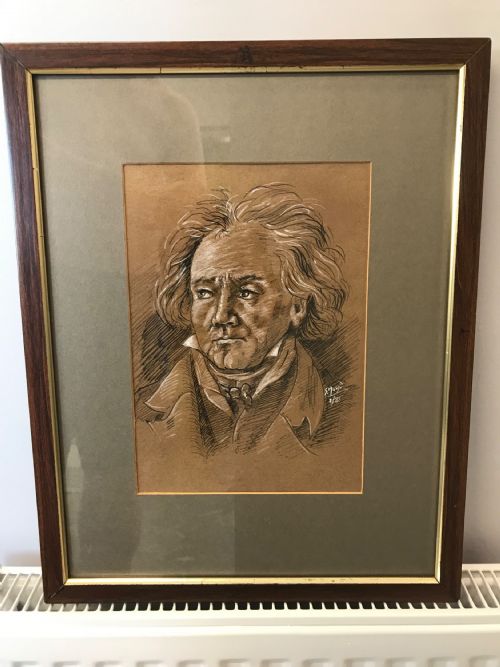
Portrait studies and botanical watercolours also appear regularly, reflecting the Victorian appetite for natural history and personal likeness. Each subject offers insight into nineteenth century visual interests.
How can I tell an oil painting from a watercolour?
Oil paintings feature a textured surface with perceptible brushstrokes and are typically executed on woven canvas or wooden panels. They reflect light differently due to the oil binder.