



Tonalist Landscape Painting
These tonalist landscape painting examples capture the quiet mood and subdued palettes that collectors seek for contemplative interiors.
Tonalist Landscape Painting
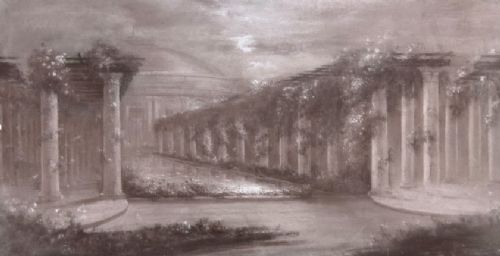
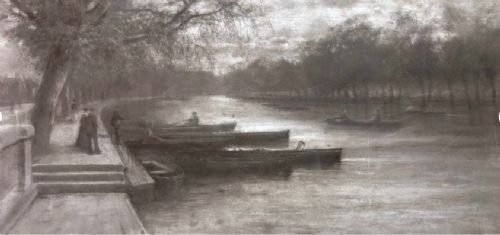
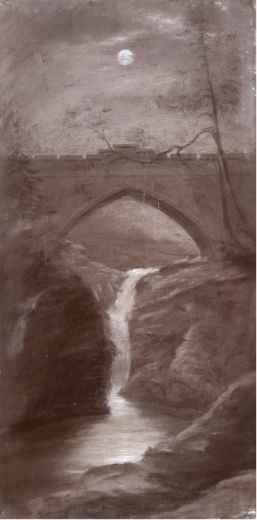
A tonalist landscape painting captures twilight, mist and low light with a unified palette, relying on atmosphere over sharp detail. You will most frequently meet works from the late nineteenth century and the early twentieth century on this page.
The subjects range from nocturnal rivers and moody Scottish landscapes to quiet winter gardens and urban embankments. Works span several mediums, including oil on canvas, charcoal on paper, and watercolour.
Influences from the Victorian nocturne and Edwardian tonalism appear across the selection, often reflecting the atmospheric approaches associated with Whistler and Grimshaw. These pieces offer a subdued visual calm suited to traditional and modern spaces alike.
Materials and technique
Artists built these compositions primarily using oil paint on canvas or panel, layering pigments to achieve deep shadow and soft illumination. Charcoal on paper also appears, fixed to canvas stretchers to create grainy, dusk-lit textures.
The technique relies on muted colour harmonies rather than high contrast, subordinating individual details to the overall mood of light. Frame gilding often complements the warm, subdued hues of the canvas.
At least one winter garden in Weston-Super-Mare managed to look remarkably moody through charcoal.
What separates the finest examples
Quality rests in the subtlety of the colour transitions and the cohesion of the light source across the composition. Stronger works manage to evoke a specific time of day or atmospheric condition with immense economy of palette.
The handling of the medium, whether the buttery application of oil paint or the deft smudge of charcoal, dictates the depth of the finished piece. Greater works maintain tension between shadow and illumination without relying on harsh lines.
William Grant Murray·Augustus William Ennes·W.E.Atkinson·Joseph Vickers de Ville·Matthew Hale·Robert Buchan Nisbet
The Tonalist Landscape Painting Glossary
- Tonalism
- An artistic style focusing on shadow, atmosphere, and muted colour harmonies rather than strict topographical accuracy. It emerged in the late nineteenth century.
- Nocturne
- A painting depicting a night scene or evening twilight. This style emphasises deep blues, greys, and browns.
- Canvas stretcher
- The wooden framework upon which canvas is stretched tight before painting. Older pieces often show period stretchers.
- Gilt
- A gold leaf or gold-coloured application used on frames to enhance the presentation of the artwork. It reflects low candlelight effectively.
Tonalist Landscape Painting: Frequently Asked Questions
What defines a tonalist landscape painting?
These works focus on atmospheric moods, utilising dark, muted palettes to depict twilight, fog, and night. The emphasis rests on shadow and unified colour rather than crisp botanical or architectural details.
Such pieces invite contemplation, relying on a poetic interpretation of nature rather than a topographical record.
How do I care for antique oil paintings?
Keep them away from direct sunlight and sudden shifts in temperature to protect the canvas and paint layers. Dust gently with a soft, dry brush without applying pressure.
Avoid hanging works in damp environments like unventilated kitchens or bathrooms to prevent mould and canvas slackening.
How can I tell the period of a painting?
Examine the materials, stretcher construction, and framing techniques alongside any visible signatures or paper labels on the reverse. Victorian and Edwardian works often utilise specific canvas preparations and framing styles unique to their decade.
Stylistic cues, such as Edwardian tonalism or Victorian nocturne influences, also help narrow down the creation date.
Where should I hang these artworks?
Their subdued palettes and quiet moods suit spaces dedicated to rest, such as studies, drawing rooms, or bedrooms. Pairing them with low, warm ambient lighting enhances the atmospheric depths of the dark pigments.
Avoid overly bright spotlighting, which can wash out the subtle tonal gradations intended by the artist.