




Dusk Landscape Painting
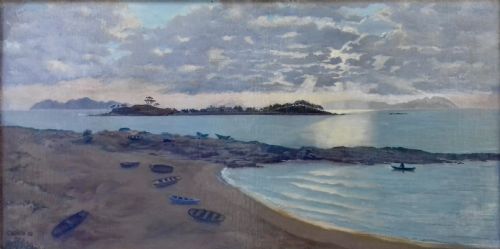
These dusk landscape painting works capture the quiet stillness of evening through delicate handling of fading light.
Dusk Landscape Painting
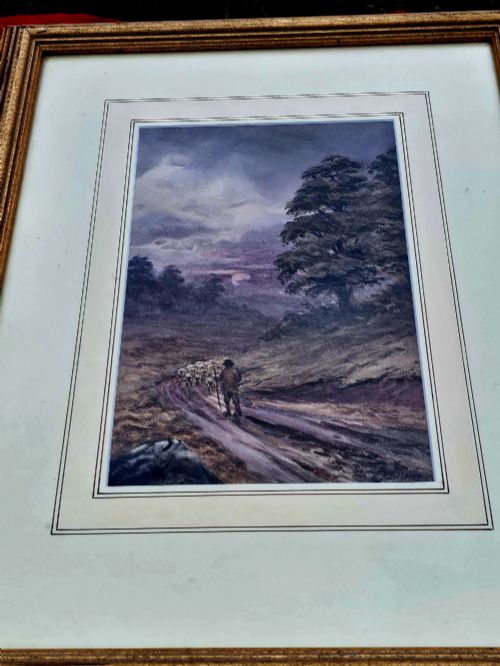
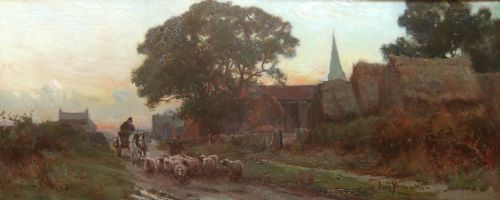
A dusk landscape painting captures the transitional hour between day and night, focusing on the fading light across pastoral, maritime, or village settings. These works frequently explore themes of evening labour, such as herding sheep, harvesting, or children returning home.
The pieces available span from the Victorian era into the mid-twentieth century, with a strong representation of British Impressionism and regional realism. Common forms include watercolours on paper, pastels, and oil paintings executed on canvas or board.
Makers and artists working in this genre often titled their pieces with evocative terms like eventide, twilight, or close of day to signal the specific atmospheric quality of the scene. Buyers will encounter both intimate watercolour sketches and larger oil canvases framed for display.
Materials and Technique
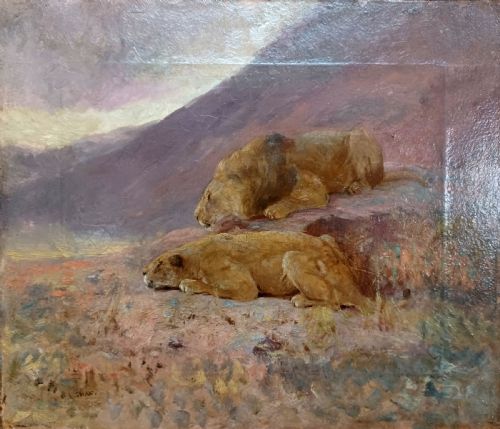
Artists relied primarily on oil on canvas or board, alongside delicate watercolours on paper and pastel drawings, to render the soft illumination of evening. Oil paints allowed for rich layering to build deep twilight skies and shadowed foregrounds, while watercolours captured the translucent quality of fading daylight.
Support materials range from traditional stretched canvas and wooden panels to heavy paper sheets suited for wash techniques. Many surviving examples retain their period frames of wood and glass that protect the fragile paper or canvas surfaces.
Listings feature works executed in oil, watercolour, pastel, and glass across various periods from Victorian times to the mid-twentieth century.
Judging Quality and Execution
The distinction between standard works and exceptional examples lies in the artist's ability to manipulate light and shadow to convey atmosphere rather than mere topographical detail. Superior pieces demonstrate confident brushwork and a subtle understanding of the chromatic shifts occurring as day turns to night.
Compositional balance and the preservation of the original medium also determine the standing of a piece. Works that retain their luminous pigments without excessive fading or discolouration offer a more direct connection to the artist's initial vision of the evening scene.
William Greaves·Owen Bowen·W. Tatton Winter·Frederick William Jackson·William Manners
The Dusk Landscape Painting Glossary
- Eventide
- An archaic or poetic term for evening or dusk, frequently used by artists in their titles to denote the fading light of the day.
- Watercolour
- A painting method in which the paints are made of pigments suspended in a water-based solution, known for its translucent washes.
- Pastel
- A dry painting medium in the form of a stick, consisting of powdered pigment and a binder, used to achieve soft and velvety tonal gradations.
- Impressionism
- A nineteenth-century art movement characterised by relatively small, thin, yet visible brush strokes and an emphasis on accurate depiction of light.
Dusk Landscape Painting: Frequently Asked Questions
What periods do these paintings come from?
The selection spans from the nineteenth century through the Victorian and Edwardian eras, extending into the mid-twentieth century. Most examples cluster around the late nineteenth and early twentieth centuries.
Artists during these periods frequently turned to pastoral and maritime subjects to explore natural light during twilight hours.
How should I display a watercolour dusk painting?
Watercolour works on paper require careful placement away from direct sunlight to prevent the pigments from fading over time. Framing with conservation glass helps protect the delicate paper and medium.
Keeping the piece in a stable environment with moderate humidity prevents warping of the paper support and damage to the frame.
What subjects appear most often in these scenes?
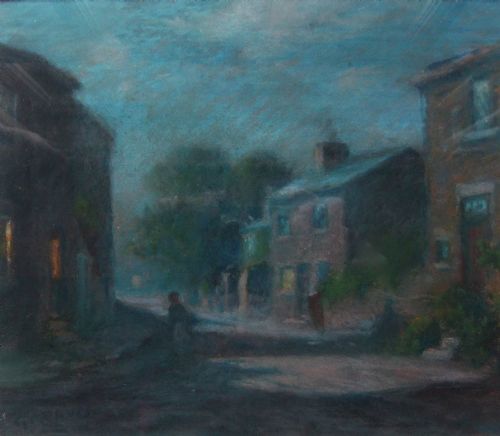
Common subjects include rural workers returning from the fields, sheep being herded to market, and quiet village streets at the close of day. Marine settings featuring coastal views, ships, and evening clouds over water also appear frequently.
These motifs emphasise the peaceful cessation of daily labour as night approaches.
How do oil paintings differ from watercolours here?
Oil paintings utilise pigments suspended in drying oils, allowing artists to build thick, textured layers that capture the deep shadows of dusk. Watercolours rely on thin washes of pigment on paper to achieve luminous, delicate effects of fading light.
Both mediums serve to interpret the same transitional hour through very different optical properties.