
Victorian Country Oil Painting
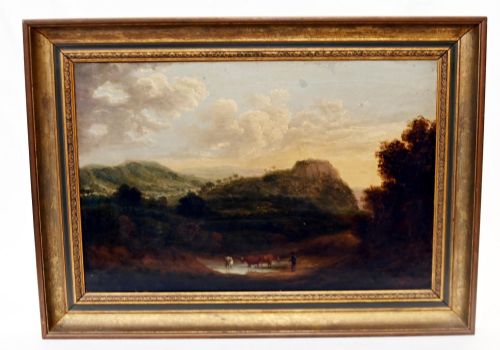
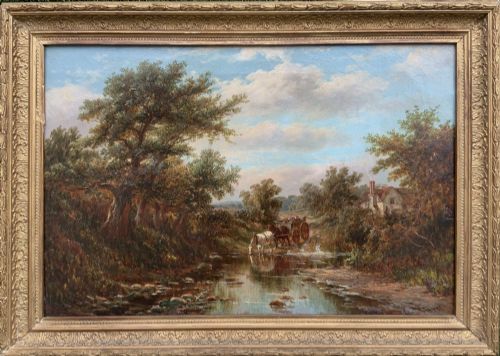
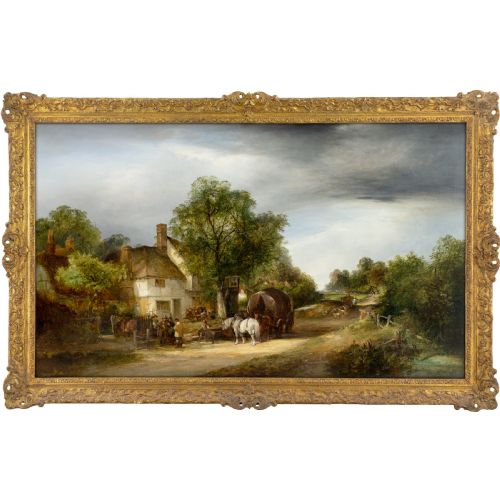
These pieces capture rural life through victorian country oil painting, offering a window into pastoral scenes, country houses and field sports.
Victorian Country Oil Painting
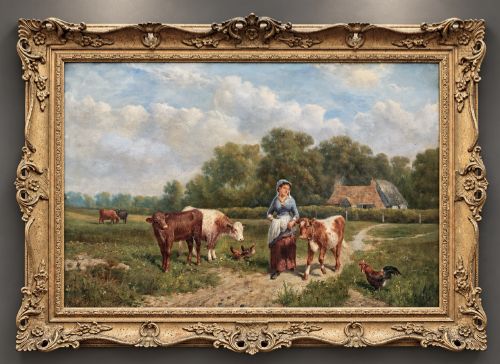
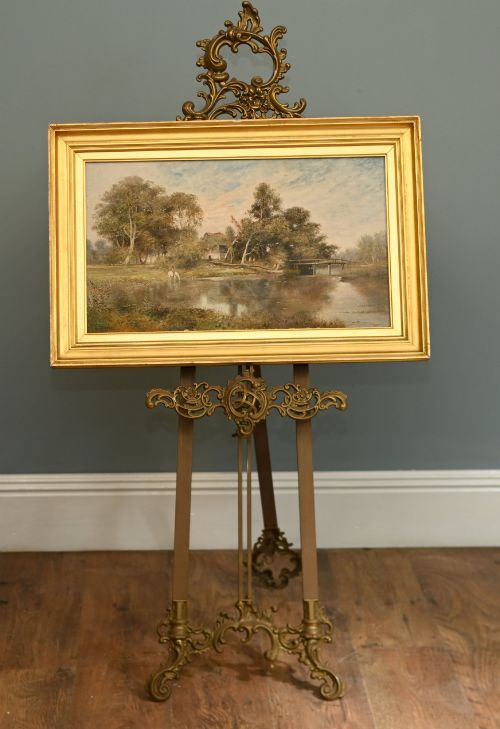
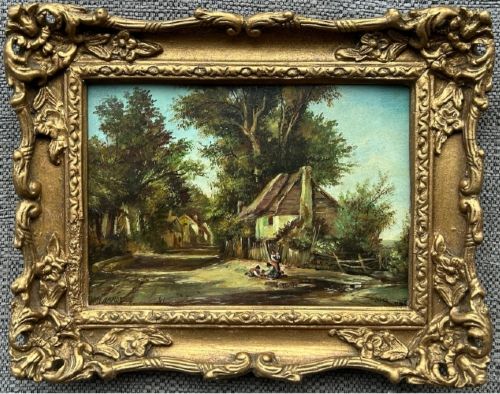
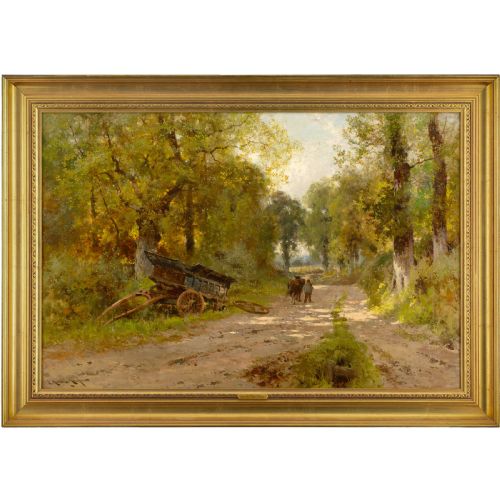
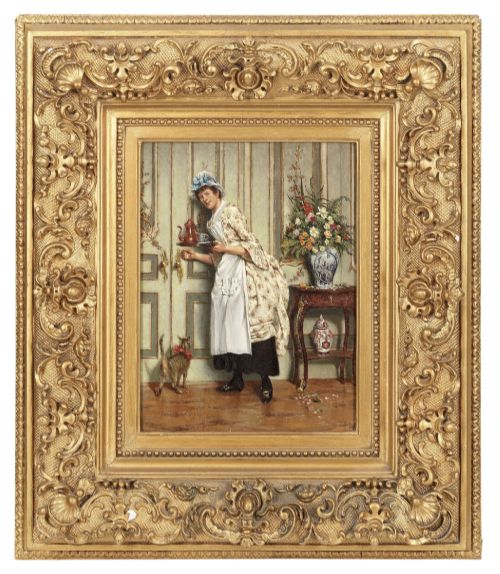
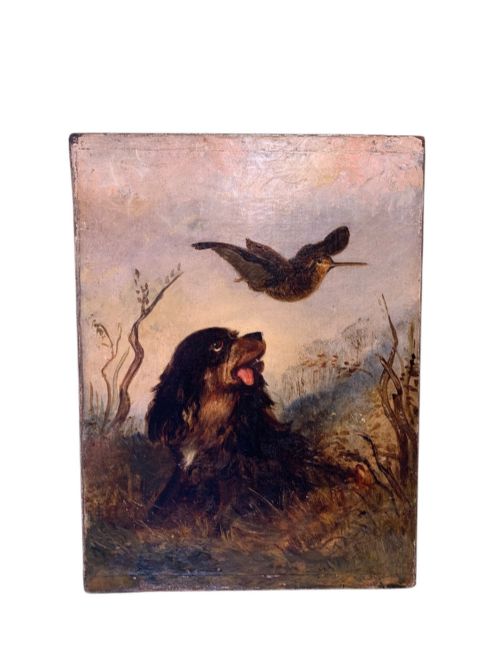
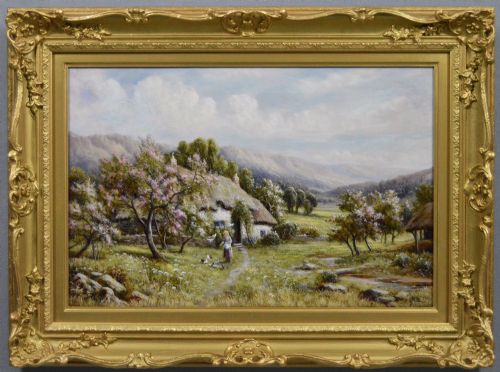
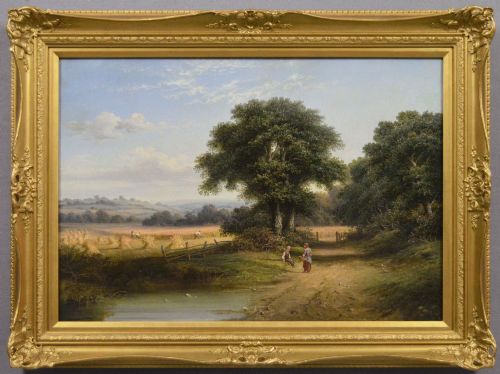
When searching for a victorian country oil painting, buyers encounter canvas and panel works depicting pastoral scenes, harvest fields, farm animals and rural cottages. These artworks stem primarily from the nineteenth century, reflecting the era's deep fascination with the British countryside.
British and continental schools dominate the selection, capturing specific locales from Berkshire and Sussex to French chateaux. Domestic interiors, country house tea times, and agricultural livestock form a substantial portion of the available subjects.
How They Were Made
Artists painted primarily with oil paint on prepared canvas stretched over wooden frames, or directly onto wooden panels and board. These materials provided the rich pigmentation and blending capacity needed to render fine details in foliage, animal coats and fabrics.
Canvases often retained their original wooden supports and were housed in decorative gesso and giltwood frames featuring gold leaf. These ornate surrounds completed the presentation of the artwork for Victorian domestic display.
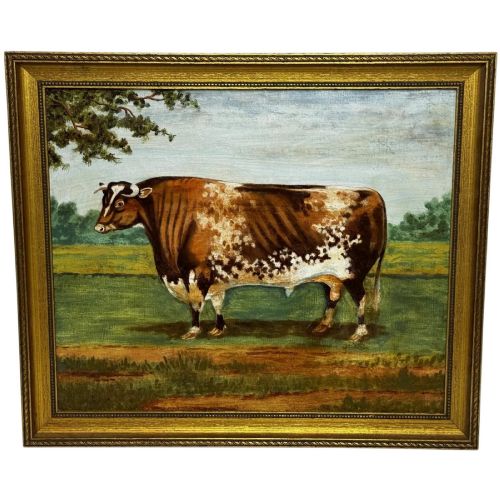
Several canvases immortalise remarkably stout nineteenth-century livestock, proving that prize-winning bulls enjoyed portraiture just as much as country squires.
What Varies in Quality
Quality rests in the precision of draughtsmanship, particularly in the anatomical rendering of animals, figures and architecture. Masterful handling of light creates atmospheric depth in landscape skies and interior lighting.
The depth of provenance and the artist's standing elevate certain works, distinguishing academic skill from naive or provincial output. Frame preservation and the integrity of the original paint surface also influence the piece's standing.
William Howard Hardy·John Horace Hooper·Stephen Samuel Lewin·Robert John Hammond·Walter Heath Williams·Howard Helmick·George Augustus Holmes·Thomas Sidney Cooper·Frederick Walker·John Sargent Noble·Sir Edwin Henry Landseer·George Wright·Edgar Hunt·Johann Friedrich Voltz·Henry Yeen King·C R Breytle·John Alfred Wheeler·Henry H Parker·Thomas Walker Bretland·Miles Birkett Foster·Henry Schouten·Claude Cardon·Johannes de Haas·F.A. Clark·Sydney Yates Johnson
The Victorian Country Oil Painting Glossary
- Genre oil painting
- A representation of everyday life and ordinary people engaged in common activities. These scenes often depict domestic interiors, farmyard chores or social gatherings.
- Giltwood
- Wood carved and coated with gold leaf or a gold-coloured metallic finish. This material was standard for framing nineteenth-century canvases.
- Gesso
- A plaster-like mixture applied to wooden frames as a base for gilding. It allowed artisans to mould intricate decorative reliefs before applying gold leaf.
- Oil on canvas
- Pigment mixed with drying oil applied to a woven fabric support. This combination allowed artists to achieve rich colour saturation and subtle tonal gradations.
- Victorian sporting art
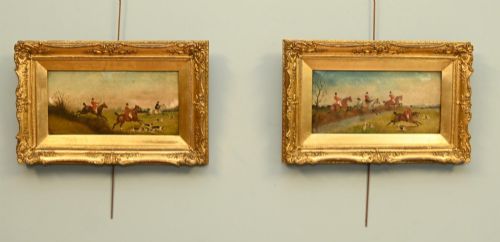
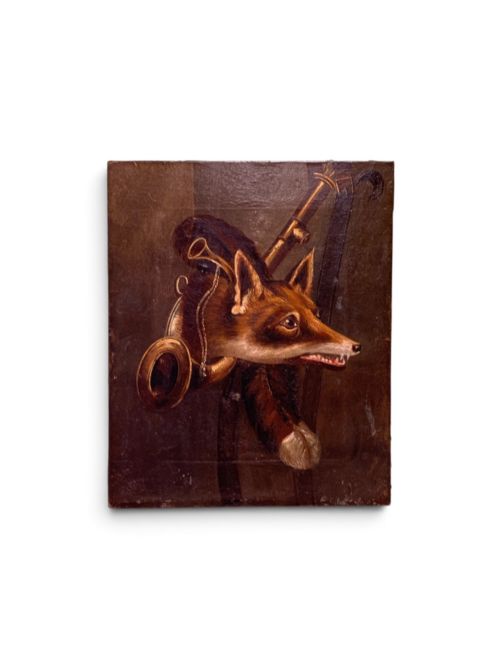
- Depictions of rural pastimes, equestrian subjects, hunting dogs and livestock. These works celebrated prized animals and field sports popular among the nineteenth-century gentry.
Victorian Country Oil Painting: Frequently Asked Questions
What subjects do these paintings feature?
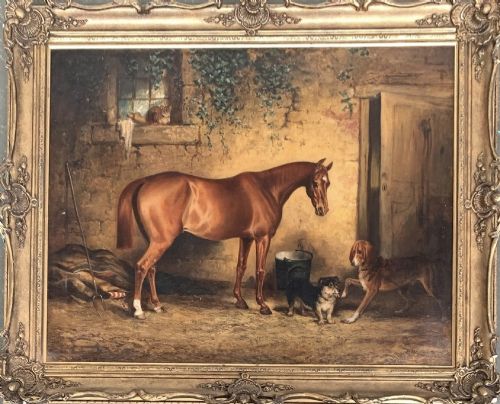
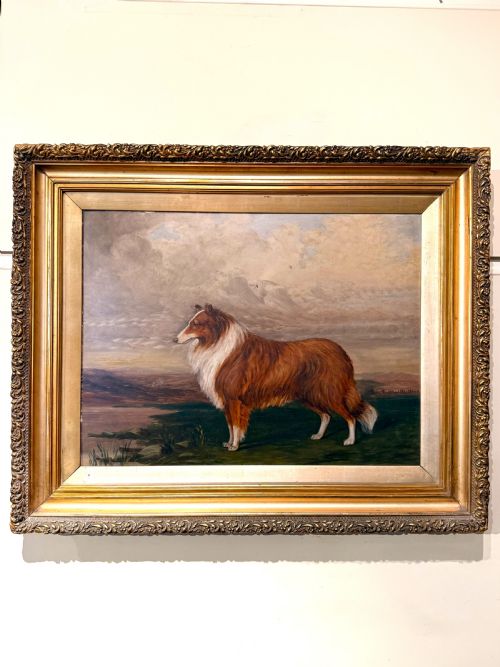
The works depict a broad range of rural subjects, including agricultural livestock such as shorthorn bulls, harvest fields, and quiet country cottages. Sporting scenes involving horses, gun dogs and game birds also appear frequently.
Domestic genre scenes capture quiet moments in country houses, farmyard animals like pigs and chickens, and river landscapes across Britain and Europe.
How should I care for a nineteenth-century oil painting?
Keep the artwork away from direct sunlight and fluctuating humidity to protect the canvas and wooden stretcher. Gentle dusting with a soft, dry brush is generally sufficient for maintenance.
Avoid using water or chemical cleaners on the paint surface or the giltwood frame. Professional conservation is recommended for any structural repairs or cleaning.
How can I tell the period of the painting?
Dating relies on stylistic clues, stretcher construction, and signatures or attribution notes associated with the artist. Nineteenth-century works often reflect specific academic styles, realism, or pastoral traditions of the period.
Framing materials and canvas stamps can provide additional chronological markers, while documented artists often have recorded exhibition dates.
Were these paintings made for domestic display?
Victorian households prized these artworks for interior decoration, placing them in parlours, dining rooms and country houses. They reflected the owners' appreciation for rural life, agriculture and sporting pursuits.
Framed in ornate giltwood, these paintings served as both status symbols and comforting windows into the natural world.