



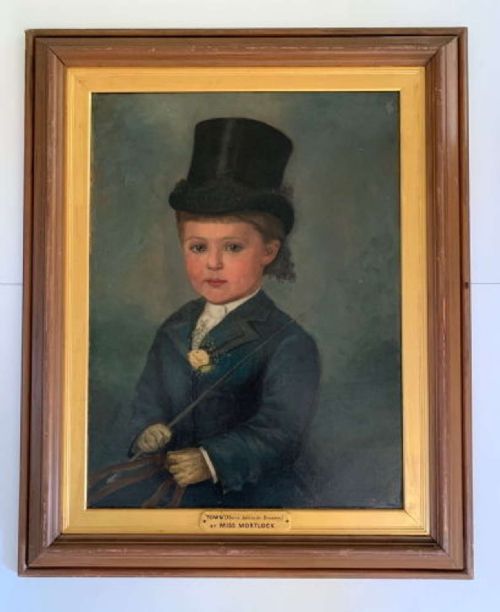


Nineteenth Century Figurative Art
Nineteenth century figurative art brings human character and narrative directly to your walls through oil paint, canvas, and bronze.
Nineteenth Century Figurative Art
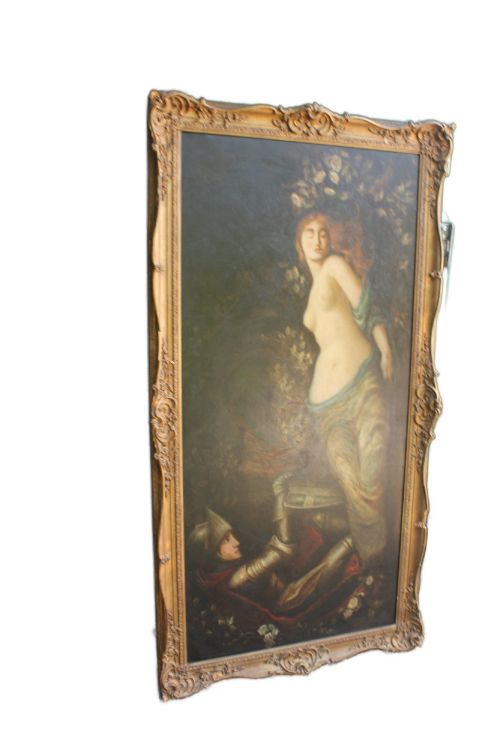
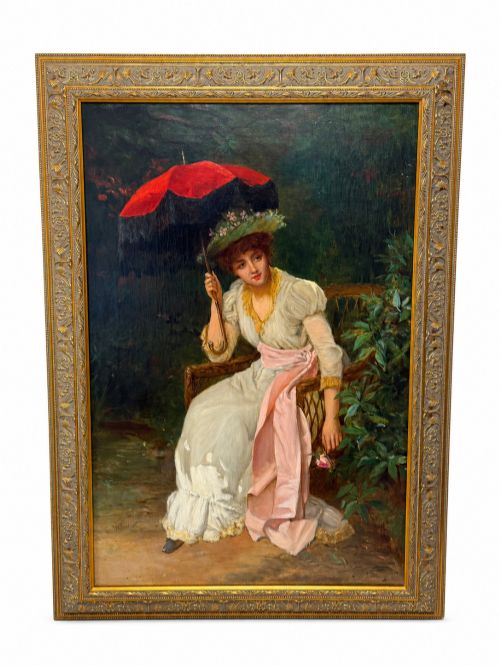
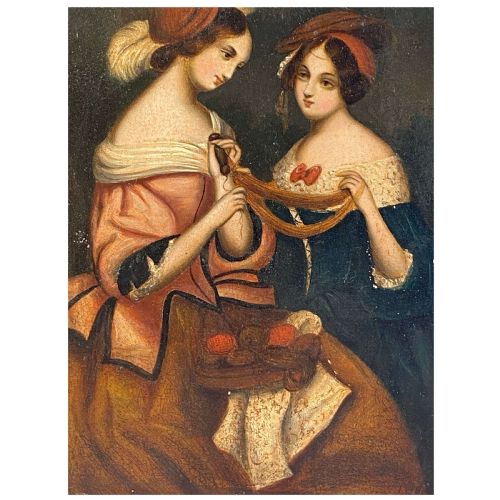
Nineteenth century figurative art comprises oil paintings, watercolours, bronze busts, and woodblock prints that centre on the human form and human stories. These works capture domestic scenes, historical moments, and individual portraits across the Victorian, Edwardian, and Academic eras.
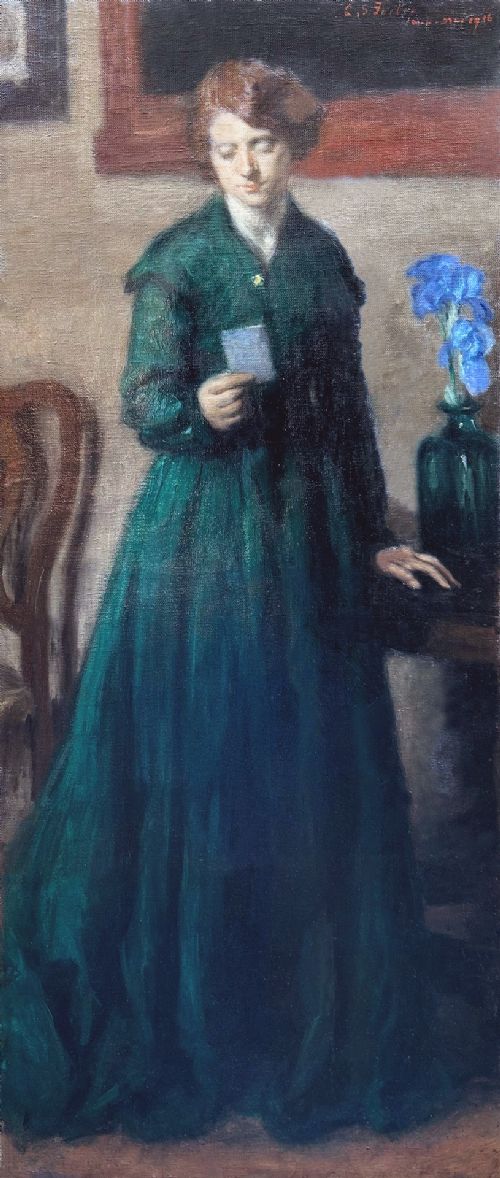
Buyers meet canvas works executed in oil paint alongside watercolours on paper and panels of zinc or wood. The selection spans quiet interior moments, such as card players or letter readers, alongside striking individual portraiture framed in giltwood.
How they were made
Artists built these compositions primarily using oil paint on stretched canvas or wooden panels, applying pigments to achieve depth in drapery and flesh tones. Some works utilise watercolour on paper or delicate grisaille techniques in monochrome oil.
Framing forms an integral part of the physical object, employing carved gilt wood or giltwood frames designed to complement the palette and period style of the painting or bronze sculpture.
Dogs and pups share canvas space with human subjects, proving that nineteenth century artists understood the pulling power of a good family pet.
What varies in quality
Quality rests in the handling of anatomical proportion, facial expression, and the play of light across fabric and skin. Superior works demonstrate confident brushwork and narrative tension that draw the viewer into the scene.
The sophistication of the support and the preservation of the original pigment layer dictate the standing of a piece. Finer examples maintain their original canvas tension and retain the crisp details intended by the artist.
Robert Heinrich·Charles Stuart Forbes·William Oliver·Johann Hamza·George Van Der Straeten·George Kilburne·Linnie Watt·William Powell Frith·Ethel Mortlock·Eva Hollyer·Carlo Ferranti·Edmund Alphonse Andre·Ralph Hedley·Charles Lewis
The Nineteenth Century Figurative Art Glossary
- Grisaille
- A painting executed entirely in shades of grey or neutral monochrome, often used to create the illusion of relief sculpture. This technique highlights the draftsmanship of the artist.
- Genre painting
- The pictorial representation of scenes from everyday life, typically depicting ordinary people in domestic or social settings. These works offer a window into contemporary social habits.
- Ukiyo-e
- A genre of Japanese woodblock prints and paintings depicting scenes of civilian life and popular culture. These works influenced European artists during the late nineteenth century.
- Lithograph
- A planographic printing process using a flat stone or metal plate, enabling the reproduction of illustrations. It gained popularity for mass-producing affordable art prints in the Victorian era.
Nineteenth Century Figurative Art: Frequently Asked Questions
What defines nineteenth century figurative art?
These works focus primarily on human subjects, ranging from formal portrait studies to narrative genre scenes of daily life.
They encompass oil paintings on canvas and wood, watercolours, and bronze sculptures created during the Victorian and Edwardian periods.
How should I hang oil paintings safely?
Support heavy canvases and framed works securely using appropriate wall fixings rated for the weight of the gilt wood frame.
Keep pieces away from direct sunlight and steady heat sources to protect the canvas, oil paint, and wooden supports from warping.
What is a genre painting?
Genre paintings depict ordinary people engaged in everyday activities, such as playing cards, reading letters, or gathering by a cottage door.
Unlike formal portraits, these narratives capture social interactions and domestic routines of the period.
How do I distinguish watercolours from oil paintings?
Watercolours utilise thin translucent pigments applied to paper, often mounted beneath glass to protect the delicate surface from moisture and handling.
Oil paintings feature thicker pigment layers built up on canvas, wood panels, or zinc, displaying visible brush texture and richer depth of colour.