

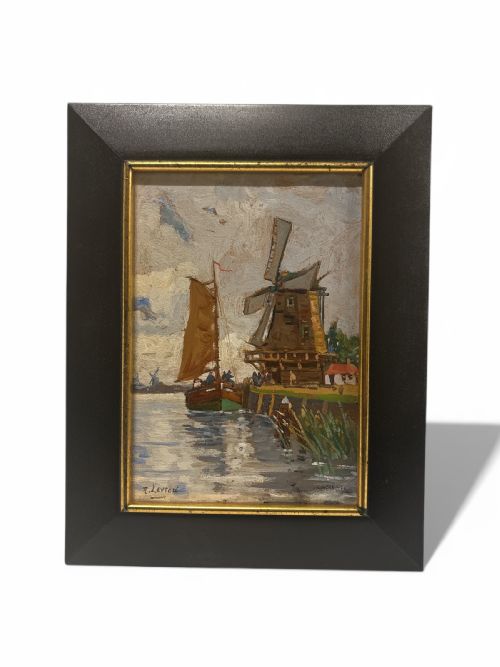

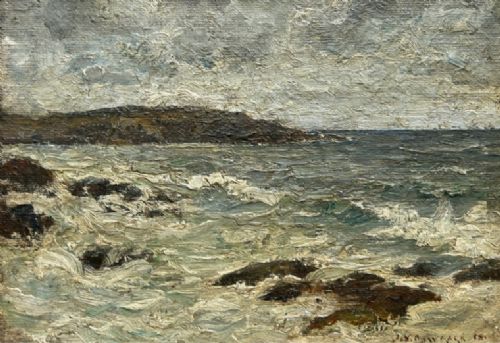
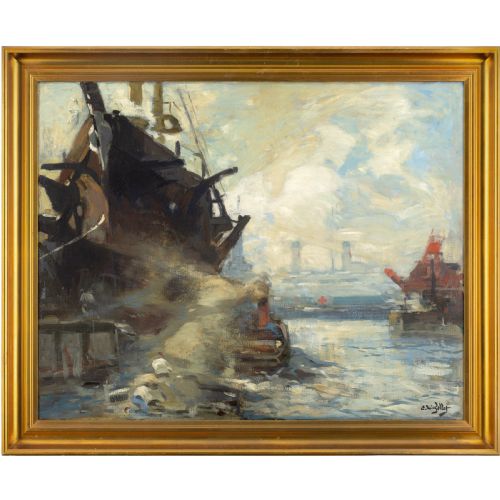
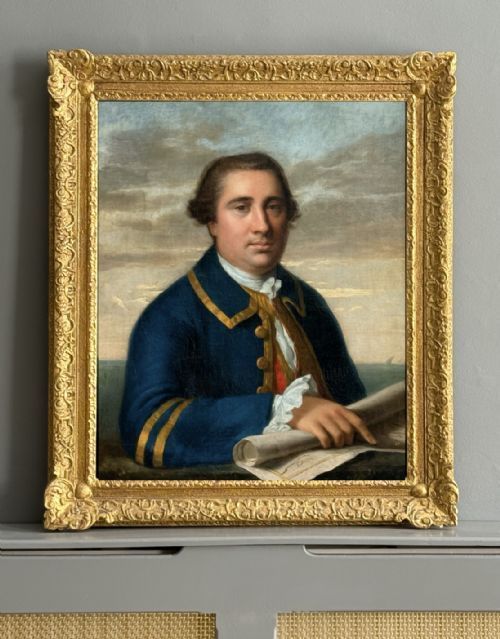
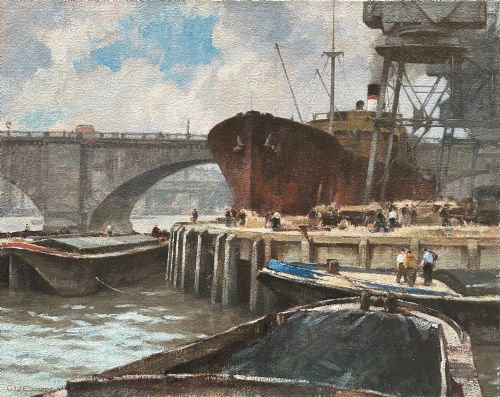
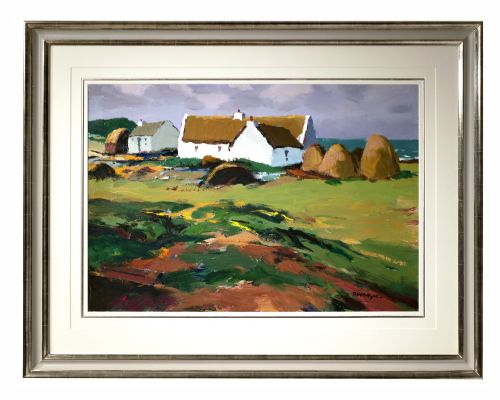
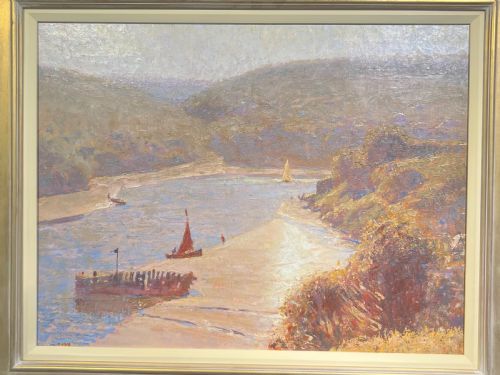
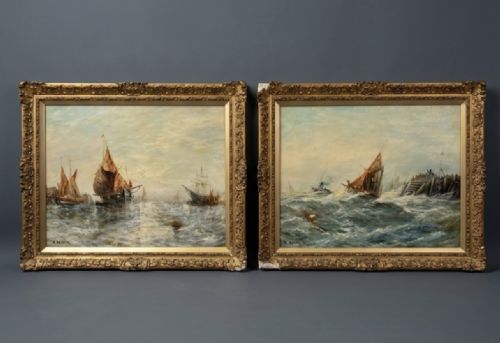
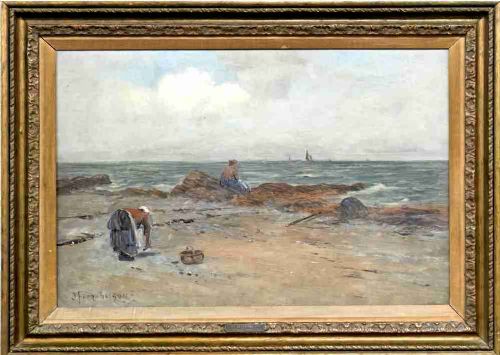
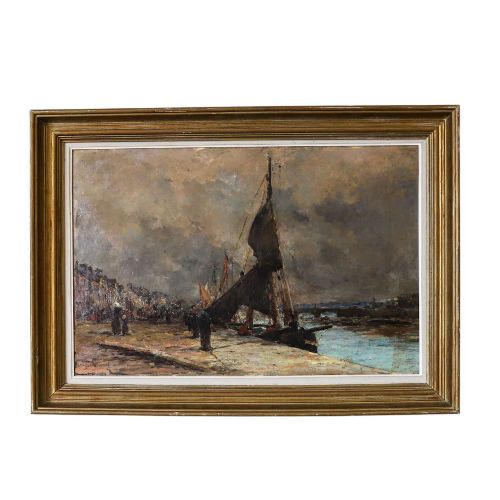
Original Maritime Oil Painting
An original maritime oil painting brings the movement of water and the atmosphere of the coast directly into a room.
Original Maritime Oil Painting
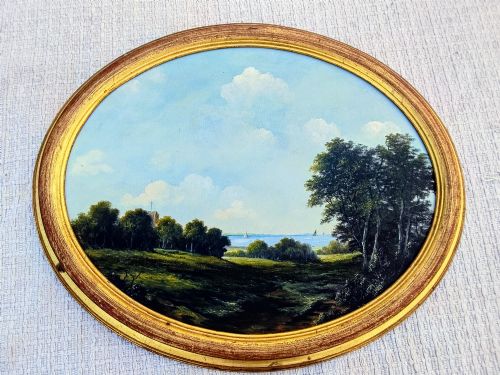
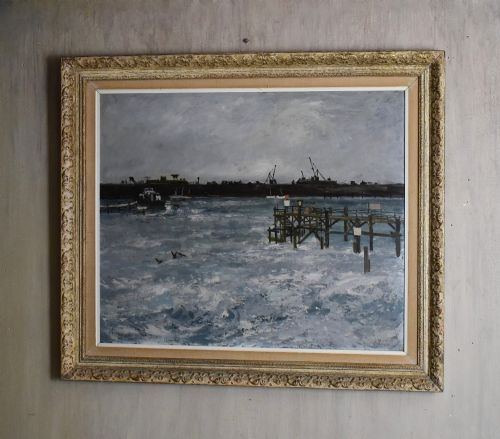
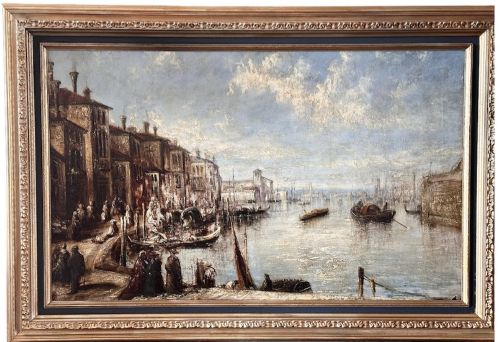
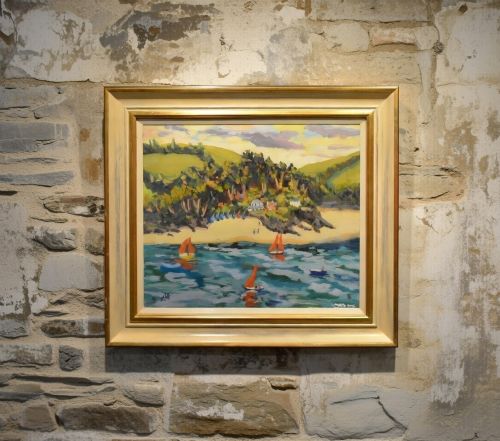
An original maritime oil painting depicts coastal scenes, harbours, choppy seas, and marine life rendered in oil paint upon canvas, board, or wood. These works capture the changing light on water and the daily toil of fishermen and coastal workers through distinct historical periods.
Collectors encounter pieces spanning the Victorian era through the mid twentieth century, including Edwardian realism, British Impressionism, and Modern British styles. Subjects range from busy Cornish fishing ports to sunlit Italian vistas such as Sorrento.
How they were made
Artists applied oil paint to prepared supports of canvas, wood panels, or rigid board, often building rich texture through layered brushwork. This medium allowed painters to capture the translucent depth of seawater and the heavy atmosphere of coastal skies.
Many of these works remain housed within their period frames of gilt wood or painted timber, which complement the maritime subject matter. Signatures on canvas, board, or within the composition itself indicate the hand of the individual artist.
Original Maritime Oil Painting Retail Price Guide 2026
Typical asking prices for original maritime oil painting among the pieces listed under this phrase on Sellingantiques today, from the lower quarter to the upper quarter. They describe what is for sale here now, not the wider market.
Some paintings still carry the faint scent of linseed oil and sea salt after more than a century.
What varies in quality
The success of a maritime painting lies in the artist's ability to render the weight and motion of water, whether in calm Italian waters or choppy English seas. Stronger works demonstrate a confident command of light, atmosphere, and maritime architecture.
Provenance and documentation elevate certain pieces, particularly those bearing clear signatures, identifiable coastal locations, or attribution to established painters. The integrity of the original support and the sympathetic preservation of the paint surface also define the standing of each work.
Joseph Farquharson·Donald McIntyre·Charles Napier Hemy·John W Gilroy
The Original Maritime Oil Painting Glossary
- Oil paint
- A slow-drying paint made of pigment particles suspended in a drying oil, typically linseed oil. This medium allows for subtle blending and rich impasto textures.
- Canvas
- A heavy woven fabric stretched across a wooden frame to serve as a sturdy painting surface. It has been a primary support for fine art oil paintings for centuries.
- Board
- A rigid flat sheet of wood or composite material used as an alternative to canvas. It offers a firm surface favoured by plein air painters working outdoors.
- Gilt wood
- Wood coated with a thin layer of gold leaf or metallic gilt finish. Period frames utilising this technique add considerable presence to vintage artworks.
- Seascape
- A work of art depicting the sea, coastal views, or marine vessels. These compositions focus on water and maritime activity rather than landmasses.
Original Maritime Oil Painting: Frequently Asked Questions
How do I identify the date of a maritime painting?
Dates are often indicated by the artist's signature, historical inscriptions on the reverse of the canvas or board, and stylistic clues within the clothing or vessels depicted. The framing and materials also provide reliable indicators of the period.
Examining the construction of the stretcher frames and the composition of the paint layer helps corroborate the historical era of the work.
What is the difference between canvas and board?
Canvas is a flexible woven fabric stretched over a wooden frame, offering slight give and a traditional textured surface. Board is a rigid, flat panel that provides a solid, unyielding ground for the paint.
Board was frequently utilised by artists working outdoors because it required less preparation and withstood travel more easily than stretched canvas.
Where should I hang a maritime oil painting?
These works suit rooms with steady ambient light, away from direct sunlight and sudden temperature fluctuations that can affect oil paint and wooden frames. Placing them at eye level allows the viewer to appreciate the texture and detail of the brushwork.
Pairing a maritime painting with neutral walls allows the historic tones of the sea and sky to remain the primary focus of the interior.