
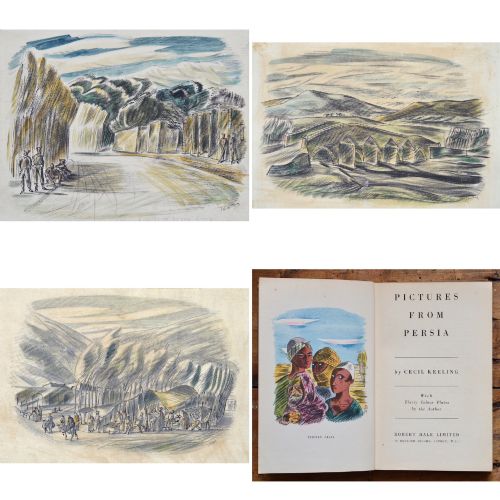
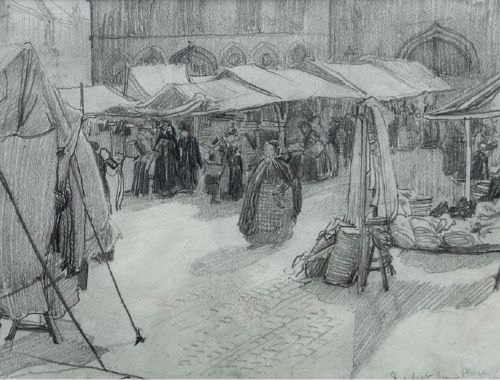
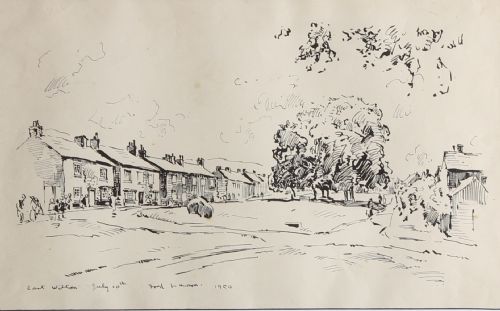
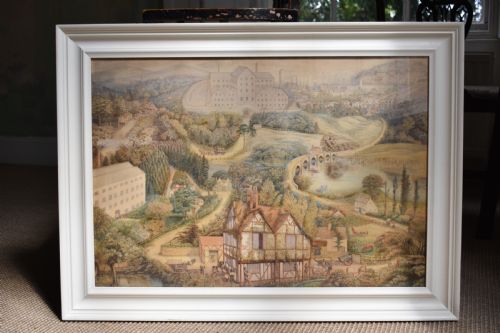
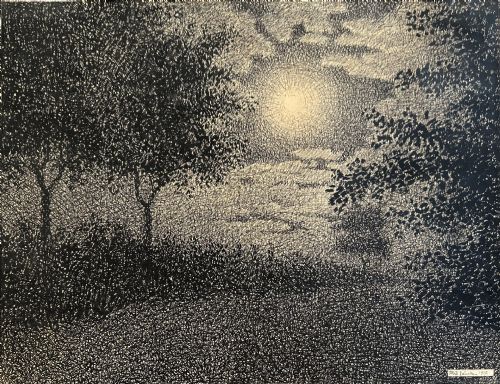


Original Landscape Illustration
These original landscape illustration pieces bring direct views of British and European countryside and architecture straight to the wall.
Original Landscape Illustration
An original landscape illustration captures specific terrain, buildings, or rural scenes directly from the hand of an artist rather than through a mechanical printing press. These works span multiple centuries, ranging from eighteenth-century Georgian sketches to mid-century modern British watercolours and drawings.
Buyers encounter works executed on paper supports, framed behind glass, using mediums that record the immediate touch of the creator. Common formats include delicate pen and ink drawings, pencil sketches, and wash paintings depicting rural villages, castles, and natural vistas.
How they were made
Artists create these works on paper utilising traditional media such as graphite pencil, pen and ink, and watercolour pigments. Wash techniques provide subtle tonal gradations, while coloured pencils and mixed media add texture and depth to the composition.
Surviving pieces frequently retain their period frames constructed from wood and enclosed with glass to protect the delicate works on paper from atmospheric damage.
Listings feature works created between the eighteenth and mid-twentieth centuries, executed in watercolour, ink, and pencil.
What varies in quality
The degree of draughtsmanship and direct observation separates standard topographical records from works possessing superior artistic execution. Handling of light, shadow, and perspective dictates the visual strength of a composition.
Attribution to a recorded artist or connection to published books and known exhibitions elevates the historical importance of an individual sheet.
Cecil Keeling·Henry Percy Huggill·Fred Lawson·Edward Dayes·J W Hogley·C Lainé·Frank Wood·Sir Francis Leggatt Chantrey·William J Hodgson·Linnie Watt·Irene Lagut·J Tim Macdonald·George De Paris·Minnie Smythe
The Original Landscape Illustration Glossary
- Wash
- A technique where water-diluted ink or watercolour is applied in broad, translucent layers across paper to build tone and shadow. It forms the basis of many atmospheric topographical sketches.
- Work on paper
- Any piece of art executed on a paper support, including drawings, watercolours, and prints. These require protection behind glass to prevent environmental degradation.
- Mixed media
- An artwork combining two or more distinct materials, such as watercolour and coloured pencil. This approach allows artists to layer different textures within a single composition.
- Topographical
- Pertaining to the accurate depiction of specific places, buildings, and landscapes. Many period drawings serve as direct records of regional architecture and topography.
Original Landscape Illustration: Frequently Asked Questions
What defines an original landscape illustration?
An original landscape illustration is a unique, hand-drawn or hand-painted work on paper rather than a mass-produced mechanical reproduction. These pieces show direct brushstrokes, pencil marks, or ink lines made by the artist.
The inventory spans various eras including the Georgian period, the Victorian age, and the mid-twentieth century. Each item records a specific view of countryside, architecture, or rural life from the maker's viewpoint.
How should these works on paper be displayed?
These pieces require framing behind glass with proper mount boards to keep the paper surface from touching the glazing. This setup protects the delicate ink, pencil, and watercolour mediums from moisture and physical damage.
Positioning the framed artwork away from direct sunlight prevents the pigments and paper supports from fading over time. Standard interior lighting suits these historic drawings adequately.
How can I identify the period of a drawing?
Dating relies on stylistic markers, framing methods, paper types, and inscriptions left by the artist or previous owners. Many works feature period signatures, dates, or detailed location notes written in pencil or ink on the reverse or margin.
Comparative study of regional art schools and known working dates of practitioners helps narrow down the decade of creation. Archival records and book illustrations provide further confirmation for specific sheets.
What mediums were commonly used?
Artists relied primarily on paper supports combined with watercolour, pen and ink, graphite, and coloured pencil. These materials allowed creators to capture quick plein-air studies as well as finished studio watercolours.
Some examples incorporate mixed media techniques, blending wash layers with fine ink linework to define architectural details and natural foliage.