




Edwardian Pencil Sketch
These delicate works on paper capture a vanished era with immediate intimacy, making an edwardian pencil sketch a prized find for collectors of early twentieth-century portraiture.
Edwardian Pencil Sketch
An edwardian pencil sketch brings domestic and public life from the turn of the twentieth century directly into modern rooms through direct, unmediated lines. Buyers seek these original drawings to connect with the personal likenesses of sitters, artists and notable figures recorded during the Edwardian period.
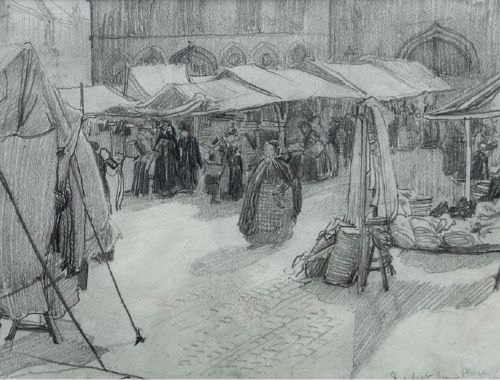
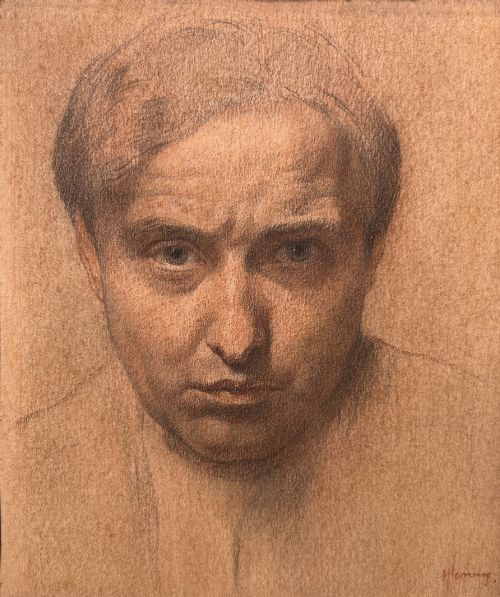
The works appearing here encompass framed fine art, wall art and intimate portrait drawings produced across the broader early twentieth-century milieu. Many examples combine graphite or charcoal with watercolour washes, capturing subjects ranging from Belgian street markets to society portraits on paper.
Originating predominantly from British and European hands, these drawings present both finished academic studies and rapid preparatory observations. They offer an accessible entry point into collecting original period artwork without the heavier commitments of oil paintings.
How they were made
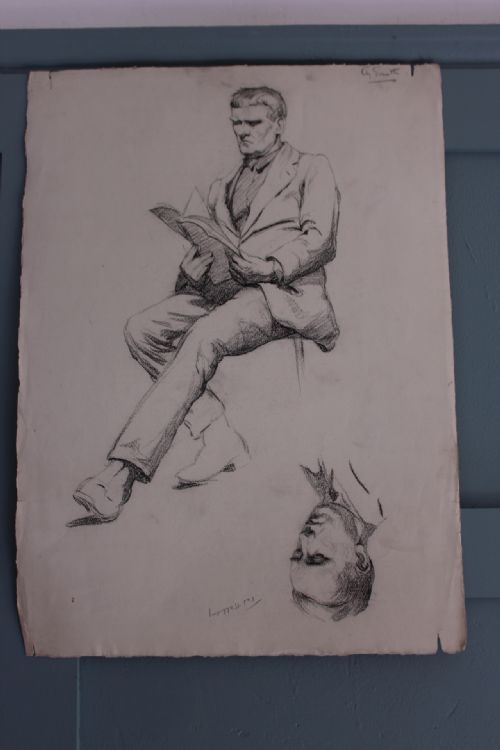
Artists worked primarily with graphite, pencil and charcoal upon varied surfaces of prepared paper, sometimes heightening the monochrome tones with chalk or subtle watercolours. The immediacy of the medium allowed draughtsmen to record rapid gestures and nuanced facial expressions directly from life.
Framing materials typically involve period wood mouldings enclosing protective glass, safeguarding the fragile paper supports from atmospheric degradation. These traditional mountings preserve the original appearance of the artwork while keeping the delicate media secure for display.
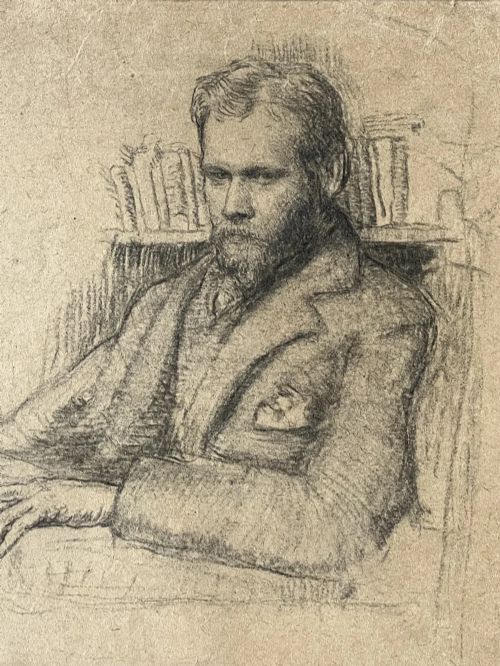
One portrait records Sir Henry Alexander Wickham, celebrated as an explorer and bio-pirate for smuggling rubber tree seeds out of the Amazon.
What varies in quality
The strength of the draughtsmanship and the psychological depth of the portraiture elevate certain examples above standard decorative pieces. Confident, economical lines display an artist's command of form, whereas hesitant or overly laboured marks diminish the vitality of the subject.
The historical significance of the sitter and the documented provenance from established galleries or identified hands substantially distinguish the finest sheets. Condition also plays a role, with clean, unblemished paper surfaces preserving the intended tonal contrasts of the original graphite.
Henry Percy Huggill·Augustus John·Herbert Johnson Harvey·J D Fergusson·Raoul Millais·Charles Prosper Sainton·Reginald G Eves·Ernest Borough Johnson·Leo Klin·Francis Dodd·Cecil CP Lawson
The Edwardian Pencil Sketch Glossary
- Graphite
- A form of carbon used as a drawing medium, commonly referred to as pencil lead. It produces varied tonal ranges from pale silvery greys to deep dark blacks depending on the hardness of the core.
- Charcoal
- A porous form of dry carbonized wood utilised for sketching and creating rich velvety dark lines. It offers expressive fluidity and permits rapid blending across the paper surface.
- Watercolour
- A translucent painting method where coloured pigments are suspended in a water-soluble vehicle. Artists frequently combined this technique with pencil sketches to tint portraits and landscapes.
- Academic Realism
- A style of painting and drawing influenced by the standards of European art academies. It emphasises precise anatomical accuracy, careful observation from life, and polished technique.
Edwardian Pencil Sketch: Frequently Asked Questions
How do I care for a pencil sketch?
Keep drawings out of direct sunlight to prevent the paper from yellowing and the graphite from fading over time. Framing them behind glass with acid-free mounts protects the delicate surface from dust and atmospheric moisture.
Ensure they hang away from damp exterior walls and extreme temperature fluctuations. Proper framing preserves both the paper support and the fine charcoal or pencil marks indefinitely.
Are these drawings original works?
Yes, every piece represents a unique hand-drawn work on paper rather than a mechanical reproduction or print. Artists created these individual studies directly using graphite, charcoal, or added watercolour washes.
Each sheet bears the distinct individual touch, hesitation marks, and pressure variations of the artist's hand. This uniqueness distinguishes original drawings from mass-produced imagery of the period.
How do I identify an Edwardian drawing?
Look for stylistic markers associated with early twentieth-century Academic Realism and British art of the period. The clothing, hairstyles, and framing styles often provide clear visual clues to the era.
Many works carry contemporaneous signatures, gallery labels, or biographical details regarding the sitters. These contextual elements help anchor the creation date firmly within the Edwardian decades.
Can I hang these in a bright room?
Direct sunlight damages works on paper very quickly, causing fading and irreversible discolouration. It is best to place them on interior walls where light levels remain low and controlled.
Consider using UV-filtering glass when framing to provide an extra layer of protection against ambient light. This precaution ensures the subtle graphite tones remain clear for years to come.