
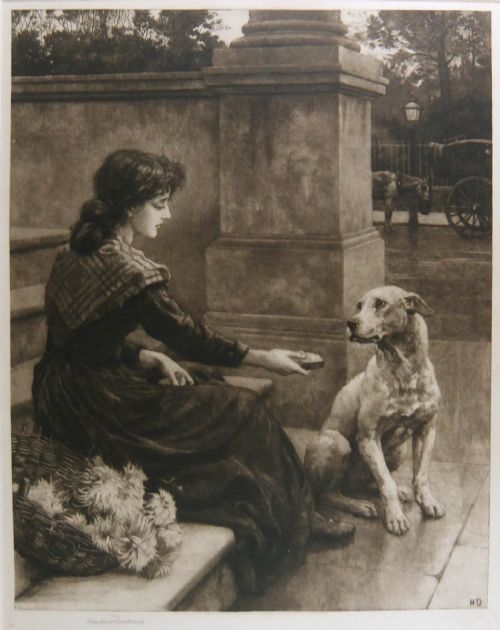
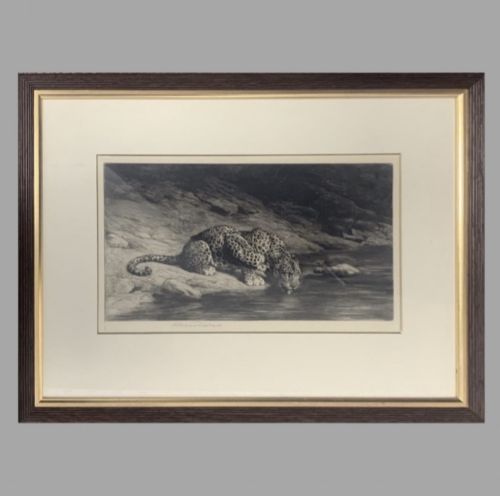
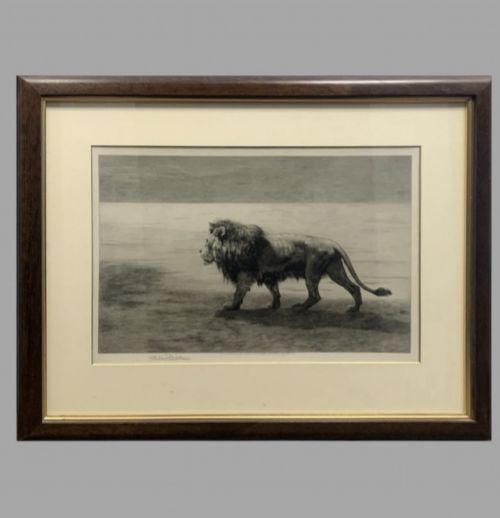
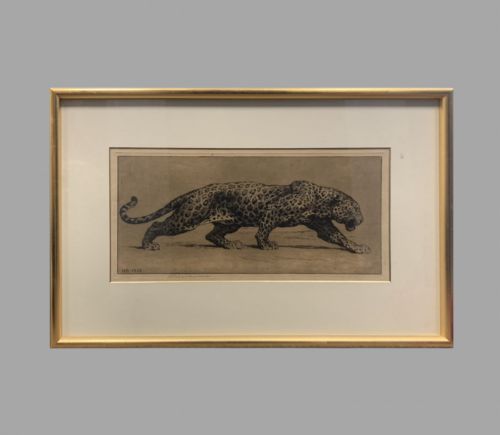
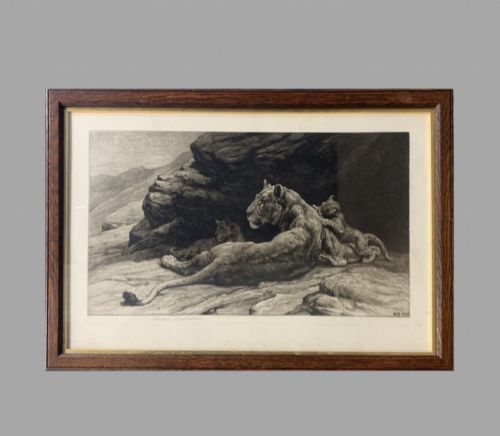


Original Herbert Dicksee Etching
An original herbert dicksee etching brings the quiet intensity of Victorian and Edwardian animal subjects directly into a room.
Original Herbert Dicksee Etching
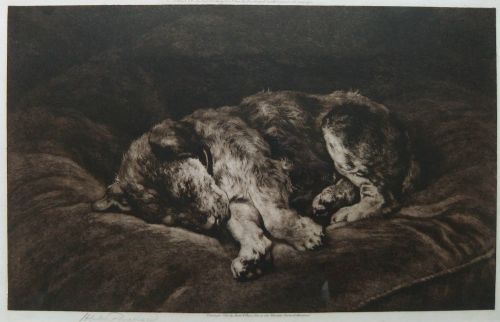
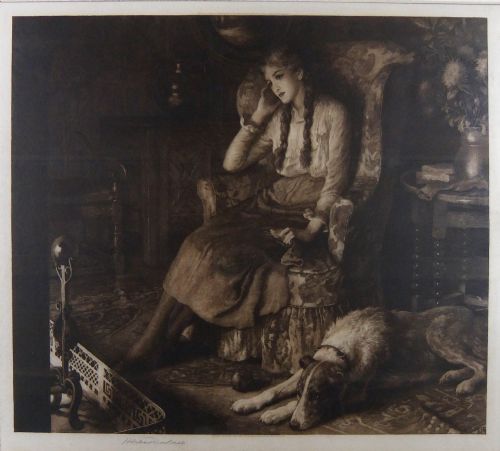
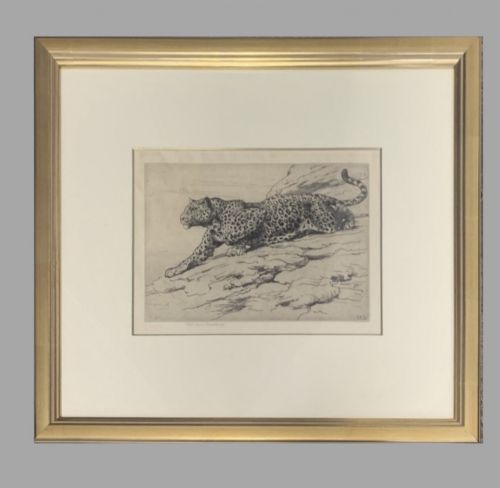
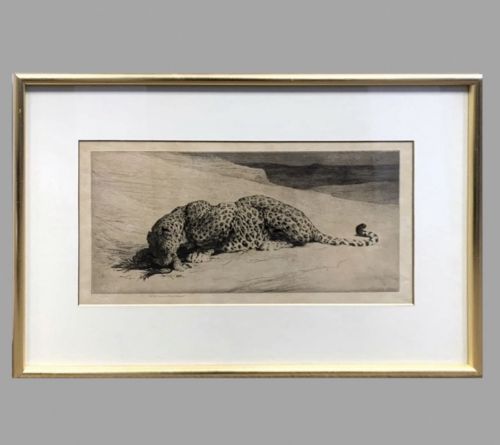
An original herbert dicksee etching is a framed print capturing domestic dogs, big cats, and wildlife with notable realism. These works span the late Victorian and Edwardian periods, capturing detailed animal expressions from domestic spaniels to leopards.
Buyers encounter subjects ranging from spaniels and deerhounds to tigers and leopards. The pieces appear in various framing materials such as oak, gilt wood, and glass.
The selection includes signed artist proofs on paper and vellum, dating primarily around nineteen hundred up to the nineteen twenties. Each plate records careful linework reflecting early twentieth century realism.
How they were made
The process relies on ink applied to metal plates, transferring fine lines onto paper or vellum sheets. Artisans utilised drypoint techniques to score the surface, creating rich textures that define the fur and musculature of each animal.
Completed works found preservation beneath glass and within wooden frames, often incorporating gold leaf or gilt wood moulding. These materials protect the delicate ink work on paper and vellum from environmental wear.
Listings feature works from eighteen ninety to nineteen twenty, utilising paper, vellum, ink, and oak.
What varies in quality
Quality rests in the crispness of the ink impression and the condition of the paper or vellum sheet. Early impressions retain the sharpest burr from the plate, whilst later pulls show softer lines.
The presence of a pencil signature and artist proof status distinguishes selected examples. Conservation state also plays a role, with clean margins and stable framing preserving the work.
Herbert Dicksee
The Original Herbert Dicksee Etching Glossary
- Etching
- A printmaking method where acid bites lines into a metal plate to hold ink. This technique creates the fine tonal gradations visible in these animal studies.
- Drypoint
- A printmaking process where an artist scratches lines directly into metal without acid. This method produces a velvety line characteristic of these works.
- Vellum
- A fine parchment prepared from calfskin used as a printing surface. It offers a smooth texture that absorbs ink differently than paper.
- Artist Proof
- An impression taken off the plate for the artist's review before the main edition. These proofs carry particular weight among collectors.
- Edwardian
- A historical period spanning the early twentieth century defined by specific artistic styles. Works from this era display detailed realism in animal portraiture.
Original Herbert Dicksee Etching: Frequently Asked Questions
What subjects appear in these works?
The compositions focus heavily on domestic dogs such as spaniels, collies, and bulldogs, alongside big cats including leopards and tigers.
Animals appear in natural or domestic settings, rendered with detailed realism characteristic of the period.
How are these prints signed?
Many examples feature a pencil signature in the margin, often denoting an artist proof from a limited edition.
This marking confirms the creator's direct involvement in printing the plate.
What framing materials are used?
Surviving examples typically appear in period wooden frames, including oak and gilt wood moulding.
Glass protects the paper or vellum surface from dust and direct handling.
Which periods do these pieces date from?
The works originate from the late Victorian and Edwardian eras, spanning from eighteen ninety through the nineteen twenties.
Early twentieth century realism governs the aesthetic across these decades.