
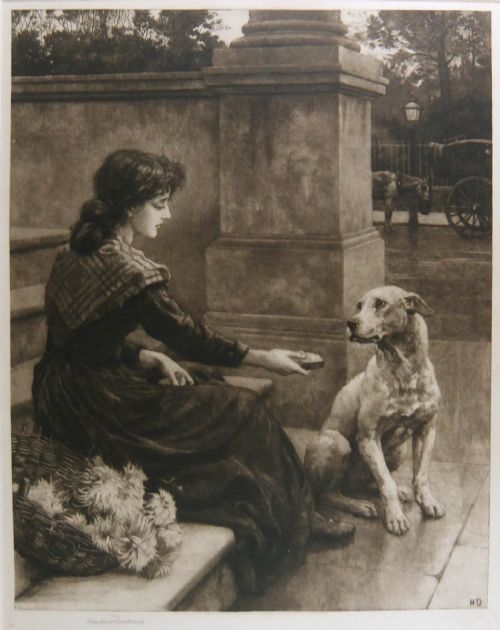
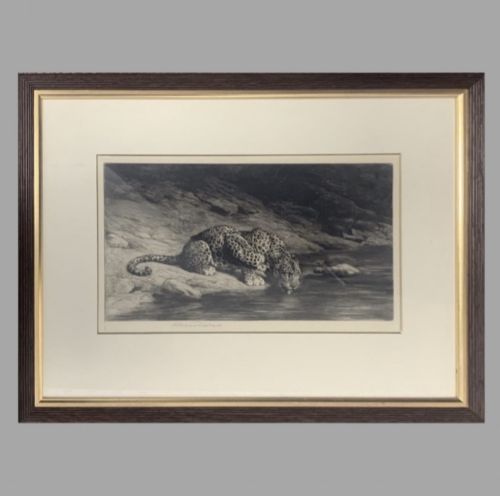
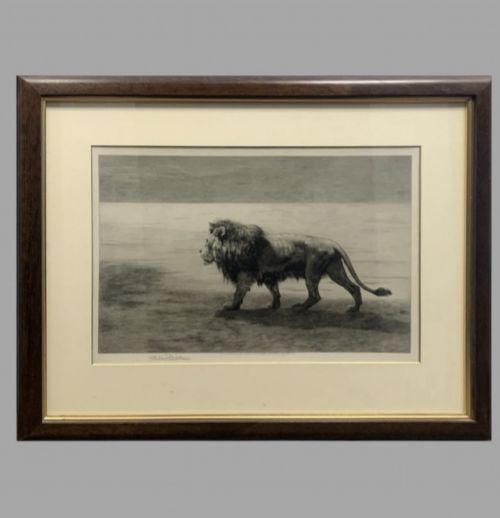
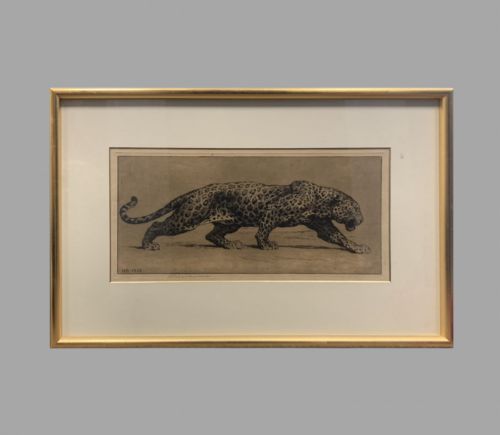
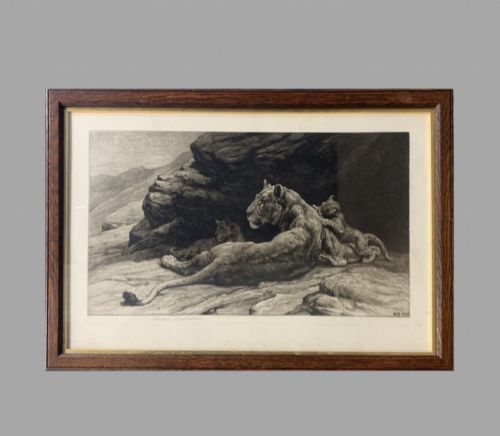


Herbert Dicksee Print
A Herbert Dicksee print brings home the intense realism of late Victorian and early twentieth-century wildlife and dog subjects through masterly original etching.
Herbert Dicksee Print
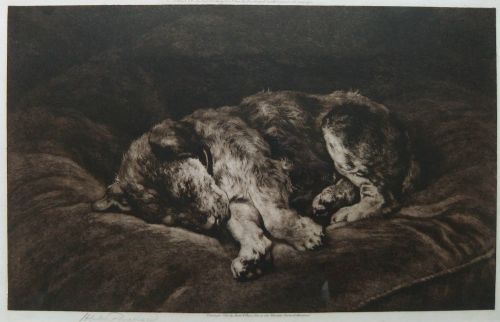
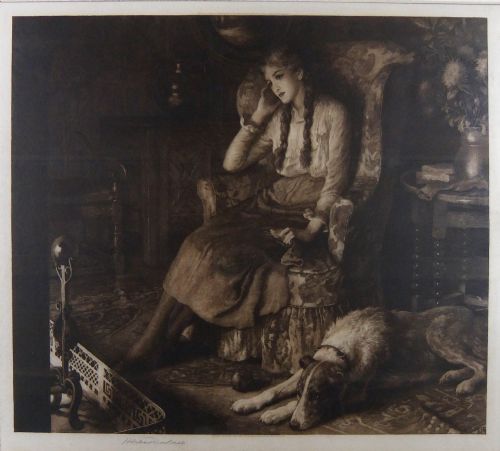
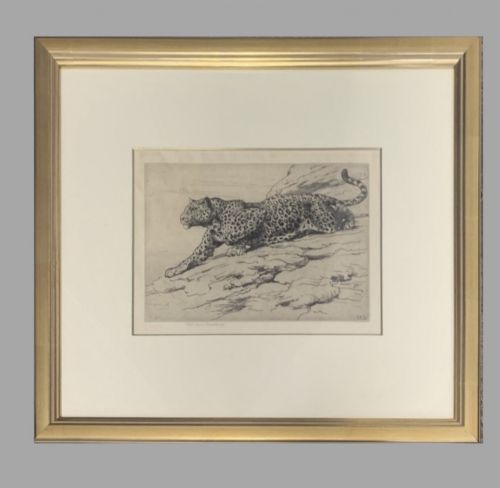
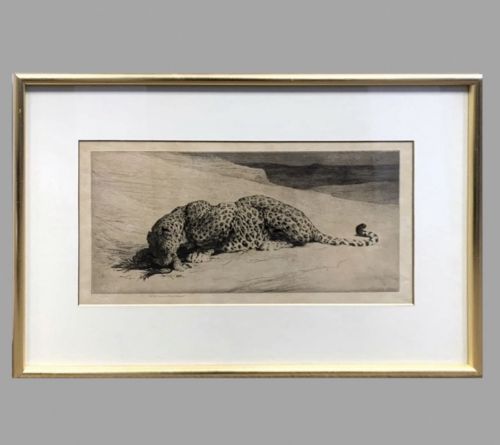
When you search for a herbert dicksee print, you encounter original etchings, drypoint etchings, and signed artist proofs depicting domestic dogs and formidable big cats. These works span from the late nineteenth century into the 1920s, capturing subjects such as leopards, lions, tigers, and various canine breeds with striking anatomical precision.
The pieces on this page include framed prints and miniatures, often presented in wood, gilt wood, or oak frames behind glass. You meet works executed during the Victorian, Edwardian, and early twentieth-century realism periods, reflecting the enduring popularity of wildlife and animal portraiture from that era.
Materials and technique
The physical foundation of these works relies upon quality paper or vellum, receiving ink through intaglio printing methods. Artists proofs and original etchings utilise metal plates worked by hand, creating the delicate lines that define the fur and musculature of the animals.
Framing materials such as oak, gilt wood, and plain wood enclose the sheets, accompanied by glass to protect the delicate ink and vellum surfaces from environmental damage.
Listings span the nineteenth century, 1890, 1900, 1910, 1920, and early twentieth-century realism styles.
Quality variations
The presence of a signature and the status as an artist proof distinguish certain impressions from standard editions. Signed artist proofs carry the direct endorsement of the hand that worked the plate, marking a higher tier of output.
The choice of support material also introduces variation, with vellum offering a distinct texture compared to standard paper. Additionally, the preservation of the original framing, whether gilt wood or oak, influences the overall integrity of the piece.
Herbert Thomas Dicksee
The Herbert Dicksee Print Glossary
- Etching
- A printmaking process where acid bites lines into a metal plate to hold ink. This technique allows for fine, expressive detail across the surface.
- Drypoint
- A printmaking method where a sharp needle scratches directly into the metal plate without acid. It produces velvety lines with distinctive burrs.
- Vellum
- A fine parchment made from calfskin used as a printing support. It provides a smooth, durable surface that absorbs ink differently than paper.
- Artist Proof
- An impression pulled outside the standard edition for the creator's approval. These carry particular significance among collectors.
- Drypoint Etching
- A hybrid term describing prints utilising scratched lines rather than acid alone. It results in rich, dark tones characteristic of animal studies.
Herbert Dicksee Print: Frequently Asked Questions
What subjects appear in these prints?
The subjects focus heavily on wildlife and domestic animals, ranging from large cats like lions, leopards, and tigers to specific dog breeds such as bulldogs, Scottish terriers, and cocker spaniels.
These animals are portrayed in varied settings, from jungle environments to open skies, capturing both tranquil moments and intense action.
How should I display a framed print?
Display these works away from direct sunlight to protect the ink and paper or vellum supports from fading. Maintaining stable indoor humidity prevents warping in the wood and gilt wood frames.
Ensure the glass remains clean and intact to shield the delicate surface from dust and atmospheric moisture over time.
What is an artist proof?
An artist proof is an impression taken during the printing process for the creator to inspect and approve. These examples were typically set aside outside the main commercial run.
Such pieces often bear signature markings from the hand that produced the plate, adding a personal connection to the creation.
How do paper and vellum differ?
Paper provides a traditional, absorbent surface that takes ink evenly across standard editions. Vellum offers a smoother, skin-based support that yields distinct tonal qualities and texture.
Both materials survive from the late nineteenth and early twentieth centuries when properly protected behind glass.