


Antique Canine Engraving
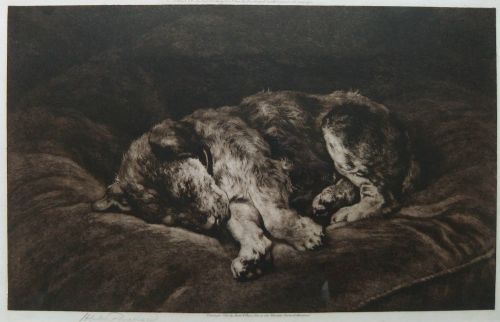
These antique canine engraving pieces capture dogs through ink and paper, offering a traditional way to bring character into a room.
Antique Canine Engraving
An antique canine engraving is a work on paper depicting dogs, often framed as wall art. The selection centres on original etchings and drypoint works alongside nineteenth century prints.
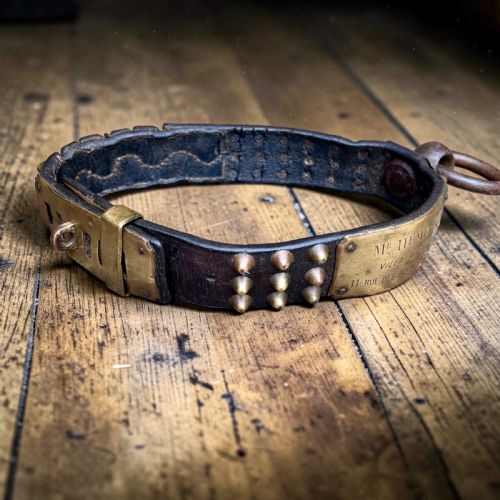
Buyers will most frequently encounter framed prints and etchings from the Victorian and Edwardian eras, alongside related items such as nineteenth century studded leather dog collars with brass nameplates.
The subjects range from individual breeds like cocker spaniels and Scottish terriers to named animals such as Lucy, a celebrated bull bitch.
Materials and production
These works utilise ink applied to paper surfaces, framed behind glass with wooden elements. Metal components appear on related items, including brass nameplates and iron or gold leaf details.
Makers employed etching and drypoint techniques to produce detailed plates, resulting in textured lines across the paper. Leather and brass were worked by hand to create fitted collars featuring engraved inscriptions.
Listings feature works from the Victorian, Edwardian, and French nineteenth century styles, using paper, ink, wood, leather, and brass.
Distinctions in quality
Quality rests upon the clarity of the line work and the strength of the impression pulled from the plate. Stronger impressions preserve the fine detail of the dog's coat and expression.
The condition of the paper and the quality of the framing materials also shape the piece. Works that retain crisp ink without heavy fading or paper degradation represent the higher tier.
Herbert Dicksee·Blockey·Landseer
The Antique Canine Engraving Glossary
- Etching
- A printmaking method where acid bites lines into a metal plate to hold ink. This process allows for fine, fluid lines that capture the texture of fur.
- Drypoint
- A printmaking technique where an artist scratches directly into a metal plate with a sharp needle. This raises a burr of metal that gives the printed lines a rich, velvety quality.
- Engraving
- A method of cutting a design directly into a hard surface using a burin. The resulting lines transfer ink cleanly to paper under pressure.
- An impression made from a prepared plate or block onto paper. These works represent multiple copies or single editions produced from the master plate.
Antique Canine Engraving: Frequently Asked Questions
What periods do these pieces come from?
The pieces span from the nineteenth century through to the early twentieth century, specifically covering the eighteen sixties up to nineteen twenty.
Victorian and Edwardian examples make up the bulk of the selection, reflecting the era's strong interest in dog subjects.
Are all the items printed on paper?
Paper and ink form the basis of the printed works, accompanied by materials like glass, wood, and gold leaf in the framing.
Other items in the category, such as dog collars, utilise studded leather and brass nameplates instead of paper.
How should I hang framed prints?
Framed works on paper require placement away from direct sunlight to prevent the ink and paper from fading over time. Stable indoor humidity levels help protect both the wooden frames and the paper within.
Who are the prominent artists featured?
Herbert Dicksee is a primary figure among the makers, known for detailed drypoint etchings of dogs like Scottish terriers and bull dogs.
Other historical references in the titles include Landseer and the printer Blockey.