


Vintage Canine Wall Art
Vintage canine wall art gathers painted oils, delicate pastels and fine etchings that celebrate dogs across centuries.
Vintage Canine Wall Art
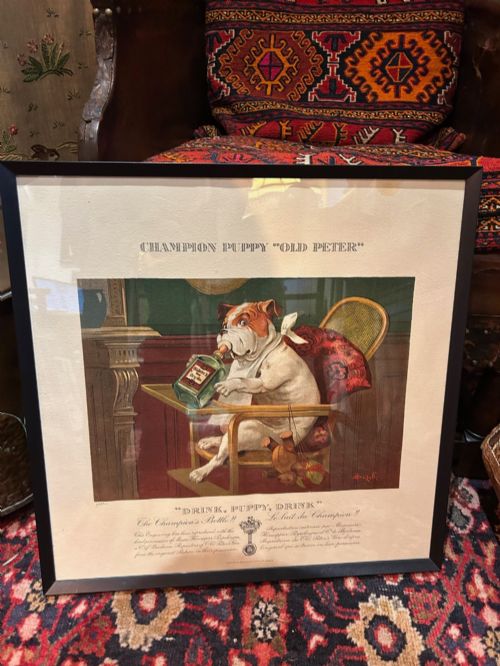
Vintage canine wall art spans original oil paintings, watercolours, pastels and framed prints depicting hounds, terriers and sporting dogs. These works range from Victorian oils on canvas and board to twentieth-century drypoint etchings and advertising pieces.
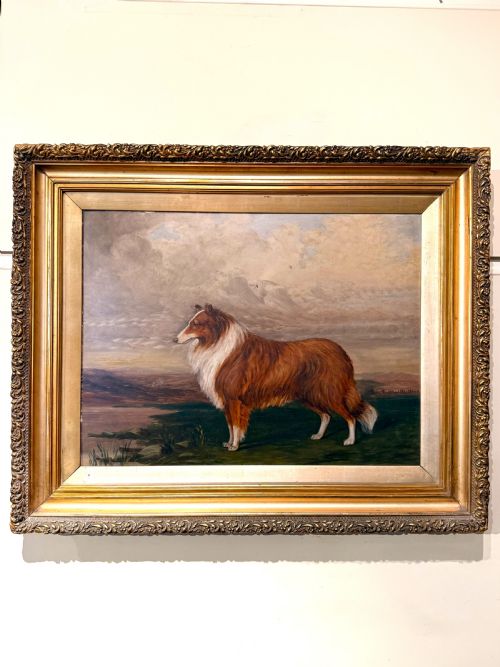
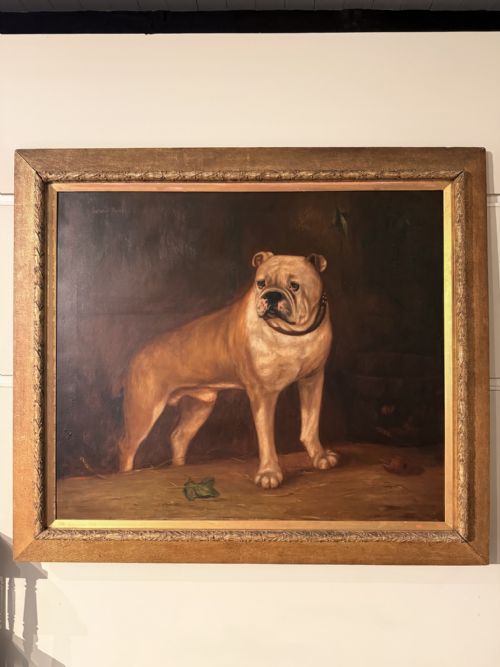
The pieces on this page lean heavily towards nineteenth-century oil paintings and early twentieth-century etchings. Buyers encounter framed portraits of individual dogs alongside larger studies of hunting hounds and terriers in landscapes.
Victorian and Edwardian depictions dominate the selection, though mid-century realist portraits also appear. Works originate from British country house traditions, capturing both working dogs and cherished household companions.
Materials and techniques
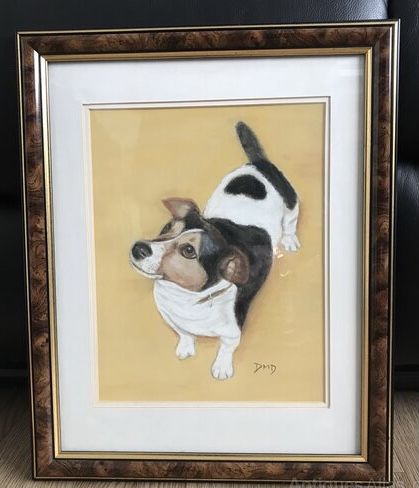
Artists painted primarily in oil on canvas or wood board, applying pigments to capture the texture of fur and the natural light of interiors and landscapes. Watercolours and pastels under glass provide a lighter, more immediate medium for intimate terrier and spaniel studies.
Printmakers utilised etching and engraving techniques on paper, sometimes employing drypoint to achieve velvety lines in detailed depictions of bulldogs and spaniels. Gilt frames and glass protection complete many of the surviving works.
Vintage Canine Wall Art Retail Price Guide 2026
Typical asking prices for vintage canine wall art among the pieces listed under this phrase on Sellingantiques today, from the lower quarter to the upper quarter. They describe what is for sale here now, not the wider market.
Current listings feature works from the nineteenth century up to the nineteen-sixties, executed in oil, watercolour, pastel, etching and engraving.
Factors that distinguish quality
Anatomy and expression separate master canine works from routine decorative pictures. Skilled painters capture the individual character, bone structure and intelligent gaze of a dog rather than relying on generic animal forms.
The handling of medium and background detail dictates the standing of a piece. Stronger works integrate the animal naturally into a detailed landscape, interior or walled garden, whilst lesser examples flatten the subject against a perfunctory backdrop.
Herbert Dicksee·Sir Edwin Landseer·John Emms·Samuel Fulton·Tom Carr
The Vintage Canine Wall Art Glossary
- Drypoint etching
- A printmaking process where the artist scratches directly into a metal plate with a sharp needle, creating a raised burr that holds ink for rich, velvety lines.
- Oil on board
- A painting executed on a rigid wooden panel rather than stretched canvas, common in smaller historical animal studies.
- Framed print
- A mechanical reproduction or photographic copy placed behind glass within a protective border for hanging.
- Sporting art
- Depictions of rural pursuits, horses and working dogs that reflect British country house traditions and field sports.
Vintage Canine Wall Art: Frequently Asked Questions
How do I identify a Victorian dog painting?
Victorian works often display rich, dark oil palettes and realistic brushwork focused on working terriers, spaniels or hounds in traditional settings. Signatures, canvas stamps and framing styles also help anchor a piece to the nineteenth century.
Subjects frequently reflect nineteenth-century sporting life or sentimental Victorian portraiture, mirroring the era's deep affection for domestic animals.
What is an original etching?
An original etching is a print pulled from a metal plate that the artist or printmaker worked by hand using acid or drypoint tools. Each impression carries subtle variations created during the ink application and press process.
These works differ fundamentally from modern mass-produced posters because the artist personally created the matrix from which the paper image was transferred.
Where should I hang a dog portrait?
Dog portraits suit traditional spaces like studies, libraries and hallways, where their rich wooden frames and historical subjects complement period interiors. They also add character when mixed into contemporary gallery walls.
Keep oil paintings and works on paper away from direct sunlight and excessive moisture to protect the canvas, pigments and delicate paper grounds over time.
How do I care for framed vintage art?
Protect framed art by maintaining stable room temperatures and avoiding humid environments that can warp wooden boards or damage paper under glass. Dust frames gently with a dry cloth without applying cleaning chemicals.
If a piece requires conservation or new backing paper, consult a professional restorer rather than attempting repairs at home.