



Antique Dog Etching Print
An antique dog etching print captures canine character with fine line work, offering collectors a striking piece of period wall art.
Antique Dog Etching Print
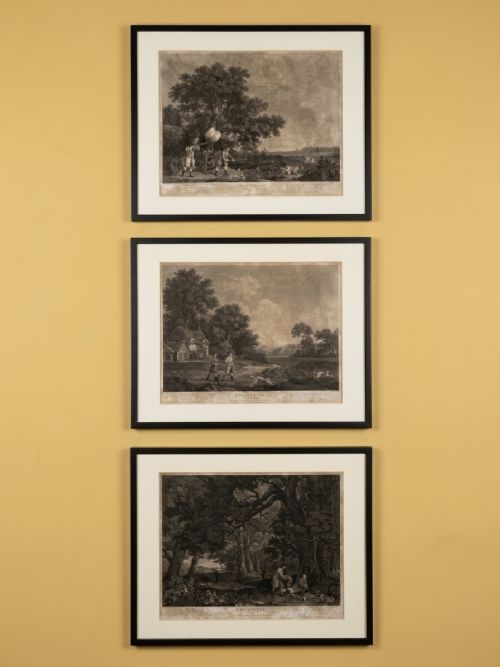
An antique dog etching print combines fine graphic artistry with historical canine subjects, ranging from spaniels to terriers. When searching for an antique dog etching print, buyers typically encounter works produced across the nineteenth and early twentieth centuries. These pieces reflect specific stylistic periods including Victorian, Edwardian, and early twentieth century realism.
The physical forms on this page include original framed prints and wall art designed for domestic display. Many examples originate from the early decades of the twentieth century alongside nineteenth century engravings. Each piece presents a distinct canine portrait framed under glass with wood surrounds.
Materials and methods of production
Makers produced these works using ink applied to paper plates through traditional intaglio printing techniques. Master printmakers utilised drypoint methods to scratch fine lines directly into the metal plate, creating velvety textures in the fur. This technique required precise manual pressure during the pulling of each impression.
Finished works were subsequently mounted behind glass and housed within wooden frames suitable for interior display. The combination of high grade ink and robust paper stock ensured these images survived across multiple centuries. Carpenters constructed the protective wooden surrounds to complement the monochrome tones of the printed imagery.
Antique Dog Etching Print Retail Price Guide 2026
Typical asking prices for dog etching print among the pieces listed under this phrase on Sellingantiques today, from the lower quarter to the upper quarter. They describe what is for sale here now, not the wider market.
Listings feature paper and ink materials housed in wood and glass, spanning the Victorian period through early twentieth century realism.
Assessing quality in printed works
Superior examples of an antique dog etching print display deep plate marks and crisp ink transfer that reveal the delicate nuances of canine anatomy. Master printmakers achieved richer tonal gradations in the shadows, particularly when rendering the texture of a dog coat. Lesser impressions often appear flat or muddy, losing the fine detail in the background.
The condition of the paper surface and the integrity of the framing materials also influence the overall standard of the piece. Well preserved margins and clean paper indicate careful historic handling away from damaging moisture. Original frames that retain their historic finish contribute positively to the overall integrity of the object.
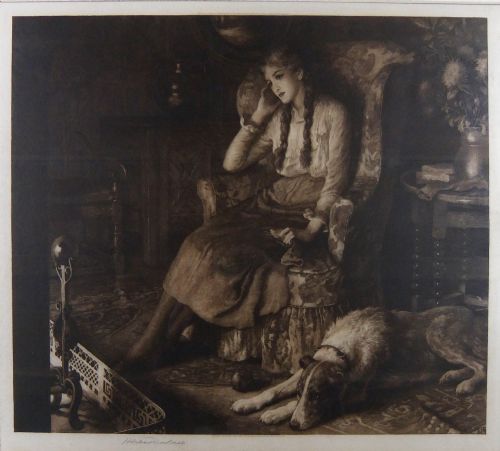
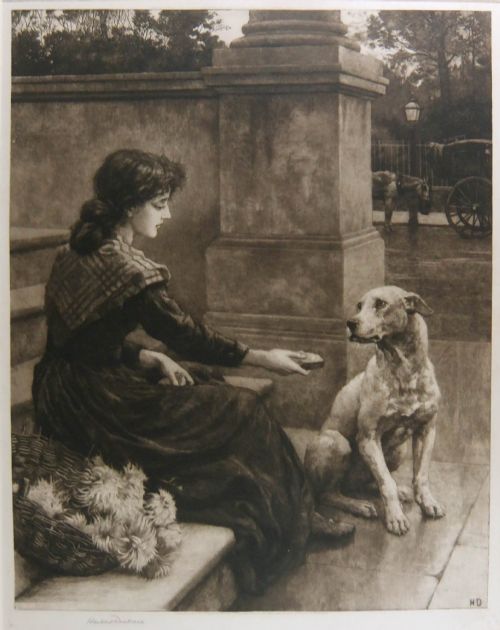
Herbert Dicksee·Blockey
The Antique Dog Etching Print Glossary
- Etching
- A printmaking process where acid bites lines into a metal plate to hold ink. This method allows for delicate, painterly line work.
- Drypoint
- A printmaking technique where an artist scratches an image directly into a plate with a sharp needle. This creates a distinctive raised burr that holds ink for velvety dark lines.
- Engraving
- A method of cutting design lines directly into a hard plate using a burin tool. It produces crisp and precise linear details.
- Plate mark
- The indentation left on the paper by the edge of the printing plate under heavy press pressure. This feature confirms the use of a traditional intaglio printing process.
- Realism
- An artistic style focused on depicting subjects accurately and truthfully without idealisation. In these works, it captures the realistic anatomy and expression of dogs.
Antique Dog Etching Print: Frequently Asked Questions
What is an antique dog etching print?
An antique dog etching print is a historic work of art created through traditional intaglio printing methods on paper. These pieces depict various canine breeds with fine linear detail.
They serve as decorative wall art that reflects the aesthetic standards of nineteenth and early twentieth century English country houses.
How do I date these prints?
Dating relies on stylistic markers, paper analysis, and associated framing materials typical of the Victorian and Edwardian eras. Print technology evolved significantly between the nineteenth century and the early nineteen-twenties.
Examining the signature, plate characteristics, and subject matter helps establish the approximate decade of production.
Where should I hang these?
These framed works suit traditional study spaces, hallways, or living rooms where fine art prints can be appreciated at close range. They pair well with wood panel architectural details.
Protect the paper by hanging them away from direct sunlight and excessive moisture.