


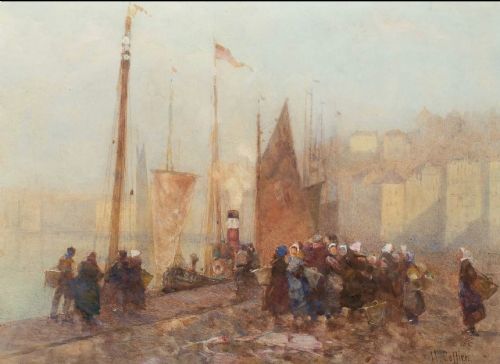
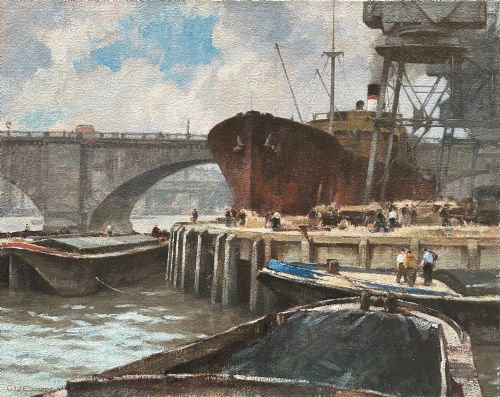
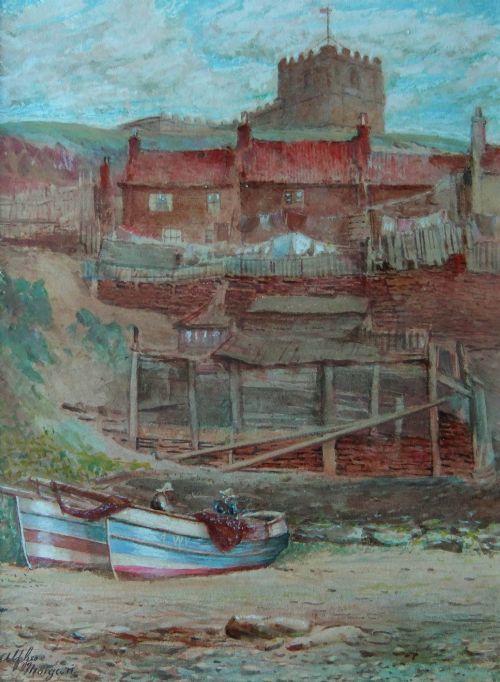
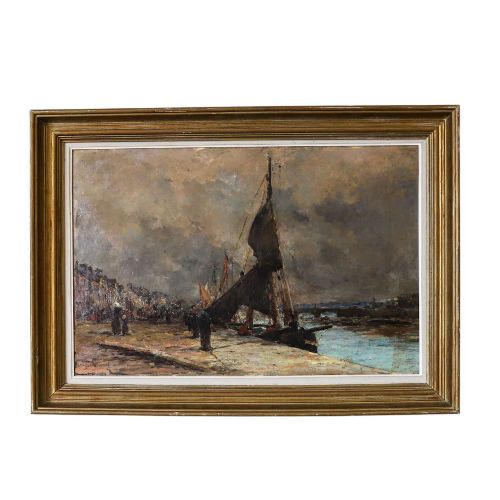



Original Harbour Scene Artwork
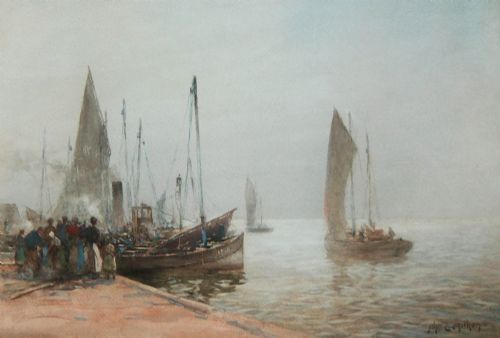
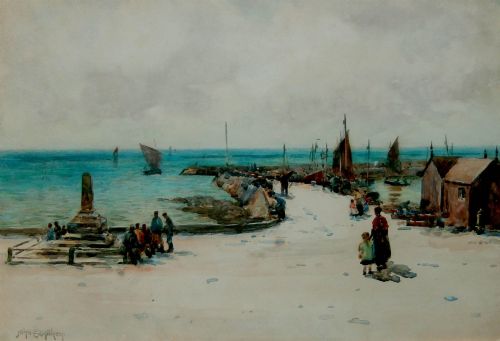
When you search for original harbour scene artwork, you are looking at coastal views of working ports, fishing boats and tidal basins captured by artists across the nineteenth and twentieth centuries.
Original Harbour Scene Artwork
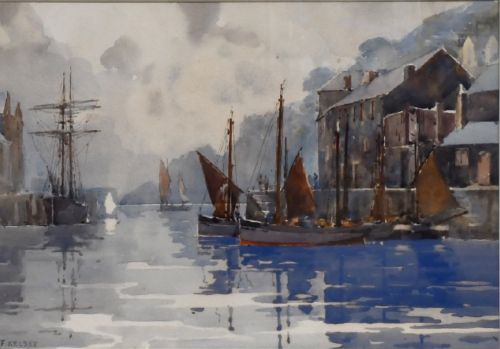
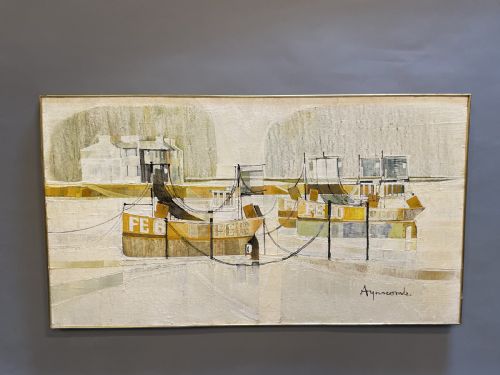
Original harbour scene artwork captures maritime life, coastal topography, and working vessels in ports ranging from Cornish fishing villages to northern European havens. These pieces record historical anchorages, quaysides, and shipping activity through the eyes of contemporary observers.
The selections span the nineteenth century, Edwardian era, and mid-twentieth century, reflecting evolving interpretations of coastal subjects. Works include detailed topographical records alongside freer impressions of light upon water.
Watercolour paintings and oil paintings dominate the selection, presented on paper, canvas, board, and panel. Framed artwork frequently retains period gilding or traditional framing that complements the maritime subject matter.
How they were made
Watercolour pigment applied to paper allows artists to capture translucent effects of sea spray, atmospheric skies, and shifting light across tidal mudflats. Many works utilise delicate washes alongside precise pencil or ink underdrawing to define rigging and architecture.
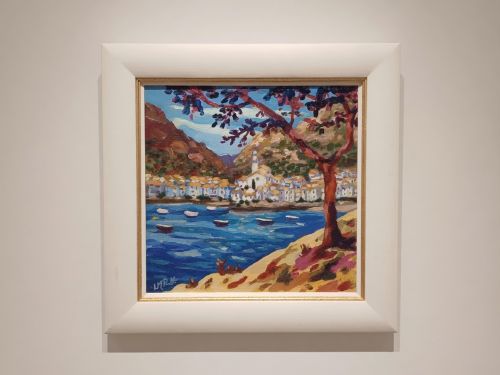
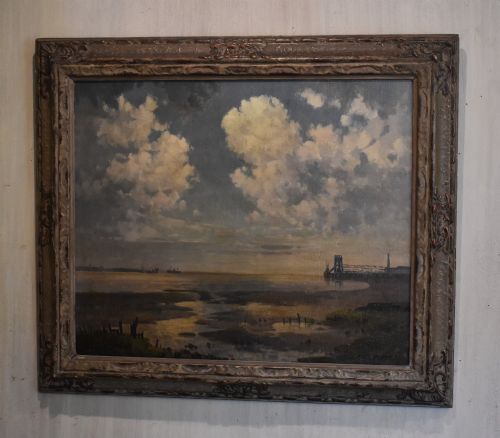
Oil paint laid upon canvas, board, or wood panel provides rich texture and depth for depicting choppy seas, shadowed hulls, and dense clusters of moored shipping. Artists manipulate the medium with both fluid brushwork and heavier impasto to suggest movement and substance.
Several artists braved North Sea gales and Cornish drizzle with pocket watercolours, returning with damp paper and salt-encrusted frames.
What varies in quality
Atmospheric conviction and spatial handling separate skilled observations from routine topographical recording. The strongest works capture the specific weight of maritime air and the particular character of regional craft rather than relying on formulaic compositions.
Material stability and preservation of the support dictate longevity, particularly in works on paper exposed to light or damp coastal environments. Pigment retention and the condition of original or period gilt wood frames contribute to the integrity of the piece.
James E Aitken·William Banks Fortescue·Hector Caffieri·Alfred G Morgan·Frank Kelsey·George F Pennington·Richard Harry Carter·Gyrth Russell·William Lee Hankey·Fred Lawson·James Kyd·Donald McIntyre·John Bell·Kate E Booth·Frederick Stuart Richardson·Rowland Henry Hill·Frank W Scarborough·Jack R Mould·Antonio Godoy·Thomas Clavering Alder·Owen Bowen
The Original Harbour Scene Artwork Glossary
- Watercolour
- A paint consisting of colour suspended in a water-soluble vehicle, typically applied to paper to achieve translucent washes of tone.
- Impressionism
- A style of painting emphasising transient effects of light, loose brushwork, and unblended colour rather than meticulous detail.
- Board
- A rigid flat substrate, often made of wood or compressed wood pulp, used by artists as an alternative to stretched canvas.
- Gilt wood
- Wood carved or moulded and coated with a thin layer of gold leaf or metallic powder, commonly found on period picture frames.
- Provenance
- The documented history of ownership or origin of an artwork, establishing its authenticity and lineage.
Original Harbour Scene Artwork: Frequently Asked Questions
What periods do these harbour paintings cover?
The works span from the nineteenth century through the Edwardian period and into the mid-twentieth century. This timeline captures shifts in maritime trade and artistic technique across generations.
Artists working in different decades recorded the changing face of coastal communities, from traditional sailing luggers to early twentieth-century port infrastructure.
Are these pieces painted outdoors?
Many coastal works began as plein-air sketches executed directly on quaysides and beaches to capture immediate light and weather conditions. Artists often completed larger canvases later in their studios using these preliminary studies.
Watercolours in particular were frequently painted on the spot to record rapid shifts in tidal states and coastal skies.
How should I frame and display these artworks?
Works on paper require conservation mounting behind glass to protect the pigment from ultraviolet degradation and atmospheric moisture. Oil paintings on canvas or board benefit from stable indoor environments away from direct heat sources.
Many pieces retain their original gilt wood frames, which should be preserved where structurally sound to maintain the historical context of the artwork.
How do I identify regional British harbour scenes?
Artists frequently inscribed titles, locations, and signatures directly onto the front or reverse of the painting or mount. Specific coastal landmarks, architectural styles of West Country cottages, and types of fishing vessels help pinpoint locations like St Ives, Whitby, or Polperro.
Period labels from galleries and retailers on the reverse offer further clues to geographic provenance.