


Terracotta Harbour Painting
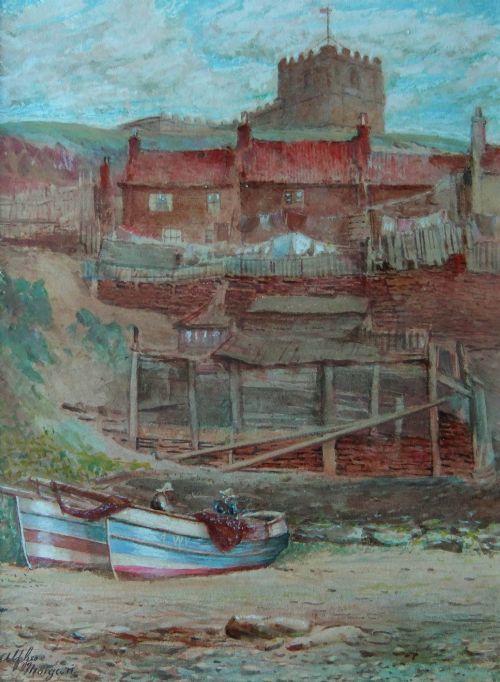
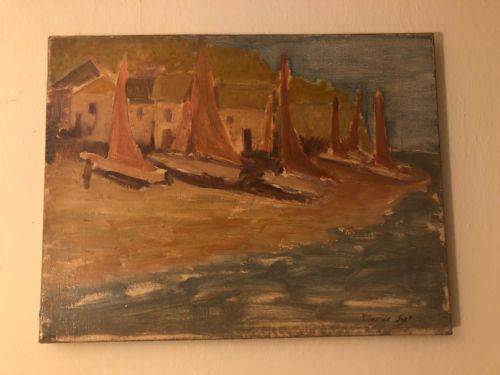
These terracotta harbour painting works capture coastal townscapes and maritime scenes through the delicate application of watercolour pigment and oil on canvas.
Terracotta Harbour Painting
A terracotta harbour painting brings coastal views, fishing docks, and maritime scenes into domestic spaces through works created across the Victorian, Edwardian, and mid-century periods. These works capture historical ports and coastal landmarks such as Whitby, Staithes, and Volendam with distinct regional character.
The selections available here include watercolour paintings on paper alongside oil paintings set in gilt wood frames. Buyers frequently encounter detailed topographical watercolours depicting harbour life, piers, and docked boats created by British and European artists.
The visual scope ranges from nineteenth-century impressions to twentieth-century town landscapes and port views. Each piece records specific maritime locations, architectural details, and coastal atmospheres through traditional painting media.
Materials and execution
Artists utilised watercolour pigment and oil paint applied to paper or canvas surfaces to build these coastal scenes. Paper supports receive fluid washes of pigment, while oil paintings employ richer layers of paint on stretched canvas.
Many of these works are presented behind glass within protective framing, often complemented by gilt wood surrounds. The combination of traditional pigments, paper supports, and secure framing protects the delicate watercolour works over time.
Listings span multiple decades, incorporating Victorian, Edwardian, 1920s, 1930s, and 1960s periods alongside paper, canvas, and gilt wood materials.
Assessing quality and finish
Quality rests upon the handling of light and architectural detail within the harbour or townscape. Stronger works demonstrate confident brushwork and precise topographical rendering of vessels, docks, and coastal buildings.
The preservation of the paper or canvas surface and the clarity of the pigment contribute significantly to the overall presence of the piece. Intact framing, whether original gilt wood or protective glass settings, maintains the integrity of the artwork.
Alfred G. Morgan·Fred Lawson·Arthur Tucker·Fred Waugh·James Thomas Watts·Jan van Couver·Ralph Todd·Fred Mayor·John Sanderson Wells·Frances E Nesbitt·Rowland Henry Hill·Maurice Sijs
The Terracotta Harbour Painting Glossary
- Watercolour painting
- A work created by applying water-based pigments to paper supports. This technique allows for translucent washes and fine illustrative detail.
- Oil on canvas
- A painting method using pigments suspended in a drying oil applied directly to stretched woven fabric. This medium provides rich colour depth and textural variation.
- Gilt wood
- Timber framing finished with a thin layer of gold leaf or metallic gilt. It provides a decorative and protective border for historical paintings.
- British Impressionism
- An artistic movement focusing on light, atmosphere, and everyday subject matter. Works in this style capture natural outdoor illumination and transient coastal weather.
Terracotta Harbour Painting: Frequently Asked Questions
What periods do these paintings come from?
The works span from the Victorian and Edwardian eras through to the 1920s, 1930s, and mid-century modern periods. Artists captured maritime subjects across these distinct historical decades.
Each period brings its own characteristic approach to coastal landscapes, ranging from traditional Victorian townscapes to twentieth-century impressionistic harbour views.
How should I display watercolour works at home?
Watercolour paintings on paper require protection from direct sunlight to prevent the pigment from fading over time. Hanging them away from excessive moisture preserves both the paper and the framing.
Displaying these works behind glass with appropriate matting keeps the surface safe from environmental dust and physical contact.
What subjects appear most frequently in these scenes?
Coastal views, fishing docks, moored boats, and harbour piers dominate the subject matter. Locations such as Whitby, Staithes, and Volendam recur across the collection.
Artists also recorded town landscapes, architectural landmarks, and figures engaged in daily coastal life.