







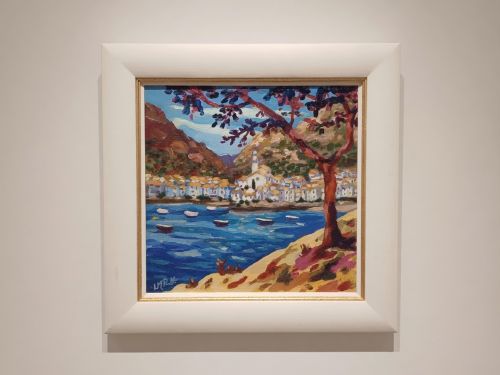
Original Coastal Art
Original coastal art captures the shifting light and rugged shores of Britain through the hands of painters working from the nineteenth century onward.
Original Coastal Art
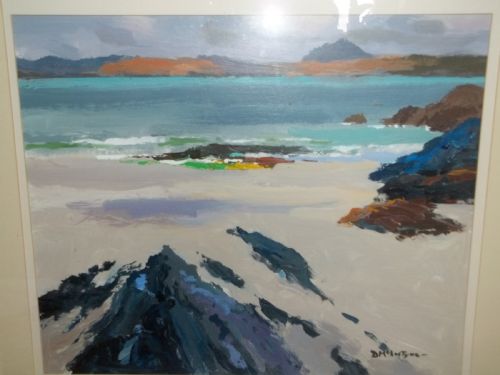
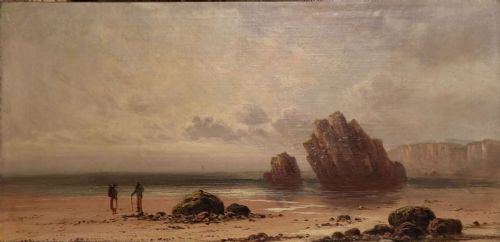
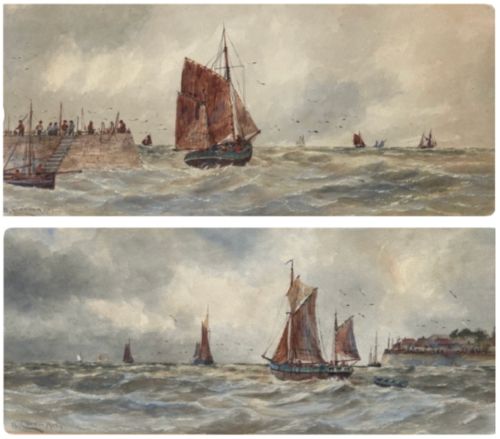
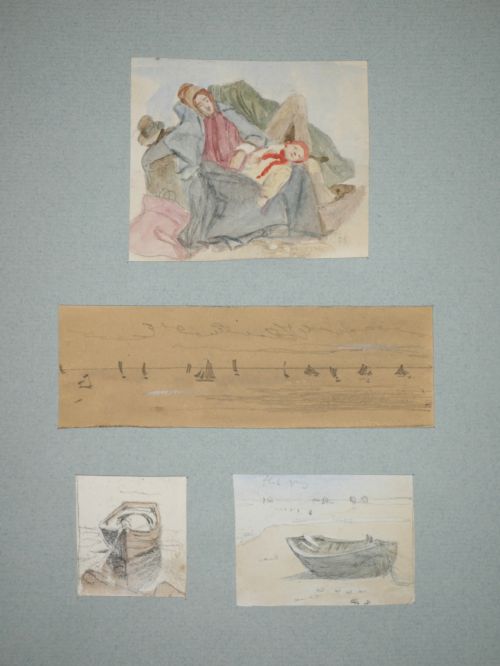
Original coastal art comprises paintings and works on paper depicting harbours, fishing boats, and coastal landscapes. The selection spans the nineteenth century through to the mid-twentieth century and beyond, covering Victorian maritime scenes and later interpretations.
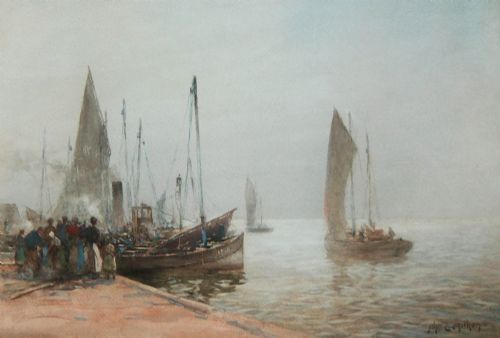
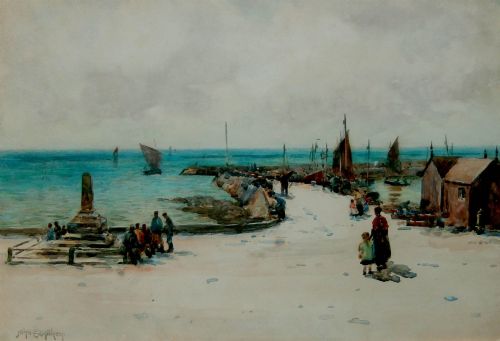
Buyers frequently encounter watercolours and oil paintings on canvas or board originating from British coastal hubs such as St Ives, Whitby, and Scarborough. These pieces record the working life of the shore, from landing the catch to quiet estuaries and open sea views.
Works range in style from traditional Victorian maritime recording to British Impressionism, Post-Impressionism, and mid-century modernism. Each period brings its own palette and handling, reflecting how artists viewed the coastline across different decades.
How They Were Made
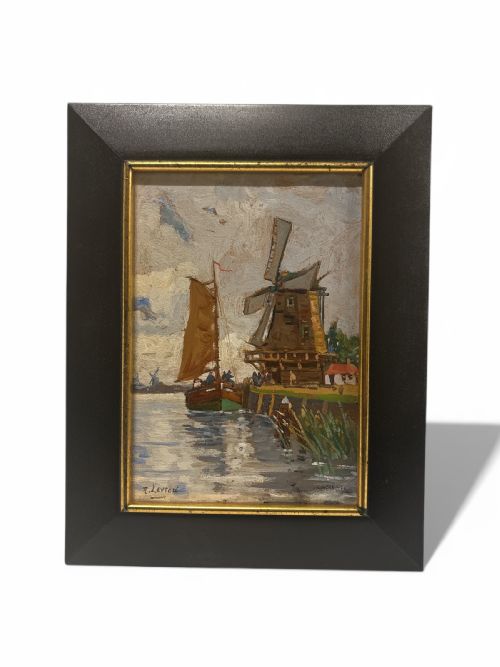
Artists worked in oil paint or watercolour, applying medium to canvas, prepared wood panels, or heavy paper. Oil paintings often utilised gilt frames to complement the subject matter, while watercolours relied on transparent washes to capture atmospheric sea light.
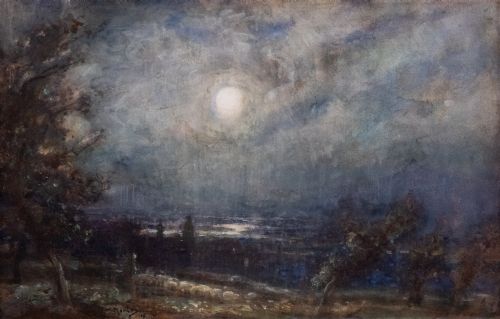
Many works were executed en plein air directly on the beach or harbour wall to catch immediate weather conditions, leading to textured impasto brushwork in oils or swift, confident strokes in watercolour.
The listings show watercolours and oils spanning the nineteenth century through to the 1960s, featuring paper, canvas, and wood panels.
What Varies in Quality
Quality rests on the sureness of the drawing and the artist's ability to render atmosphere, movement in water, and changing coastal light rather than mere topographical accuracy. Stronger compositions show confident handling of paint or watercolour wash, whereas lesser examples rely on formulaic repetition.
The relationship between the subject and the medium dictates success, with superior pieces demonstrating a direct engagement with the scene, whether through thick impasto on board or delicate watercolour on paper.
James Orrock·William Cannon·Clifford Hanney·James E Aitken·John E Aitken·William Banks Fortescue·Thomas William Morley·Clive Browne·Peter Brannan·Hector Caffieri·James Fry·Ethel Sands·Thomas Maidment·Donald McIntyre·Cecil Allan Mould·Alfred G Morgan·Joseph Farquharson·William Matthison·Bernard Benedict Hemy·George Stanfield Walters·Frank Kelsey·Walter Goodin·Abraham Hulk I·Henry Barlow Carter·Charles D'Oyly
The Original Coastal Art Glossary
- Watercolour
- A paint consisting of colour suspended in a water-soluble vehicle, typically applied to paper to create translucent washes of light.
- Impasto
- Paint applied thickly to a canvas or board, standing out from the surface so that the brush or palette knife marks remain visible.
- En plein air
- A French expression meaning painting out of doors to capture the direct effects of light upon objects.
- Gilt wood
- Wood that has been covered with a thin layer of gold leaf, commonly found on framing for nineteenth and twentieth-century oil paintings.
Original Coastal Art: Frequently Asked Questions
How do I date a coastal painting?
Examine the materials, clothing of any figures depicted, and framing style to narrow down the decade. Signatures, inscriptions on the reverse, and artist biographical dates provide the most reliable chronological anchors.
Comparison with documented works from the same hand helps confirm whether a piece belongs to the Victorian era, the Edwardian period, or mid-century British modernism.
Are watercolours as durable as oils?
Waterworks on paper require protection from direct sunlight and moisture to prevent fading and foxing. Proper framing behind glass with acid-free mounts preserves the integrity of the paper over generations.
Oil paintings on canvas or board offer greater physical resilience against environmental factors, though both mediums benefit from stable indoor humidity.
Where were most of these scenes painted?
The listings feature prominent fishing ports and coastal communities around Britain, with Cornwall and Yorkshire appearing frequently. Locations such as St Ives, Whitby, Scarborough, and the Essex coast drew generations of artists.
Artists also travelled to Scottish havens and European shores, recording local harbour life and maritime traffic.
How should I frame an antique maritime painting?
Period frames, particularly nineteenth-century gilt wood mouldings, complement traditional oil paintings and watercolours from the same era. Selecting a frame appropriate to the painting's creation date enhances its historical character.
Ensure that any new framing materials used for conservation are acid-free to protect the paper or canvas from chemical deterioration.