


Orientalist Ceramic Figurine
An orientalist ceramic figurine captures European fascination with Eastern subjects, bringing dramatic figures and water carriers into your home.
Orientalist Ceramic Figurine
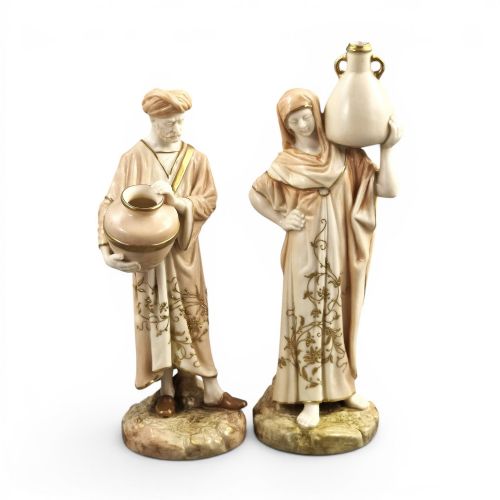
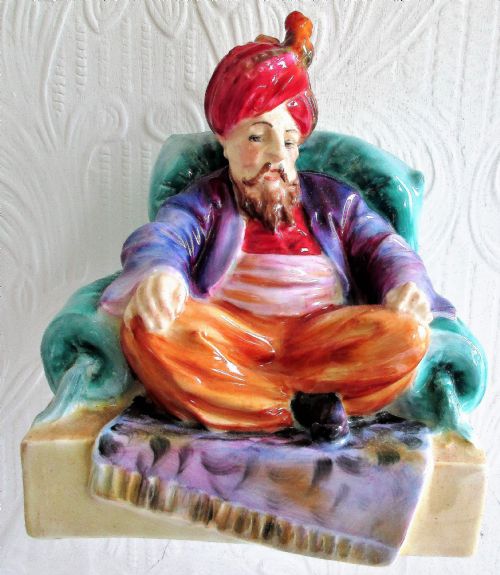
An orientalist ceramic figurine represents human subjects from North Africa, the Middle East, and Asia, rendered through the lens of nineteenth and twentieth-century European taste. You encounter these pieces in forms ranging from water carriers and musicians to decorative busts and table lamps.
The selections span distinct periods including the Victorian and Edwardian eras, alongside Art Nouveau and Art Deco movements. Makers such as Royal Worcester, Royal Dux, and Goldscheider dominate the output, working across the nineteenth and early twentieth centuries.
Early examples reach back to the eighteenth century with soft-paste porcelain interpretations like allegorical figures of continents. The primary focus remains on nineteenth-century earthenware and porcelain works depicting water carriers, traders, and musicians.
Materials and methods
Potters utilised earthenware, terracotta, and porcelain as the primary body materials for shaping complex human forms and garments. Slip casting and hand modelling allowed artisans to achieve intricate folds in drapery and detailed facial expressions.
Surfaces received decorative treatments through hand-painted enamel, polychrome glaze, and applied gold leaf or gilding. Certain manufactories employed specialised blush ivory grounds and metallic finishes to accentuate the exotic costumes and accessories.
Elephants and musicians occasionally share shelf space with water carriers, proving the nineteenth century had eclectic taste.
Judging quality
The application of glaze and enamel dictates the visual depth of the piece, separating standard production runs from exhibition-quality or prototype pieces. Well-executed gilding and careful firing enhance the sculptural presence of water carriers and musicians.
Royal Worcester·James Hadley·Royal Dux·Goldscheider·Carl Thieme Dresden
The Orientalist Ceramic Figurine Glossary
- Blush ivory
- A matte, cream-coloured porcelain finish pioneered by Royal Worcester that mimics the warmth of ivory.
- Veilleuses
- French ceramic night-light lamps often incorporating figurative designs and pierced chimneys.
- Polychrome
- Decoration utilising multiple distinct enamel colours applied across the ceramic surface.
- Earthenware
- Porous pottery fired at lower temperatures, commonly used for large nineteenth-century sculptural figures.
- Staffordshire
- English regional pottery known for popular figures and earthenware groups produced across centuries.
Orientalist Ceramic Figurine: Frequently Asked Questions
How do I identify a water carrier figure?
Water carrier figures typically depict individuals carrying urns, jars, or vessels on their shoulders or by a spring. Look for specific regional attire and supportive titles recorded in the makers' archives.
These sculptures often serve as decorative table centerpieces or form part of larger matched pairs from manufacturers like Royal Worcester and Turn.
What distinguishes Art Nouveau figures?
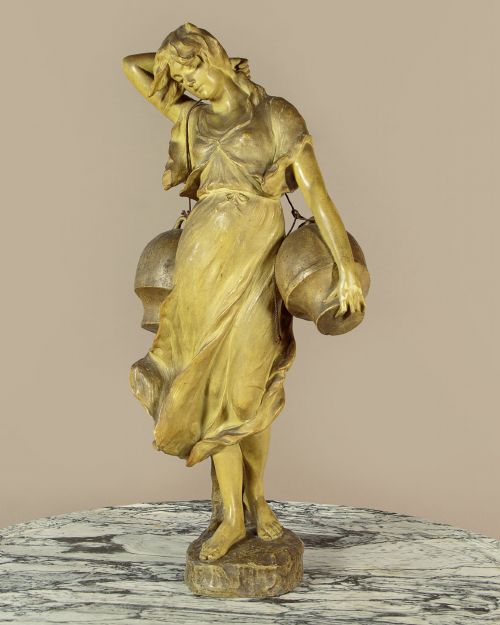
Art Nouveau examples display flowing, organic lines and stylised drapery that reflect the design ethos of the turn of the twentieth century. Makers like Goldscheider utilised these sinuous forms for dramatic figures such as Rebecca by the Spring.
Such pieces often combine terracotta or earthenware bodies with metallic patination or soft coloured glazes rather than bright polychrome enamels.
Where were nineteenth century figures made?
Production centres spanned across England, Austria, France, and Germany during the nineteenth century. Major factories included Royal Worcester in England and Royal Dux in Bohemia.
Each region developed distinct clay bodies and glazing techniques, from Staffordshire earthenware to fine Dresden porcelain.
How should I display porcelain figurines?
Display these figures away from direct sunlight and dramatic temperature fluctuations to protect delicate enamel colours and gold leaf. Stable shelving with adequate depth ensures large sculptural pieces remain secure.
Keep them distanced from high-traffic areas to prevent accidental contact with fragile extremities and protruding accessories.