


Oriental Temple Guardians
Oriental temple guardians are protective figures of stone, bronze, wood and ceramic designed to ward off malevolent forces from sacred spaces.
Oriental Temple Guardians
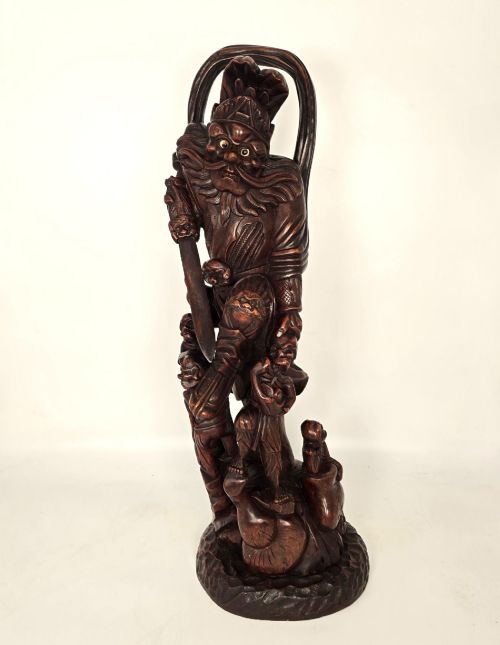
Oriental temple guardians encompass sculptural depictions of mythical lions, guardian kings and Buddhist figures originating from Chinese, Japanese, Tibetan and Burmese traditions. These protective figures frequently appear as pairs flanking thresholds, altars and sacred spaces within temples and domestic settings.
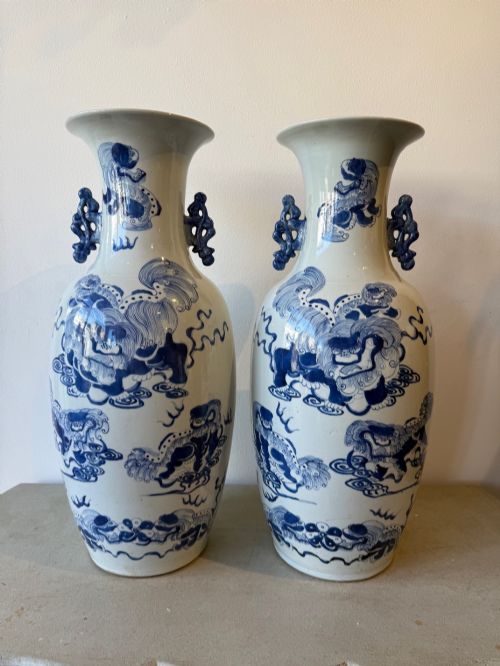
The pieces on this page span several centuries, with particular concentration in the nineteenth century and the early twentieth century. Common forms include carved hardwood and gilt wood figures, bronze and brass statues, and glazed porcelain or pottery models.
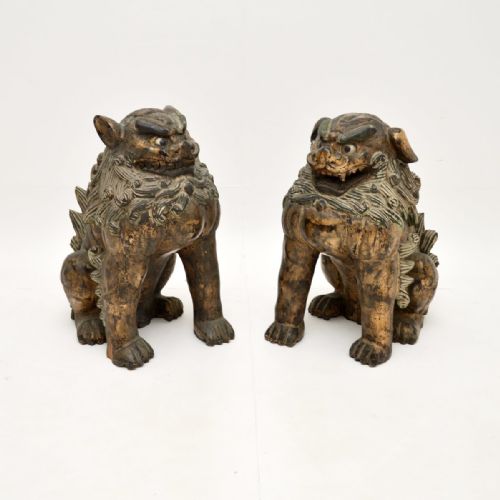
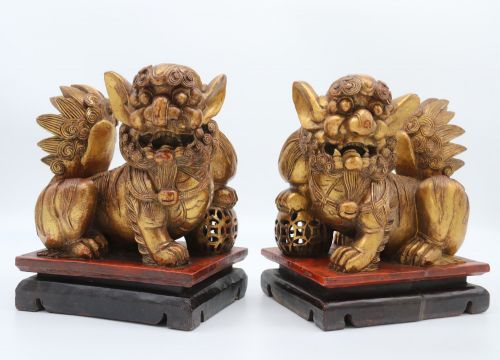
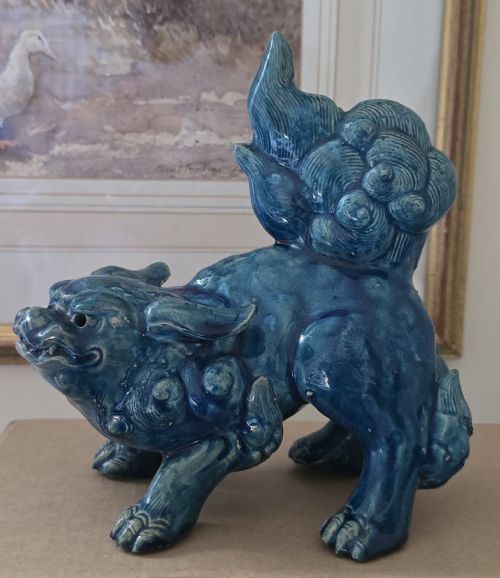
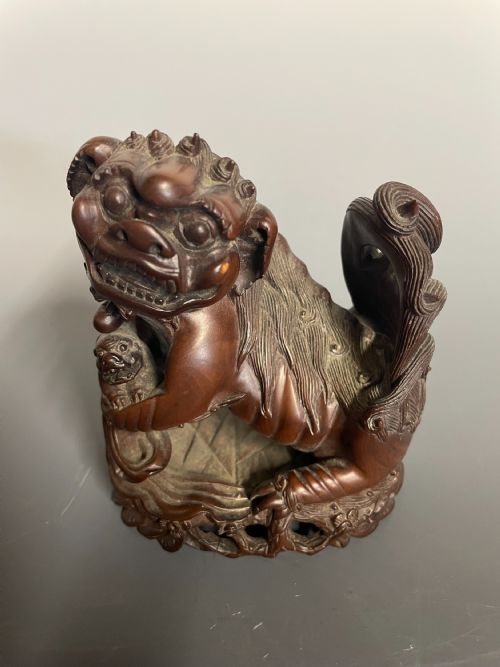
Buyers will encounter various interpretations of guardian lions, alternatively known as foo dogs, shishi or karashishi, alongside monumental wooden figures of guardian kings. These sculptures range from small boxwood carvings to monumental bronze and stone statues weighing considerable amounts.
Materials and construction
Carved wood examples utilise dense timbers including boxwood and hardwood, often enriched with gilt, lacquer or polychrome paint layers. Artisans shaped these materials using traditional hand-carving techniques to delineate intricate manes, musculature and ceremonial garments.
Metal versions rely on cast bronze, brass and iron, sometimes highlighted with gilding or applied mirror elements. Ceramic and porcelain pieces employ specialised glazing techniques, producing turquoise, pale green, blue and white, and polychrome finishes fired at high temperatures.
The listings on this page span periods from the eighteenth century through the early twentieth century, incorporating materials like porcelain, bronze, carved hardwood and pottery.
Assessing quality in guardian sculptures
Quality rests upon the sculptural depth and anatomical precision achieved by the maker, distinguishing expressive, master-carved figures from rigid commercial productions. The handling of details such as the curls of the mane, the tension in the paws and the symmetry of a matched pair dictates the aesthetic success of the piece.
The preservation of original surface treatments, whether gilt layers, polychrome pigments or specialised ceramic glazes, plays a primary role in determining the integrity of an antique guardian. Superior patination on bronzes and undisturbed original finishes on carved woods reflect careful historical stewardship.
The Oriental Temple Guardians Glossary
- Foo dog
- A colloquial western term for the Chinese guardian lion, or shi, which actually represents a mythical lion rather than a canine. These figures traditionally stand outside temples to provide symbolic protection.
- Shishi
- The Japanese term for a stone or ceramic guardian lion, closely related to Chinese iconographic traditions. They frequently appear paired with open and closed mouths.
- Lokapala
- A guardian king or heavenly general tasked with protecting a specific cardinal direction in Buddhist cosmology. Sculptures of these figures often depict them in armour with dynamic, commanding postures.
- Meiji period
- A period in Japanese history spanning from 1868 to 1912, known for significant developments in metalwork, ceramics and decorative arts. Pieces from this era often display refined surface details.
- Qing dynasty
- The final imperial dynasty of China, lasting from 1644 to 1912, which produced prolific ceramic and wood guardian figures. Stylistic variations across this period help date surviving sculptures.
Oriental Temple Guardians: Frequently Asked Questions
What is a foo dog?
A foo dog is a western term for a Chinese guardian lion, historically placed outside temples and palaces to ward off evil spirits.
Despite the name, these mythical creatures combine the majesty of a lion with the protective loyalty associated with guardian beasts.
How were temple guardians used?
Temple guardians were positioned in pairs at entrances, gates and altars to guard sacred spaces against harmful influences and malevolent spirits.
They served both architectural and spiritual functions, projecting authority and divine protection over the structures they inhabited.
How do I care for wooden guardians?
Wooden sculptures require stable indoor environments away from direct sunlight and dramatic humidity shifts to preserve the timber and any gilt or painted surface.
Dusting should be performed gently with a dry, soft cloth, avoiding commercial polishes that can damage historic finishes.
Are these figures always displayed in pairs?
Traditional placement usually involves a matched pair where one figure represents yin and the other yang, often with one paw resting on a brocade ball or a cub.
While many survive as pairs, single figures also appear independently depending on how they were used or collected.
What materials are temple guardians made from?
These protective figures were fashioned from a diverse array of materials including carved hardwood, bronze, brass, cast iron, pottery and porcelain.
Surface treatments frequently incorporated gilding, lacquer, turquoise glazes and polychrome pigments to enhance their decorative impact.