


Asian Guardian Figures
Asian guardian figures protect doorways and sacred spaces, taking sculptural forms from bronze, wood and pottery that collectors prize for presence and history.
Asian Guardian Figures
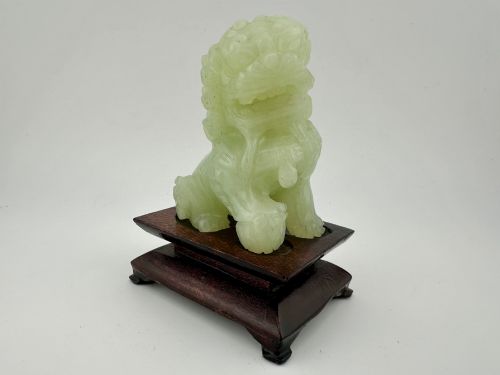
Asian guardian figures include temple lions, foo dogs, mythical beasts and fierce warrior kings modelled to ward off malevolent forces. These sculptures appear frequently as pairs, standing sentinel at entrances or upon altars to maintain spiritual balance.
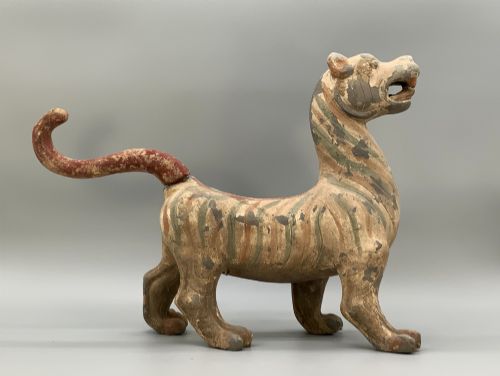
The selections span distinct cultural expressions, encompassing traditional Chinese temple guards, Japanese Meiji interpretations and Southeast Asian bronzes. Collectors encounter works originating from the Han Dynasty up to the early twentieth century.
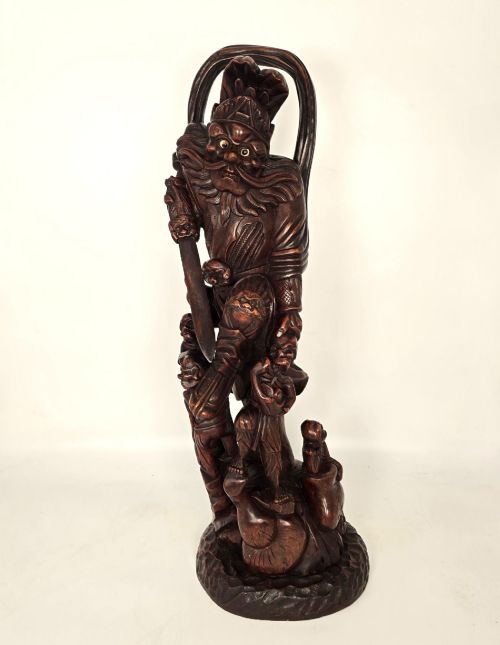
Makers utilised diverse forms ranging from monumental carved hardwood Lokapala figures to diminutive boxwood animal carvings. Each object reflects the specific religious and decorative traditions of its region and period of origin.
Materials and construction
Foundry workers cast temple lions and mythical beasts in bronze, brass and iron, sometimes applying gilt and polychrome surface treatments. Artisans also modelled earthenware and terracotta figures, finishing them with colourful glazes and pigments.
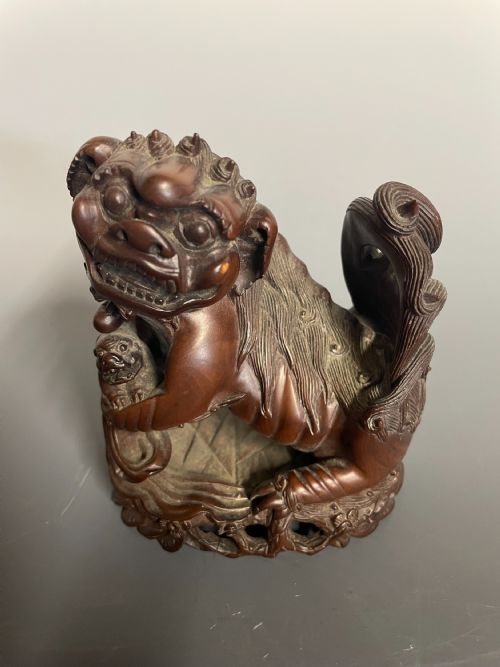
Wood carvers shaped dense materials such as boxwood, root wood and hardwood into detailed guardians with intricate surface textures. These methods required considerable skill to render the muscular forms and flowing manes characteristic of the subjects.
Some temple lions weigh enough to deter spiritual intruders and casual thieves alike.
Evaluating quality
Superior examples demonstrate confident anatomical modelling and crisp detail in the rendering of fur, armour and facial expressions. The depth and control of the initial carving or casting dictate the visual impact of the finished piece.
The preservation of original surface finishes, including polychrome pigments, gilt layers and natural patination, distinguishes finer pieces. Age and handling alter these surfaces over time, altering the character of the object.
The Asian Guardian Figures Glossary
- Foo dog
- A traditional Chinese guardian lion, typically shown in pairs representing yin and yang. These mythical beasts guard sacred structures and domestic entryways.
- Lokapala
- A Buddhist guardian king, often depicted in elaborate armour. Sculptors carved these figures to protect the four cardinal directions.
- Sancai
- A traditional three-colour Chinese glaze technique utilised on pottery figures. Artisans applied amber, green and creamy white tones before firing.
- Shishi
- A Japanese term for a stone or metal guardian lion. These sculptures derive from Chinese prototypes and stand outside temples.
- Zhenwu
- A powerful Daoist deity and martial god who serves as a northern guardian. Images of this figure often incorporate gilt and polychrome wood.
Asian Guardian Figures: Frequently Asked Questions
Where were these figures placed?
Guardians stood at temple entrances, tomb approaches and household thresholds to deter harmful spirits. Pairs typically flanked doors, with one male holding a ball and a female restraining a cub.
Inside buildings, smaller versions rested upon altars or desks. Their placement reinforced architectural hierarchy and provided spiritual defence for the inhabitants.
How do I care for bronze figures?
Bronze guardians require minimal intervention to preserve their historic metal surfaces and patination. Dusting with a soft, dry cloth prevents the accumulation of particulate matter that might trap moisture.
Keep these sculptures away from direct heat sources and high humidity to protect any underlying joinery or applied finishes. Avoid chemical cleaners entirely, as they strip the aged patina.
What is a temple lion?
Temple lions represent mythical beasts combining the attributes of lions and dogs, serving as steadfast protectors. Artisans rendered them with open mouths to utter sacred sounds or closed mouths to ward off evil.
These sculptures evolved from Indian Buddhist traditions into distinct regional styles across China, Japan and Tibet. Their visual language incorporates stylised curls, muscular limbs and fierce expressions.
How can I date wooden carvings?
Dating relies upon observing tool marks, timber shrinkage, wear patterns and the degradation of historic finishes. Older woods exhibit a dry, dense surface texture developed through centuries of environmental exposure.
Stylistic indicators such as carving depth, armour design and facial proportions also align pieces with specific periods like the Qing Dynasty. Comparing these elements with documented examples clarifies the age of the sculpture.
Why are they found in pairs?
Pairs embody the dual forces of yin and yang, balancing active and receptive energies in the guarded space. One figure usually rests a paw on an embroidered ball representing supremacy, while the other touches a cub representing nurture.
Displaying matching guardians maintains this ancient symbolic equilibrium. Complete pairs hold greater significance than solitary figures within traditional contexts.