


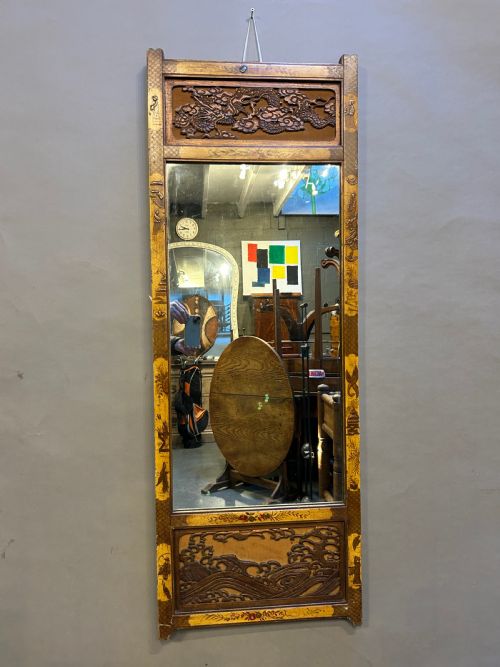


Oriental Style Wall Mirror
An oriental style wall mirror brings rich japanned surface work and classic Chinoiserie forms into a room, offering both decorative impact and practical reflection.
What these pieces are
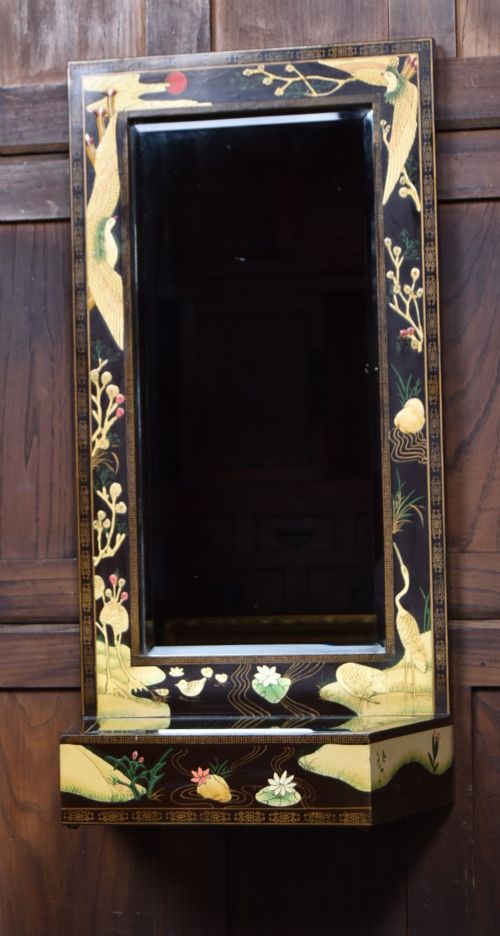
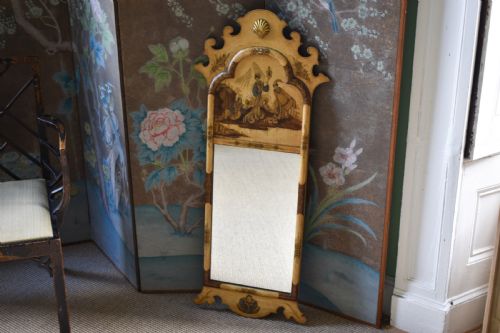
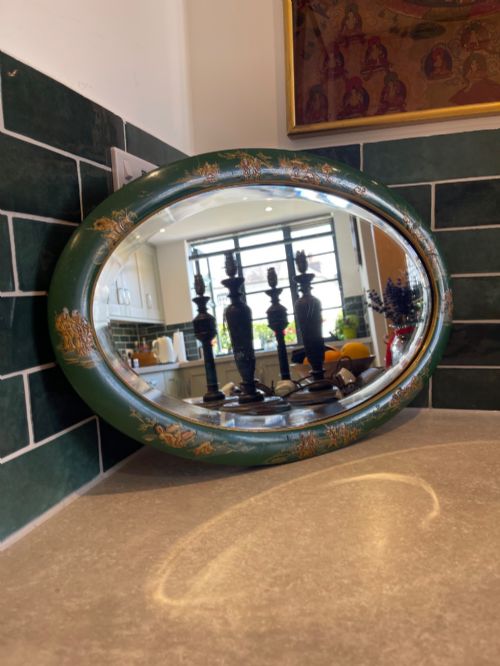
An oriental style wall mirror encompasses pieces designed within Chinoiserie traditions, frequently taking the form of wall mirrors executed in lacquered wood. These items emerge across distinct periods, notably including Georgian examples alongside Edwardian interpretations dating from around nineteen ten and nineteen twenty.
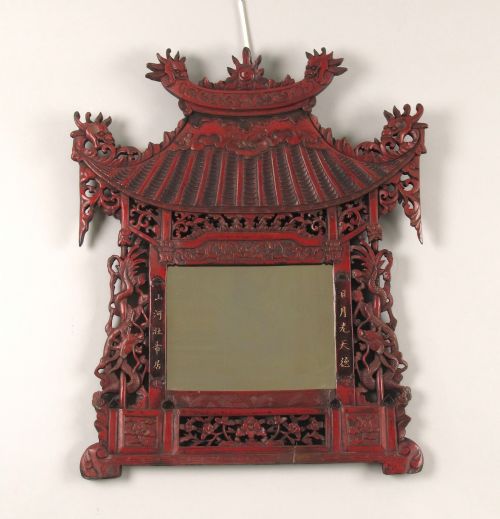
Buyers encountering this selection regularly meet oval wall mirrors, alongside pairs of mirrors finished in striking colourways like black, red, and scarlet. The overarching aesthetic draws directly upon Chinese and Japanese decorative motifs, translating historical design into domestic furnishings.
How they were made
The construction of these pieces relies upon wood foundations treated with lacquer and resin lacquer to build up deep, glossy surface coats. Craftsmen then apply gilt and gold leaf highlights to define the intricate Chinoiserie scenes and border details.
Mirrors utilise standard glass and mirror glass panels set securely within these elaborate frames. The combination of painted or lacquered wooden structures with metallic leaf work defines the physical substance of each piece.
Retail Price Guide 2026
Typical UK retail prices for oriental style wall mirror, calculated from the Sellingantiques database of over a million retail prices indexed since 2003. This retail price guide relies exclusively on Sellingantiques data; no external sources or auction records are used, so the figures do not describe the wider market.
What varies in quality
Quality rests upon the depth and finesse of the japanned surface work, where skilled application yields rich layers rather than flat painted finishes. The precision of the gilt and gold leaf detailing further separates simpler interpretations from finer examples.
The handling of the wooden frame profiles and the clarity of the integrated mirror glass contribute significantly to the overall presence of the object. Cohesion between the chosen colour scheme, such as black or scarlet, and the underlying Chinoiserie composition dictates the visual success of the piece.
The Oriental Style Wall Mirror Glossary
- Chinoiserie
- European decorative style reflecting Chinese artistic influences, frequently found on furniture and wall mirrors. This aesthetic employs picturesque scenes and stylized motifs.
- Japanned
- European imitation of East Asian lacquerwork, created using layered varnishes and resin finishes. This technique produces a hard, glossy surface often embellished with gold.
- Gilt
- Application of gold leaf or gold powder to a surface, adding metallic brilliance to wooden frames. It highlights decorative details within the design.
- Edwardian
- Period spanning the early twentieth century, noted here for oval Chinoiserie mirrors and paired sets. Pieces from this era often reinterpreted earlier Georgian motifs.
Frequently Asked Questions
How do I hang a heavy lacquer mirror?
Ensure the wall fixings align with the weight of the wooden frame and secure directly into solid masonry or stud work where possible.
Verify that the hanging wire or integrated brackets on the back of the mirror are structurally sound before mounting.
What rooms suit an oriental style wall mirror?
These mirrors function well in hallways, living rooms, or bedrooms, serving as focal points that introduce colour and reflected light.
Pair them with complementary antique furnishings or let them stand alone against neutral walls to highlight the lacquered finish.
How do I clean lacquered wood frames?
Dust the frame gently with a soft, dry cloth to prevent the accumulation of particles on the delicate lacquer surface.
Avoid chemical cleaning agents and moisture, which can damage the resin lacquer and gold leaf detailing over time.
Are these mirrors original Edwardian pieces?
The selection includes pieces attributed to the Edwardian era, alongside Georgian period examples and items from nineteen twenty.
Checking the construction materials, such as the wood base and glass characteristics, helps confirm the age of each mirror.