
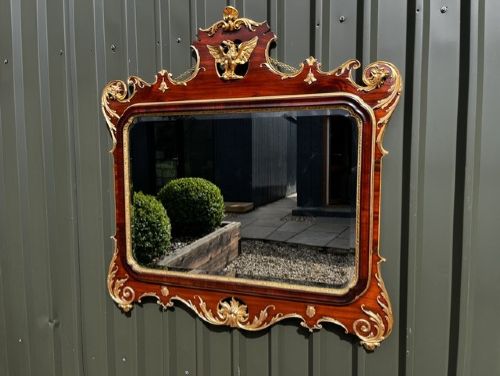


Red and Gold Mirror
These red and gold mirror pieces bring striking colour and gilded warmth into a room, offering both decorative presence and functional depth.
Red and Gold Mirror
The objects appearing here stretch from the Georgian period through the Victorian era and into the early twentieth century. You are most likely to meet revival styles such as George II, Chippendale, and Chinoiserie alongside French Rococo and Empire pieces.
Forms vary from pier mirrors and console table sets to large wall mirrors and arched overmantel designs. Many utilise traditional chinoiserie motifs, scarlet japanning, or distinctive camel cresting to create a bold focal point.
How they were made
Construction relies upon traditional cabinetmaking materials such as mahogany, wood, and gesso, which provide a stable base for decorative finishes. Artisans applied layers of red lacquer, japanning, or scarlet paint before adding detailed gilding to carved woodwork and frames.
Surface ornamentation often combines hand-applied gold leaf with red grounds, reflecting intricate techniques seen in Chinoiserie and French revival pieces. Glass panels are set within these heavy giltwood and lacquered frames, maintaining the proportion and structural integrity characteristic of each period.
Listings feature materials including glass, giltwood, wood, lacquer, gilt, gesso, mahogany, and velvet across various decorative forms.
What varies in quality
Quality reveals itself in the depth of the red ground and the precision of the gilding applied over gesso and wood. Finer examples display meticulous hand-carving and well-preserved japanned or lacquered surfaces that retain their intended richness over time.
The refinement of the supporting frame, whether executed in the Chippendale, George II, or French Rococo style, distinguishes superior pieces. Proportion, the crispness of the gilt details, and the harmony between the red base and the gold highlights determine the standing of each mirror.
The Red and Gold Mirror Glossary
- Giltwood
- Wood that has been carved and then coated with a thin layer of gold leaf. This material forms the bright, reflective framing seen across many antique mirrors.
- Japanning
- A European imitation of East Asian lacquerwork involving layered varnishes and heat-curing. It frequently produces the red and gold decorative surfaces found on period pier mirrors.
- Chinoiserie
- A European artistic style mimicking Chinese and East Asian artistic traditions. It appears on lacquered mirrors through characteristic scenic motifs and vibrant colour palettes.
- Overmantel Mirror
- A large mirror designed specifically to hang above a fireplace mantelpiece. These pieces often feature wide proportions to balance the hearth below.
- Trumeau Mirror
- A decorative wall mirror incorporating a painted or carved panel above the glass. These French pieces are sometimes paired with matching console tables.
Red and Gold Mirror: Frequently Asked Questions
What periods do these mirrors come from?
The pieces span from the Georgian era through Victorian times and into the early twentieth century. They encompass various revival movements including George I, George II, and French Rococo.
Craftsmen across these different decades reinterpreted classical forms using scarlet grounds, lacquer, and giltwood. Each era brought distinct stylistic nuances to the framing and ornamentation.
How were red and gold finishes applied?
Maker techniques typically involved applying a red ground, such as scarlet paint, japanning, or lacquer, onto a wooden or gesso base. Artisans then added gilding to the raised carved details and frames.
This layered process created a striking contrast between the deep red background and the bright gold highlights. The resulting surface gave the mirrors their distinctive decorative impact.
Where should I hang an overmantel mirror?
Overmantel mirrors are traditionally positioned directly above a fireplace mantel to reflect light around the room. Their generous proportions anchor them securely in that central wall space.
They also function effectively above large console tables or sideboards in principal living spaces. The broad format helps to visually expand the proportions of the interior.
What is a pier mirror?
A pier mirror is a tall, narrow glass designed to fit on the wall space between two windows, known as the pier. These pieces were often paired with matching console tables beneath.
Their vertical orientation maximised available light in period drawing rooms. Red japanned examples brought intense colour and pattern to these architectural wall spaces.