




Oriental Style Ceramic Lamps
Oriental style ceramic lamps bring layered colour and patterned depth to a room through converted export vases and ginger jars.
Oriental Style Ceramic Lamps
Oriental style ceramic lamps are typically formed from porcelain vases and ginger jars that have been adapted to hold electrical fittings. These pieces draw on decorative traditions such as Chinese blue and white, famille verte, and Japanese Satsuma.
Most examples found here date from the nineteenth century or the early decades of the twentieth century. They range from compact table lamps to large, commanding pairs designed to anchor a sideboard or console.
The bodies of these lamps utilise traditional ceramic forms, including baluster shapes and lidded jars, which were prized for their symmetrical proportions and detailed surface painting.
Materials and construction
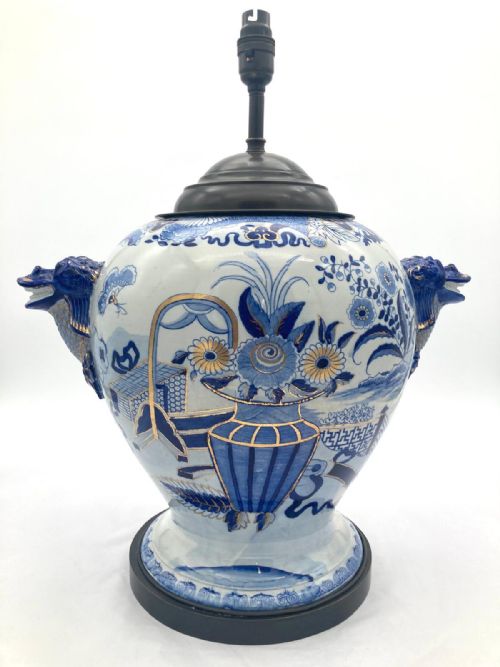
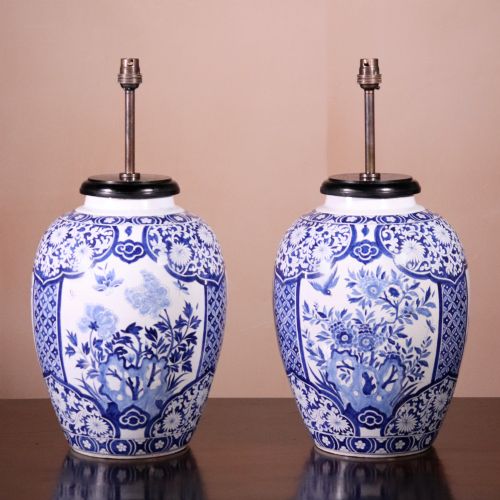
The primary material is ceramic or porcelain, painted by hand with cobalt blue, famille rose enamels, or monochrome glazes such as sang de boeuf and celadon. These glaze techniques require precise kiln temperatures to achieve their characteristic depth and crackleware textures.
Many vases are mounted on bases or fitted with collars made from brass, gilt metal, or gilt bronze to support the lamp hardware securely. Some examples incorporate paired handles or intricate metal mounts that reflect European taste applied to Asian ceramics.
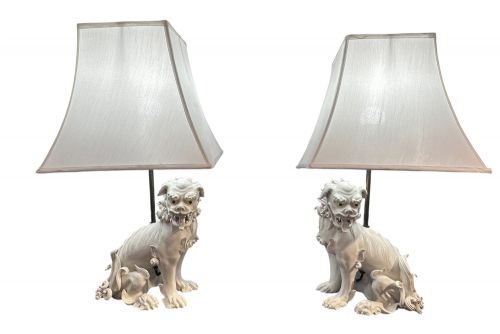
Shih Tzu lions keep a watchful ceramic eye over the room from their perch as blanc de chine lamp bases.
Assessing quality
Quality rests upon the crispness of the hand-painted details and the depth of the ceramic glaze. Superior pieces display finely delineated brushwork and rich, stable colour palettes without muddy transitions.
The integration of the conversion is another consideration, particularly how cleanly the lamp fittings are attached to the original ceramic body and whether gilt bronze or brass mounts show careful casting and chasing.
Hicks and Meigh·Samson Porcelain
The Oriental Style Ceramic Lamps Glossary
- Famille Verte
- A palette dominated by green enamels, developed during the Qing dynasty and widely emulated in later export wares.
- Crackleware
- A ceramic glaze characterised by a network of fine microscopic cracks intentionally formed during the cooling process.
- Sang De Boeuf
- A rich, deep red ox-blood glaze that requires precise control of iron oxides in a reduction kiln.
- Chinoiserie
- European decorative style that reflects Chinese artistic influences through motifs and forms.
- Ormolu
- Gilt bronze mounts applied to furniture and ceramics, popular in French and English decorative schemes.
Oriental Style Ceramic Lamps: Frequently Asked Questions
Are these lamps converted from old vases?
Many of these lamps are created from nineteenth-century or earlier porcelain vases and jars that were later adapted for electrical lighting. The conversion process preserves the decorative ceramic body while adding modern wiring.
This practice allows historic export wares to find a functional place in contemporary interiors without losing their original artistic character.
How do I identify Chinese versus Japanese styles?
Chinese styles on these lamps often feature blue and white painting, famille rose enamels, or monochrome glazes like celadon and powder blue. Japanese pieces frequently showcase Satsuma earthenware or distinct decorative motifs associated with the Meiji period.
Examining the brushwork and the specific palette helps determine which regional tradition influenced the piece.
Can I find matching pairs of lamps?
Paired lamps appear frequently among these listings, offering symmetrical options for sideboards, mantels, or large tables. These pairs usually share matching vase forms, heights, and painted decorative schemes.
Matching sets provide a balanced look when placed on either side of a room or piece of furniture.