
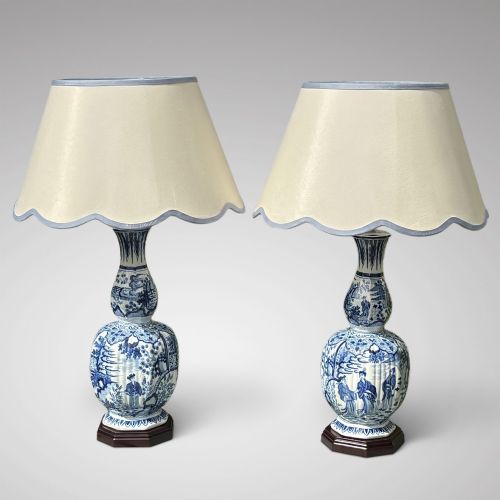


Blue and White Bedside Lamp
A blue and white bedside lamp brings quiet colour and historic form to a room, offering soft functional light through transformed ceramic vessels.
Blue and White Bedside Lamp
A blue and white bedside lamp is typically created from a repurposed antique vessel such as a ginger jar, vase, or Delftware piece mounted for electrical use. The inventory relies heavily on nineteenth-century Chinese export porcelain, Japanese Meiji period ceramics, and Dutch Delftware examples. These table lamps combine historic ceramic bodies with modern wiring and handmade fabric shades, often resting on wooden, brass, or gilt wood bases.
Buyers will encounter single lamps as well as balanced pairs suitable for flanking a bed. The forms range from crackleware ginger jars and prunus blossom vases to classical twin-handled shapes and geometric Art Deco porcelain bodies. Each piece marries traditional Far Eastern or European ceramic craftsmanship with the practical requirements of bedroom lighting.
How they were made
The ceramic bodies of a blue and white bedside lamp are shaped from porcelain or earthenware, painted with cobalt blue pigment under a clear glaze, and fired at high temperatures. Chinese export pieces and Japanese Meiji period ceramics display detailed hand-painted botanical and narrative motifs beneath a glossy finish, while Dutch Delftware offers tin-glazed earthenware traditions. Many of these historical vessels were later converted into lamps by drilling the base or mounting the neck securely into metal or wooden hardware.
The finishing elements involve complementary materials such as brass fittings, gilt wood plinths, and bespoke fabric or silk shades. Handcrafted shades diffuse the illumination while highlighting the intricate cobalt patterns of the underlying ceramic vase. Metal components are threaded and fitted to secure the electrical cord and bulb holder without damaging the antique ceramic body.
Many of these grand ginger jars spent a century guarding dried spices before being promoted to bedside reading duty.
What varies in quality
The distinction between ordinary and exceptional examples rests upon the artistic merit and preservation of the ceramic body. Finer vessels display crisp, deeply saturated cobalt painting with precise brushwork and minimal firing blemishes. The integration of the mounting hardware also dictates quality, with superior pieces retaining well-fitted brass bases and proportioned mounts that respect the original vessel.
The harmony between the ceramic jar and its shade influences the overall success of the lamp. Pairs demonstrate greater desirability when the two vessels match closely in height, glaze tone, and painted detail. Original or high-quality handmade fabric shades designed specifically for the proportions of the vase elevate the piece far above standard utilitarian conversions.
The Blue and White Bedside Lamp Glossary
- Ginger jar
- A ceramic vessel originally made for storing spices, featuring a wide body and domed mouth, frequently converted into a bedside lamp.
- Crackleware
- Pottery or porcelain featuring a network of fine microscopic cracks in the glaze, deliberately produced during the firing process for decorative texture.
- Delftware
- Tin-glazed earthenware originating from the Netherlands, traditionally decorated in cobalt blue on a white background with tin opacifiers.
- Prunus blossom
- A traditional decorative motif depicting blossoming plum branches, commonly hand-painted in cobalt blue across nineteenth-century ceramic vases.
Blue and White Bedside Lamp: Frequently Asked Questions
How do I choose a bedside lamp pair?
Selecting a pair involves matching the height, ceramic body shape, and intensity of the cobalt blue decoration across both vessels. Look for balanced proportions that suit the scale of your bedside tables.
Identical vase forms and complementary shade styles create a unified aesthetic in a bedroom. Ensure the electrical fittings and mounting heights match precisely for a harmonious display.
Are these lamps converted from antique vases?
Many of these pieces began life as nineteenth-century Chinese export vases, ginger jars, or Dutch Delftware containers before being adapted for modern electrical use. This repurposing preserves historical ceramics by giving them a functional role in contemporary interiors.
Conversion usually involves securing a brass rod through the vessel or mounting the neck securely onto a wooden or metal base. The original ceramic body remains the primary aesthetic and historic focus.
What styles are available?
The available styles span traditional Chinese Chinoiserie, nineteenth-century Japanese Meiji period ceramics, Dutch Delftware, and early twentieth-century Art Deco porcelain. Each style reflects distinct regional painting techniques and firing traditions from its period of origin.
These diverse designs allow buyers to integrate historic blue and white ceramics into various bedroom decors, ranging from classical traditional schemes to eclectic modern interiors.