


Blue White Urn Lamps
Blue white urn lamps bring together centuries of global ceramic trade and domestic lighting, offering striking cobalt patterns that anchor a room.
Blue White Urn Lamps
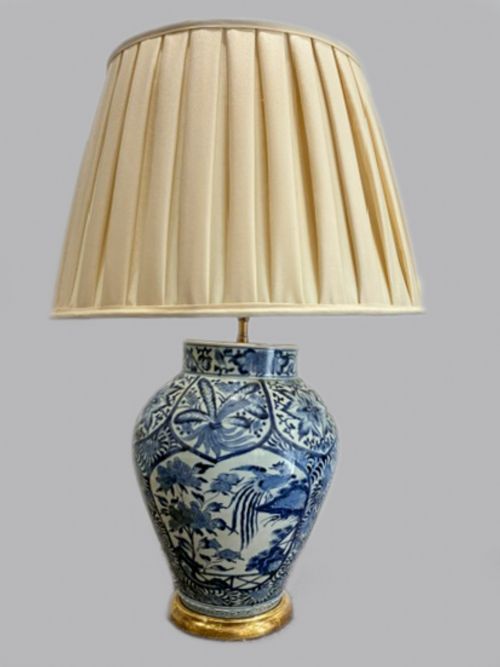
When you search for blue white urn lamps, you encounter antique vessels originally formed in China, Japan, the Netherlands, and England that have subsequently been converted into table lamps. These pieces primarily date from the 17th century through the 19th century, drawing upon traditions such as Dutch Delftware, Japanese Meiji, and Chinese Qing Dynasty aesthetics.
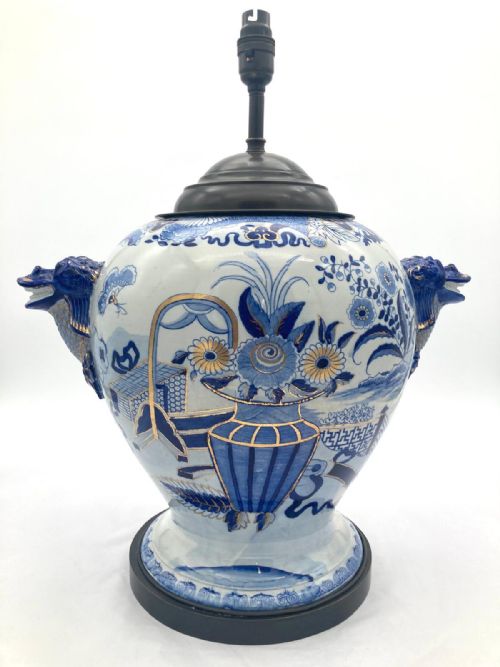
The forms span from ginger jars and twin-handle vessels to larger vases mounted on gilt bases, often paired with handmade silk or fabric shades. Regency and Georgian interpretations frequently incorporate Chinoiserie motifs, reflecting a sustained European fascination with eastern ceramic design.
Most examples found here utilise porcelain, ironstone, or ceramic bodies, retaining their hand-painted cobalt decoration despite centuries of domestic use. The conversion process typically involves securing the vessel to a wooden or metallic base and wiring it for modern electrical standards.
Materials and Construction
The underlying bodies of these lamps rely on high-fired porcelain, earthenware, or ironstone, shaped by hand on the potter's wheel or in moulds before receiving cobalt oxide decoration under a transparent glaze. Workshops in Delft, Jingdezhen, and various Japanese kilns applied these pigments by hand, resulting in fluid brushwork and deep tonal variations.
Mounting hardware commonly involves turned wood, brass, or giltwood bases designed to stabilise the heavy ceramic vessels. Fitted components and wiring additions sit alongside original manufacturing flaws such as crackle ware finishes or kiln artefacts.
Listings span several centuries of ceramic production, featuring materials from ironstone and porcelain to brass and giltwood across various Chinoiserie and Delft styles.
Judging Quality
The distinction between ordinary and exceptional pieces rests upon the crispness of the hand-painted cobalt decoration and the proportion of the ceramic body. Early vessels exhibit a depth of pigment and subtlety of glaze that mark them out from later mass-produced alternatives.
The quality of the conversion work also dictates value, particularly how sensitively the lamp fits its metal or wooden base and whether the original ceramic structure remains unaltered by the wiring process.
Hicks and Meigh
The Blue White Urn Lamps Glossary
- Delftware
- Tin-glazed earthenware originating in the Netherlands, known for its opaque white surface and cobalt blue painting. It mimics the appearance of imported Chinese porcelain.
- Chinoiserie
- European artistic style reflecting Chinese motifs and techniques, popular during the Georgian and Regency periods. It heavily influenced furniture and decorative objects.
- Ironstone
- A heavy, durable type of ceramic patented in the early 19th century as a robust alternative to porcelain. It frequently forms the body of large decorative vessels.
- Crackleglaze
- A decorative ceramic finish intentionally featuring a network of fine cracks in the glaze layer. This technique appears on various 19th-century Asian porcelains.
- Ginger jar
- A globular ceramic vessel originally made to store spices, characterised by a wide shoulders and a short neck. These jars frequently serve as bodies for converted table lamps.
Blue White Urn Lamps: Frequently Asked Questions
Are these original antique vases?
The ceramic bodies are genuine antique vessels originating from periods such as the 17th, 18th, and 19th centuries. They were produced abroad as jars, vases, or ginger vessels before being converted into lamps at a later date.
This conversion process preserves the historical ceramic art while adapting the piece for contemporary domestic illumination.
How do I date these lamps?
Dating relies primarily on the style of the ceramic body, the characteristics of the cobalt blue pigment, and the glaze type. Details such as crackle ware finishes or specific decorative motifs offer further clues to their period of origin.
The metal mounts and electrical fittings added during conversion generally reflect later interventions rather than the age of the ceramic base.
Do they come with lamp shades?
Selected pieces are supplied with handmade fabric or silk shades designed to complement the proportions of the ceramic body. Other listings present the vase lamp alone, allowing you to select a shade suited to your interior.
Descriptions specify whether a shade is included with the individual piece.
How should I clean them?
Dust the ceramic body gently with a dry, soft cloth to prevent accumulation on the glaze. Avoid harsh chemical cleaners or abrasive materials that could damage the painted cobalt decoration or the antique surface.
Take care around electrical components and any added giltwood or brass bases during maintenance.