




Asian Ceramic Table Lighting
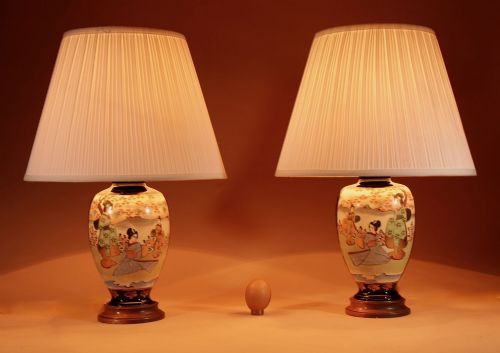
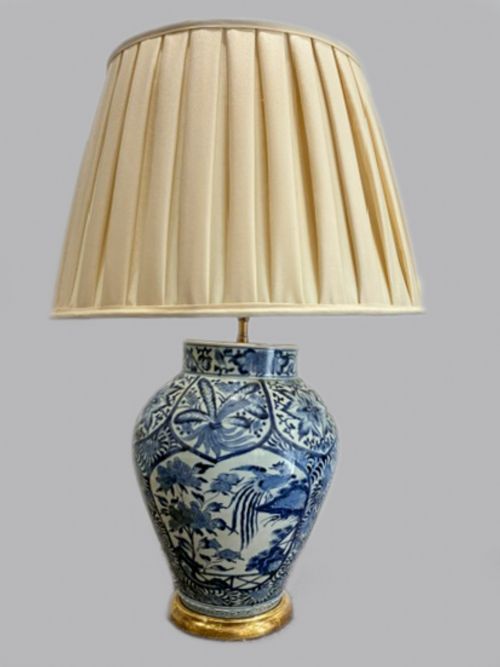
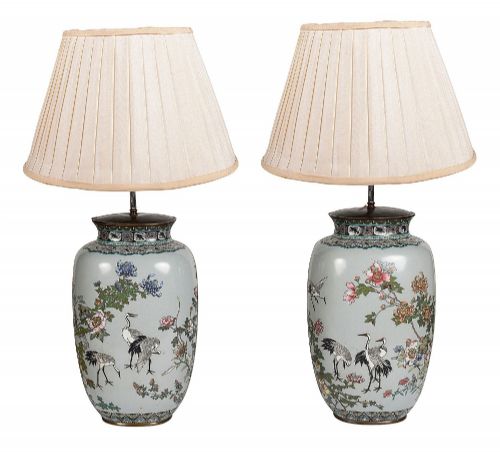
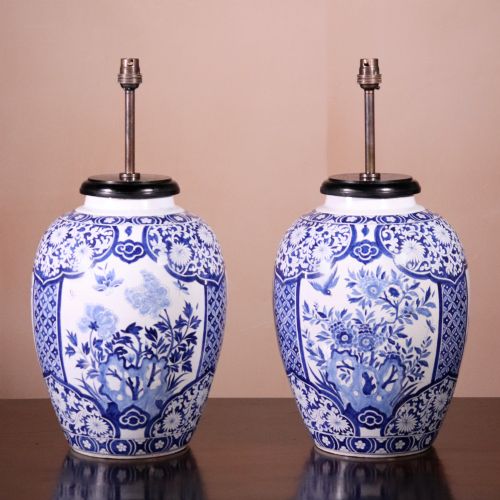
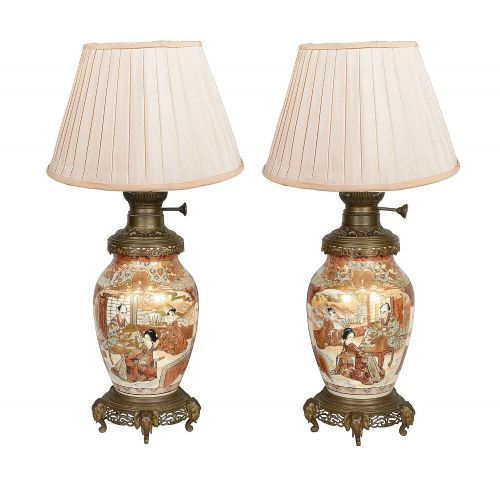
These converted vases form the core of asian ceramic table lighting, bringing heavy historical presence and rich glaze work directly onto domestic surfaces.
Asian Ceramic Table Lighting
Asian ceramic table lighting predominantly consists of antique porcelain, earthenware, and cloisonne enamel vessels repurposed into lamps. These pieces originate from Chinese and Japanese kilns spanning the seventeenth to the early twentieth centuries.
Vessels are most commonly encountered as pairs or single statement jars, baluster vases, and spill vases mounted for electrical illumination. Styles range from blue and white porcelain and celadon glazes to intricate Satsuma and Kutani enamel decoration.
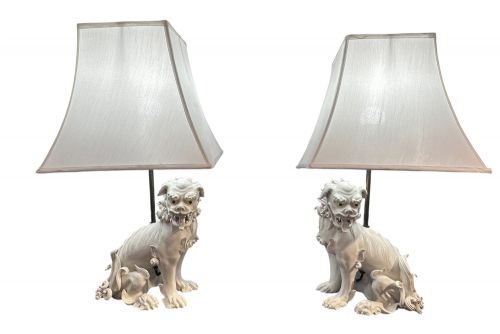
The selection reflects both export wares created specifically for Western interiors and traditional vessels adapted later in their lifespans. Forms such as Foo dogs, figural groupings, and octagonal baluster shapes provide varied silhouettes.
Materials and Construction
Potters shaped these bodies from fine porcelain and dense earthenware, applying complex underglaze blue, enamel palettes like Famille Verte and Famille Rose, or celadon glazes before firing. Many incorporate brass mounts fitted during later conversion periods to secure electrical hardware.
Decorative surfaces combine hand-painted motifs with tactile raised enamels, gilt detailing, and cloisonne wirework soldered to metal bases. Textile and silk shades frequently complete the conversion, balancing the substantial ceramic weight.
The material selection spans porcelain, earthenware, cloisonne enamel, and brass mounts, alongside silk and fabric shade components.
Evaluating Quality
Quality rests upon the crispness of the hand-painted brushwork, the depth and consistency of the glaze, and the structural integrity of the ceramic body itself. Finer examples display meticulous detail in facial expressions, foliage, and geometric borders without blurring or pooling in the pigment.
The sophistication of the conversion work also dictates overall merit, particularly how cleanly electrical fittings integrate with original brass mounts and ancient vessel necks. Intact pairs matching in proportion and palette command greater design cohesion than assembled single lamps.
The Asian Ceramic Table Lighting Glossary
- Satsuma
- A type of earthenware originating from Japan, typically featuring a ivory crackle-glaze decorated with elaborate polychrome and gilt enamels. These wares frequently depict historical figures, court scenes, and dense floral patterns.
- Celadon
- A transparent jade-green glaze over a pale porcelain or stoneware body, valued for its subtle crackle and tactile depth. Originating in ancient kilns, this finish imparts a calm, monochromatic elegance to large baluster and jar forms.
- Cloisonne
- A metalwork technique where thin wire partitions create compartments on a vase surface, filled with coloured enamel paste and fired. The resulting cells produce intricate geometric and floral patterns with a smooth, polished finish.
- Imari
- A traditional Japanese export ware style characterised by a palette of underglaze blue, iron red, and gold highlights on white porcelain. These designs often feature panels of flowers, landscapes, and intricate brocade motifs.
- Famille Rose
- A Chinese porcelain palette dominated by opaque pink and rose enamel colours introduced during the Qing Dynasty. Artisans used this technique to render delicate botanical studies and animated figurative scenes.
Asian Ceramic Table Lighting: Frequently Asked Questions
How are antique vases converted into lamps?
Converters drill the base or fit specialised brass hardware through the neck to house electrical wiring without harming the structural integrity of the antique vessel.
This method allows fragile porcelain and earthenware to function safely as domestic lighting while retaining their original decorative surfaces.
Can I match single lamps into a pair?
Matching single lamps proves difficult because hand-painted ceramics vary significantly in palette, kiln firing results, and exact dimensions between individual pieces.
Collectors seeking symmetry generally purchase pre-matched pairs originating from the same period workshop rather than attempting to combine separate finds.
How do I date Chinese and Japanese lamp bases?
Dating relies upon analysing the potting style, glaze characteristics, reign marks, and the specific palette traditions associated with periods like the Meiji era or Qing Dynasty.
The metal brass mounts added during electrification also offer clues regarding whether the conversion took place in the nineteenth century or later.
Where should I place these lamps in a room?
These substantial ceramic forms suit heavy sideboards, entry tables, or desks where their scale and rich glaze work act as focal points.
Pairing them with simple silk or fabric shades prevents visual competition with the intricate painted scenes on the vase body.