
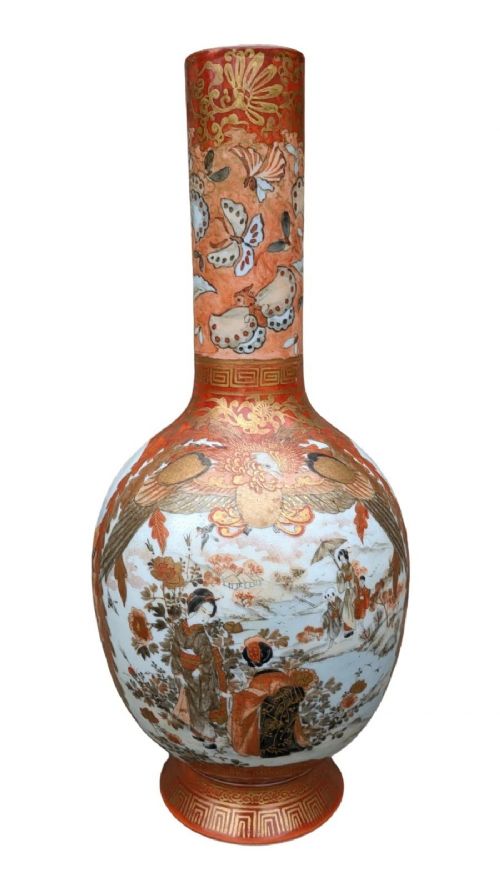
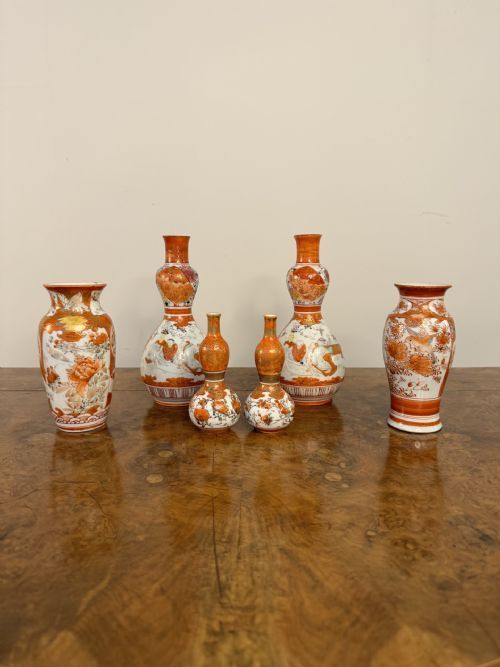


Oriental Pottery Bottle Vase
An oriental pottery bottle vase carries centuries of kiln mastery in its slender neck and swelling body, prized by collectors for bringing refined form and intricate hand-painted detail into any room.
Oriental Pottery Bottle Vase
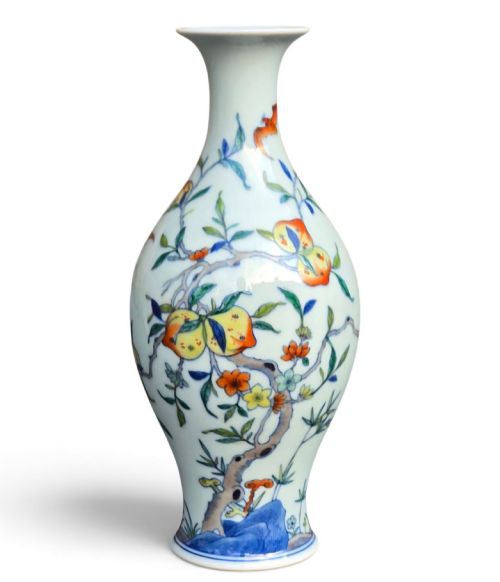
When you search for an oriental pottery bottle vase, you are looking at ceramic vessels defined by a narrow neck expanding down into a rounded or globular body. The pieces available here span the nineteenth century, Edwardian, and Victorian eras, reaching into the early twentieth century through the Taisho and Meiji periods.
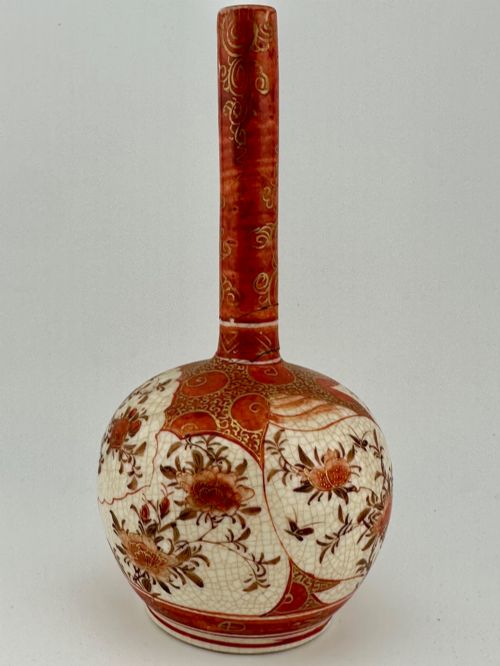
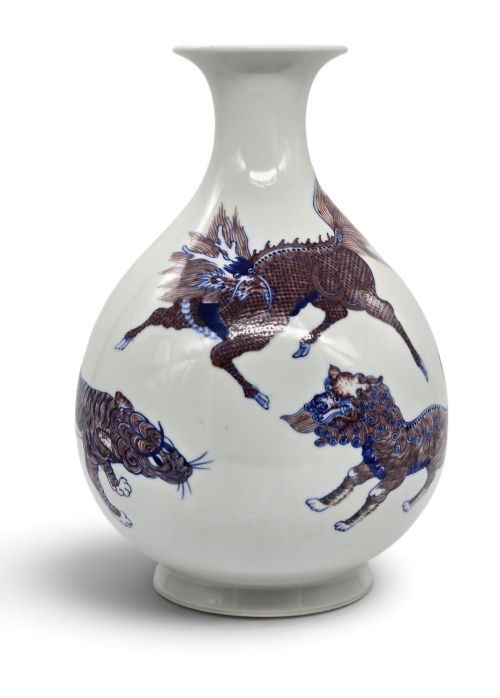
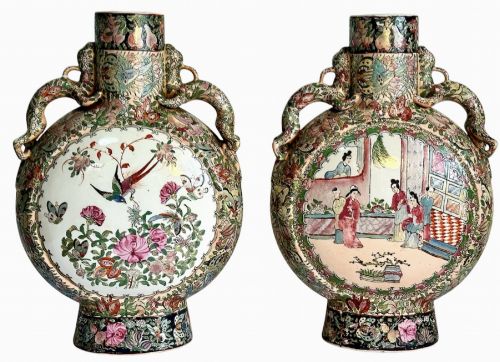
The forms originate primarily from Chinese and Japanese traditions, taking shape as garlic-mouth vases, moon flasks, and slender neck vases. Chinese Qing Dynasty examples sit alongside Japanese Kutani, Satsuma, and Imari works, reflecting diverse aesthetic lineages from East Asia.
Makers and decorators utilise distinct regional palettes and decorative schemes, from cobalt blue underglaze painting to polychrome enamel and gold leaf detailing. Collectors often encounter pairs as well as individual miniatures, each displaying the characteristic restraint or exuberance of its period of manufacture.
Materials and production methods
Potters shaped these vessels from ceramic, earthenware, porcelain, and stoneware, throwing the clay on a wheel before applying specialised mineral glazes. Cobalt glaze and tea dust glaze required precise kiln temperatures to achieve their characteristic depth and chemical reactions.
Enamel and gold leaf were applied over the fired glaze or directly onto the biscuit body, followed by a secondary low-temperature fixative firing. Underglaze blue painting involved cobalt pigments applied straight to the raw clay body before transparent glazing and high-firing.
Materials recorded here include porcelain, earthenware, ceramic, stoneware, enamel, gold leaf, and cobalt glaze.
Distinguishing quality across the range
Quality rests upon the crispness of the brushwork and the control demonstrated during the high-temperature kiln firing. Finer vessels display precise control over cobalt pigments and enamels, avoiding blurring or pooling across the ceramic surface.
The depth and brilliance of the glaze, whether a smooth tea dust or a luminous cobalt, separate standard decorative items from superior scholarly works. Details such as underglaze seal marks and delicate gold leaf application indicate the hand of a more accomplished workshop.
Choshuzan·Jissei·Yoshisada
The Oriental Pottery Bottle Vase Glossary
- Kutani
- Japanese porcelain and pottery traditionally produced in Ishikawa Prefecture, known for rich enamel palettes and intricate pictorial designs. Many pieces feature bold red and gold colourways.
- Satsuma
- Earthenware pottery originating from Satsuma Province, characterised by a finely crackled ivory glaze decorated with polychrome enamels and gold. It gained immense popularity for export during the Meiji period.
- Imari
- Japanese export porcelain featuring a distinct palette of underglaze blue, iron red, and gold, produced primarily in Arita. The style heavily influenced European ceramic manufacturers.
- Underglaze blue
- A method of decoration where cobalt oxide pigment is applied to the raw ceramic body before glazing and firing. This technique protects the blue pigment beneath a glassy clear layer.
- Tea dust glaze
- An opaque, micro-crystalline olive-green or brownish glaze that resembles fine metallic dust across the surface. It requires precise chemical composition and reduction firing.
Oriental Pottery Bottle Vase: Frequently Asked Questions
How do I date an antique bottle vase?
Dating relies on examining the potting technique, the characteristics of the glaze, and any reign marks or potter stamps found on the base. Stylistic cues such as Meiji period motifs or Qing Dynasty forms provide further temporal markers.
Comparing the baseline materials - whether earthenware, porcelain, or stoneware - also helps narrow down the era of production.
Where were these vases made?
The pieces originate primarily from traditional ceramic centres in China and Japan. Japanese works frequently hail from Kutani and Satsuma kilns.
Chinese examples reflect imperial and export styles spanning the Qing Dynasty through the early Republic period.
How should I display my vase?
Place your vase on a stable surface away from direct sunlight and heavy foot traffic to protect the delicate enamel and gold leaf details. Ensure the display area allows adequate space to appreciate the slender neck and rounded body from multiple angles.
Keep them away from rapid temperature fluctuations to preserve the ceramic body and glaze integrity.