
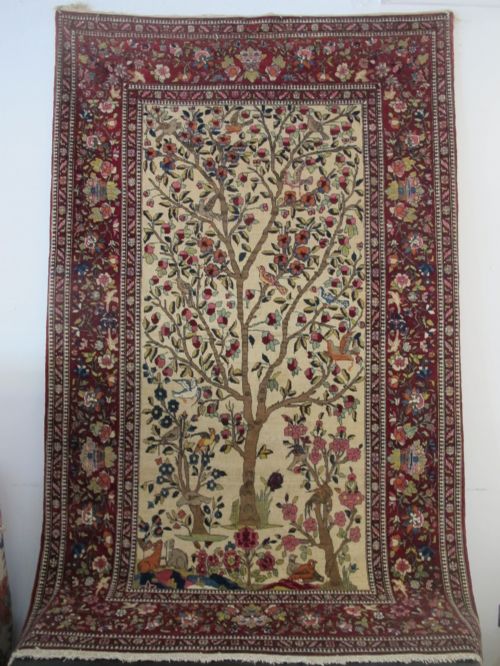


Oriental Pictorial Rug
An oriental pictorial rug brings narrative and portraiture to the floor through traditional hand-knotted weaving.
Oriental Pictorial Rug
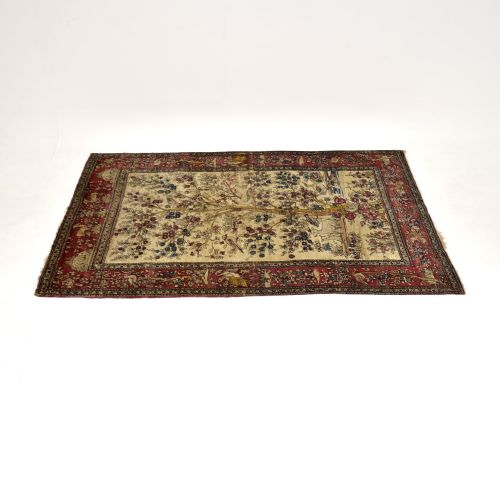
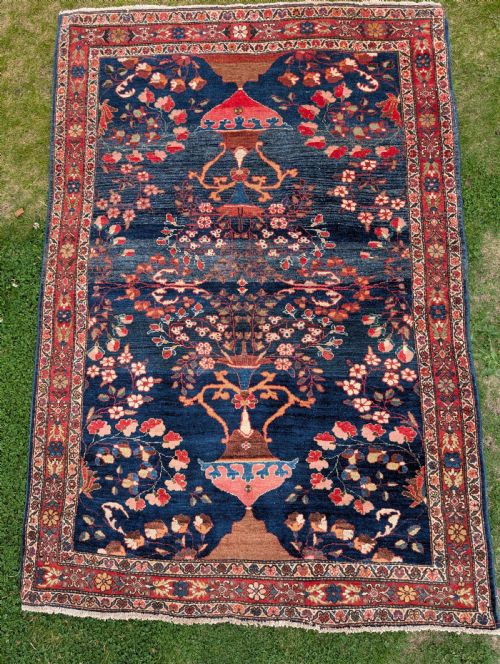
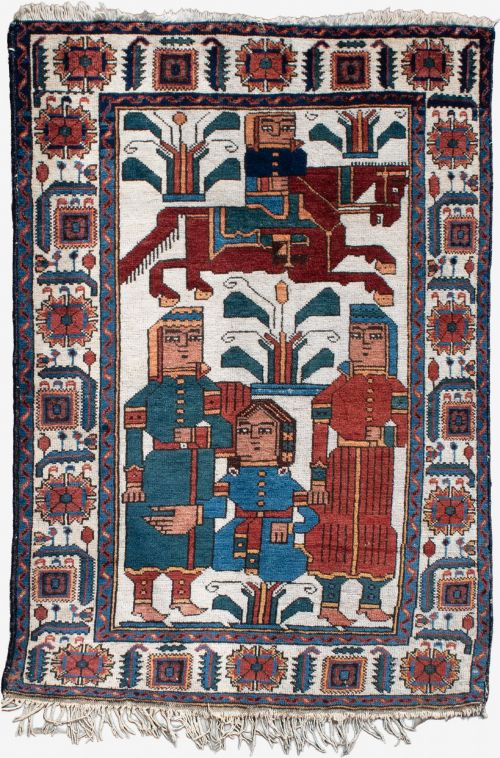
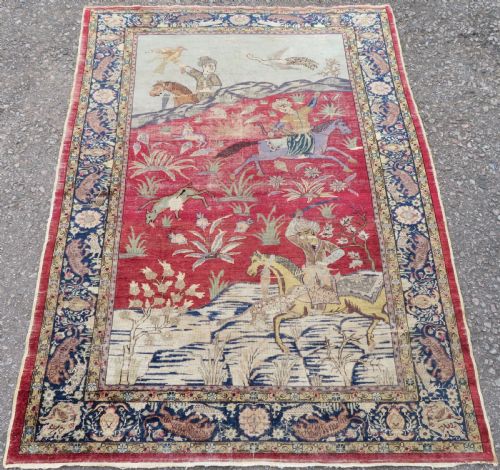
An oriental pictorial rug uses traditional weaving techniques to depict human figures, animals, hunting scenes, and historical portraits. When you search for an oriental pictorial rug, you encounter floor coverings originating from Persia, Turkey, the Caucasus, and surrounding regions dating from the nineteenth century into the early twentieth century.
The pieces appearing on this page span diverse regional styles including Kashan, Isfahan, Tabriz, Baluch, and Afghan workshops. They take the form of mats, area rugs, and larger carpets created from wool, cotton, and silk.
How they were made
Dyes derived from natural sources provided the palette for earlier pieces, while workshops incorporated refined wool and silk materials to achieve lasting clarity in intricate pictorial compositions.
Weavers immortalised world leaders and hunting monarchs in wool, turning sitting room floors into royal portrait galleries.
What varies in quality
Knot density dictates the crispness of the depicted figures, hunting scenes, and portraits. Higher knot counts allow weavers to articulate facial expressions and complex animal forms with precision.
The choice of materials influences the texture and durability of the piece. Fine silk and high-grade wool retain their pictorial detail and structural integrity far better over decades of use.
Mohtasham Kashan·Ahmadi Isfahan
The Oriental Pictorial Rug Glossary
- Knot
- The individual loops of wool, cotton, or silk tied to the warp threads that form the pile of the rug. Higher density knots create sharper pictorial details.
- Warp
- The stationary vertical threads stretched across the loom that serve as the foundation of the rug. Weavers tie the pile yarn directly onto these parallel strings.
- Weft
- The horizontal strands passed through the warp threads after each row of knots to pack the structure tight. They stabilise the entire woven fabric.
- Pile
- The upright surface of yarn on a rug formed by the cut ends of knots. This soft layer carries the colour and the pictorial design.
- Prayer rug
- A small rug featuring a mihrab or niche design used historically for private devotion. Some examples incorporate human figures within the composition.
Oriental Pictorial Rug: Frequently Asked Questions
What is an oriental pictorial rug?
An oriental pictorial rug is a hand-knotted textile featuring figurative imagery, including portraits of historical figures, hunting scenes, people, and animals.
These pieces originate primarily from nineteenth and early twentieth-century weaving centres across Persia, Turkey, and the Caucasus.
How were these rugs used?
These textiles served as decorative floor coverings, small mats, or area rugs within traditional homes and reception rooms.
Because of their detailed narrative designs, many were also displayed on walls as tapestries to protect the pile from foot traffic.
How do I care for an antique rug?
Vacuum the rug gently using suction only, avoiding beater bars that can catch and pull the hand-knotted pile.
Rotate the textile periodically to ensure even wear from sunlight and foot traffic across the room.
How do I identify the period?
Examine the materials, dye colours, and structural characteristics visible on the reverse side of the rug. Finer silk usage, specific regional motifs, and historical portraits often point to specific decades between the late nineteenth and early twentieth centuries.