


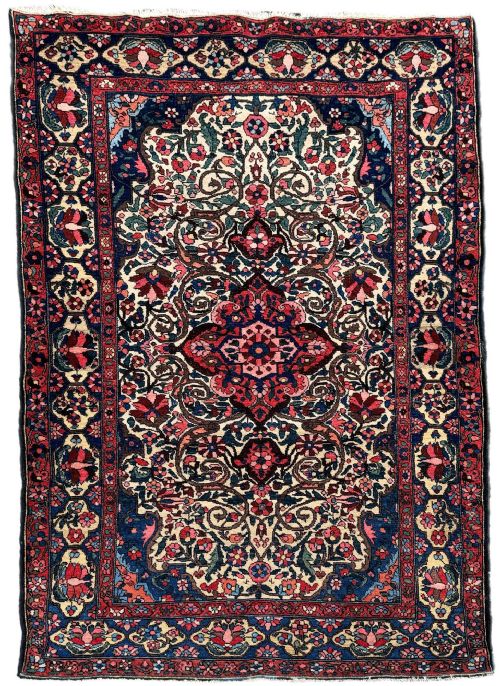
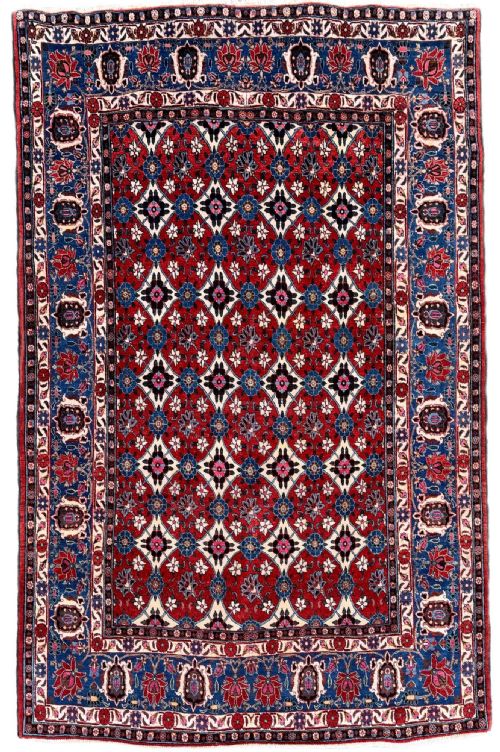
Blue Persian Floor Rug
A blue persian floor rug brings depth and warmth to a room through traditional regional weaving.
Blue Persian Floor Rug
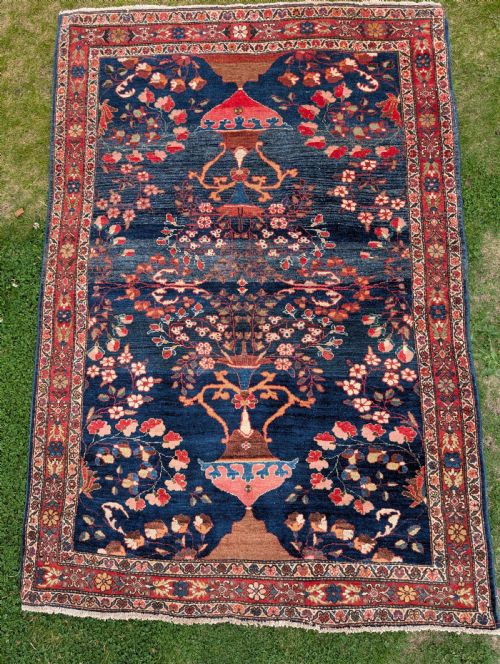
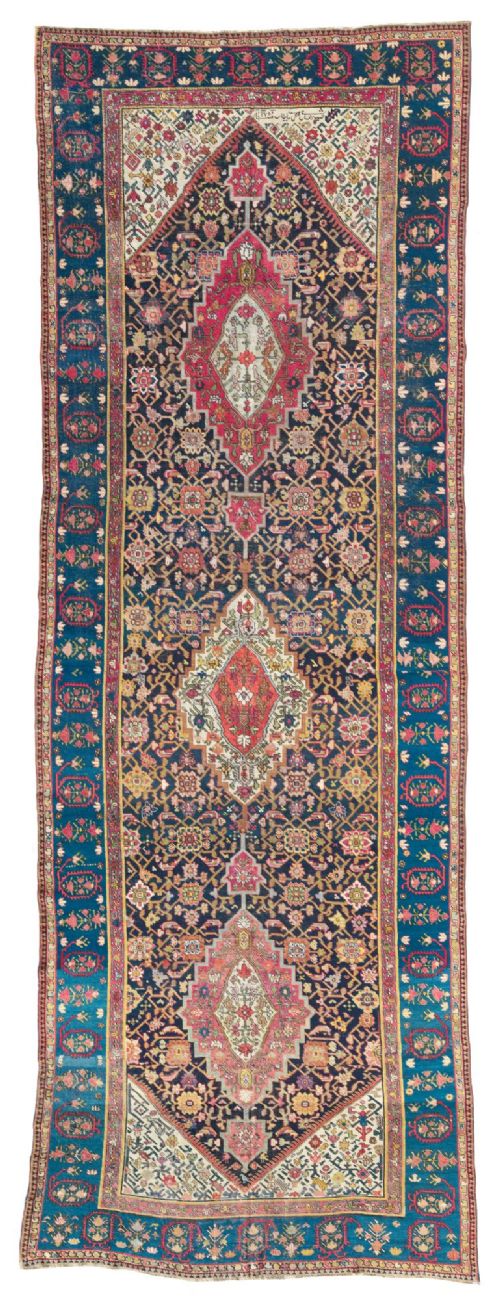
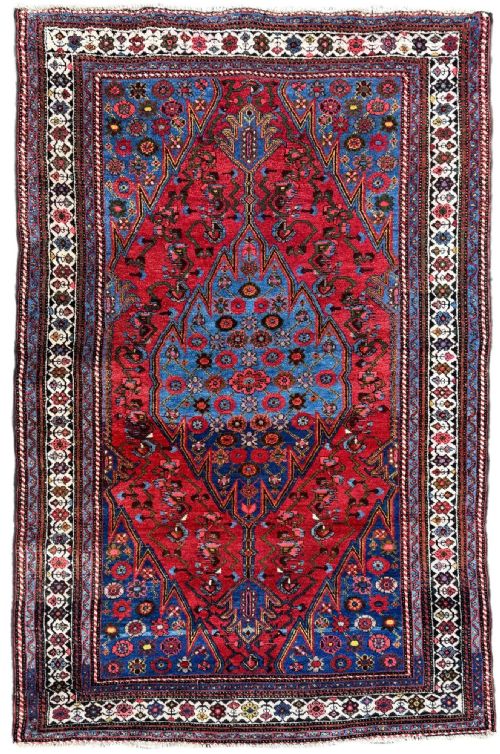
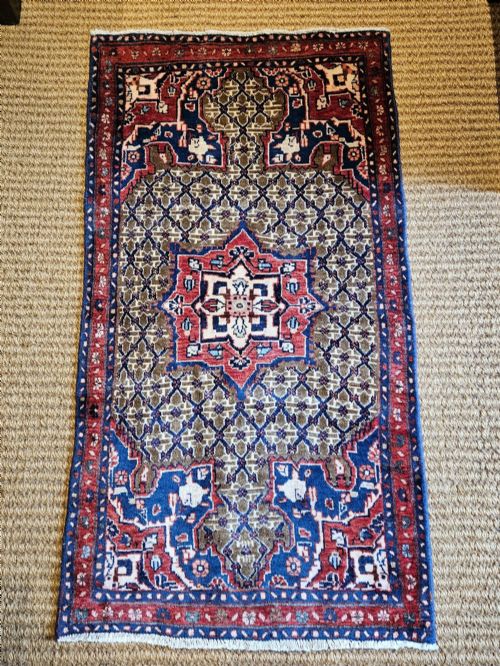
When searching for a blue persian floor rug, buyers encounter hand-knotted carpets and runners originating from Persian tribal and town workshops. These floor coverings span production dates from the mid nineteenth century through the mid twentieth century.
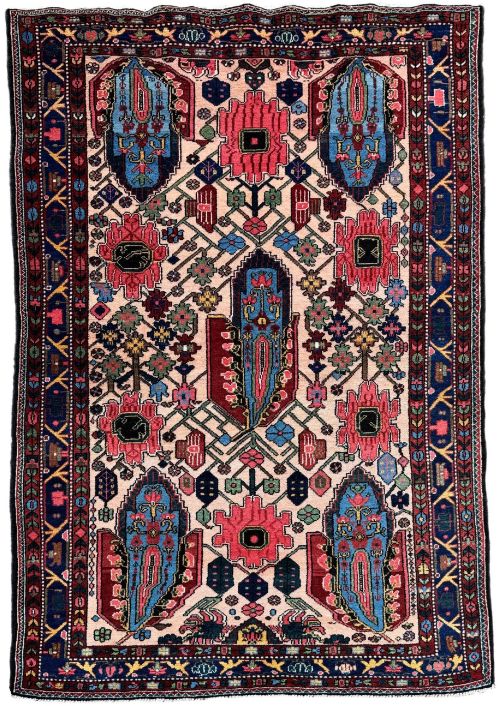
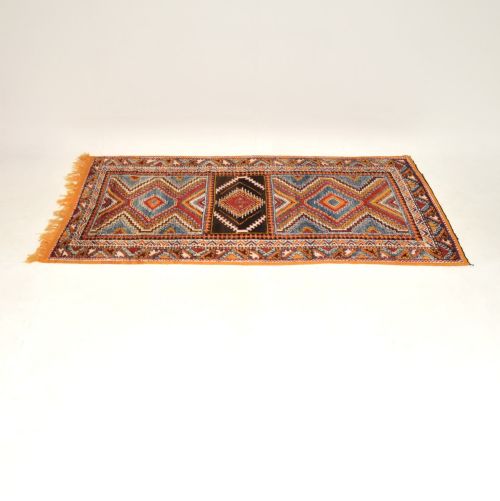
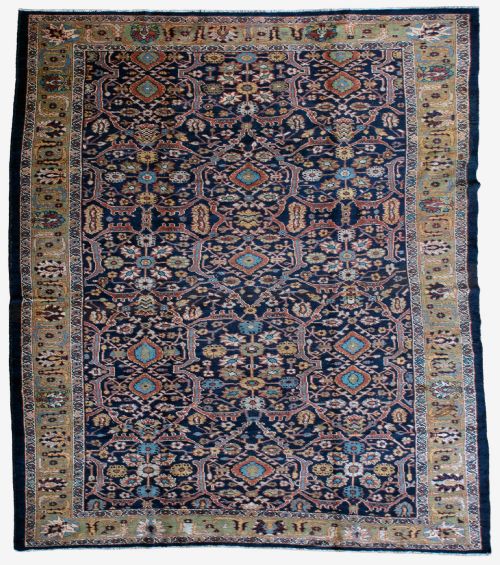
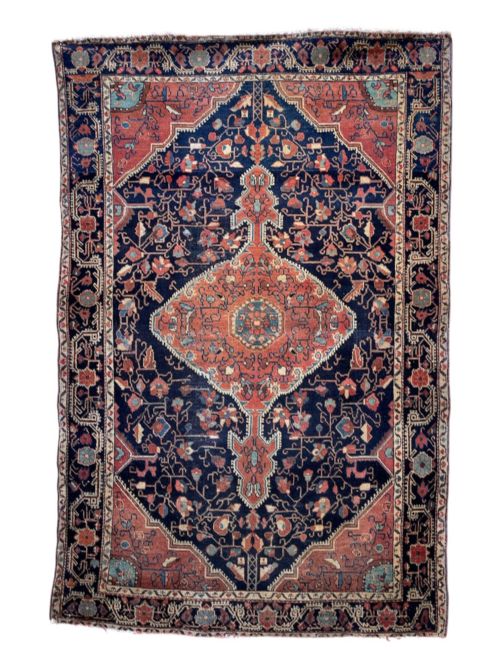
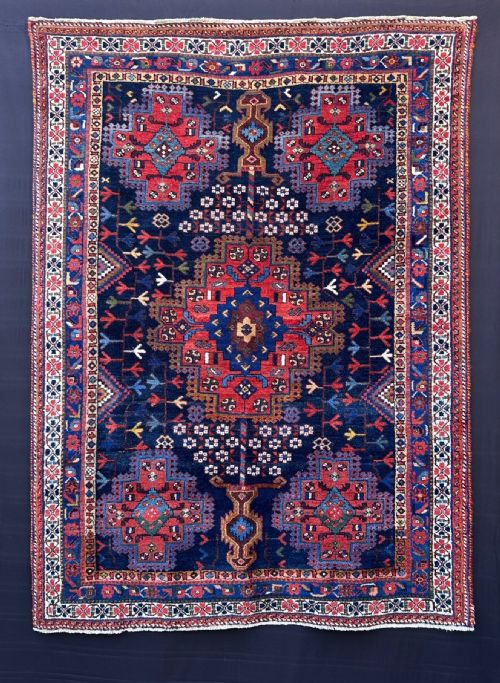
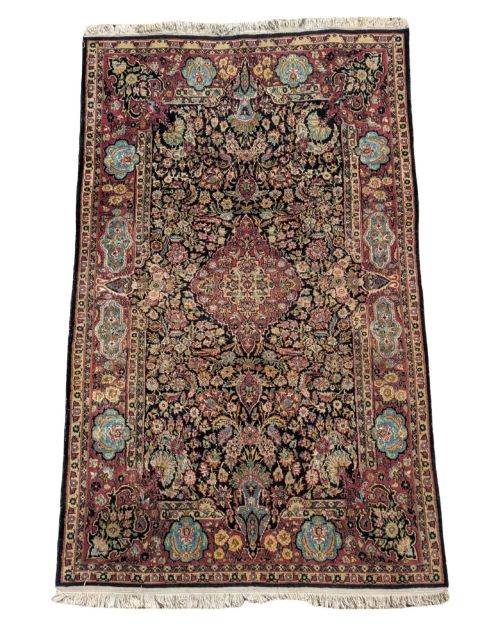
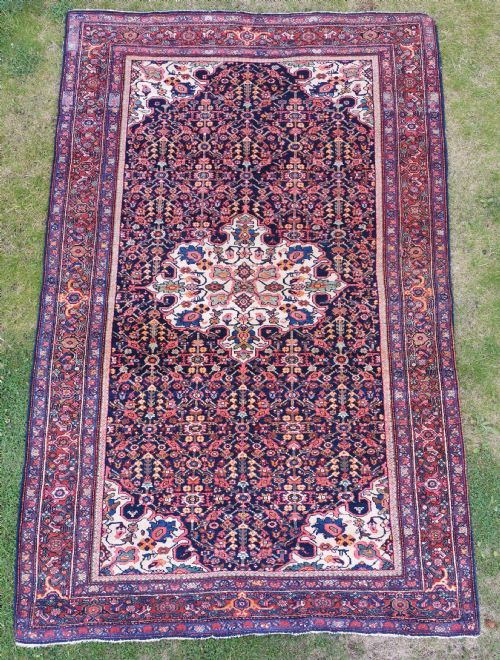
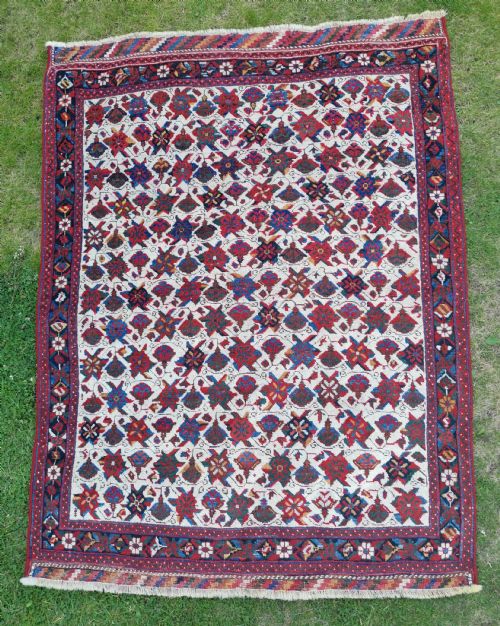
The most common examples on this page are village and city rugs, including Heriz, Bakhtiar, Afshar, and Kashan types. Formats range from small hearth rugs to large room-sized carpets and long hallway runners.
Regional styles dictate the geometry of the patterns, shifting from bold geometric medallions to intricate floral scrollwork. Indigo and sky blue tones frequently dominate the palette, often contrasted with reds, creams, and navy.
How they were made
These rugs employ wool, cotton, and occasionally silk foundations and pile, knotted by hand on upright looms. Natural dyes impart the colour palette, yielding subtle variations across the surface of the wool.
Weavers utilised cotton for warps and wefts in many town carpets, while tribal pieces frequently incorporated wool foundations. Silk highlights appear in select city rugs to accentuate specific floral motifs.
Materials documented across the pieces include wool, cotton, silk, and natural dyes.
What varies in quality
Knot density and the precision of the design determine the finer end of the scale, alongside the clarity of the natural dyes. Early pieces show greater depth of colour and softer wool handles.
Structural integrity of the foundation and the uniformity of the weave separate standard tribal production from exceptional workshop carpets. Pile retention and original edge bindings influence the preservation state.
The Blue Persian Floor Rug Glossary
- Knot density
- The number of knots per square unit, which influences the sharpness of the pattern and durability of the pile.
- Warp
- The vertical threads stretched on the loom that carry the fringe and support the structure of the rug.
- Weft
- The horizontal threads passed across the warps between rows of knots to bind the structure together.
- Natural dye
- Colourants derived from plants, insects, and minerals rather than synthetic chemical compounds.
- Kelleh
- A large format rectangular carpet, typically longer and narrower than standard room-sized carpets.
Blue Persian Floor Rug: Frequently Asked Questions
How do I clean a wool rug?
Professional dusting and specialist low-moisture washing preserve the wool fibres and natural dyes without weakening the foundation structure.
Frequent gentle vacuuming without a beater bar prevents dust accumulation in the pile base.
Where were these rugs made?
Weaving traditions span different regions of Persia, including Heriz, Kashan, Tabriz, and various tribal confederacies in the south.
Town workshops focused on intricate floral layouts, whereas tribal weavers produced geometric and pictorial designs.
Are these carpets suitable for hallways?
Narrow runner formats and resilient wool piles handle foot traffic effectively in corridors and entryways.
Underlays provide grip on smooth floors and reduce friction between the rug foundation and the floorboards.
How can I tell the age of a rug?
Material analysis, dye characteristics, and regional design traits help narrow the period of production between the nineteenth and twentieth centuries.
Wear patterns and the composition of the foundation threads also indicate the approximate era of manufacture.