



Oriental Pearl Inlaid Table
An oriental pearl inlaid table brings distinct surface lustre to a room, using mother-of-pearl or bone set into dense timbers.
Oriental Pearl Inlaid Table
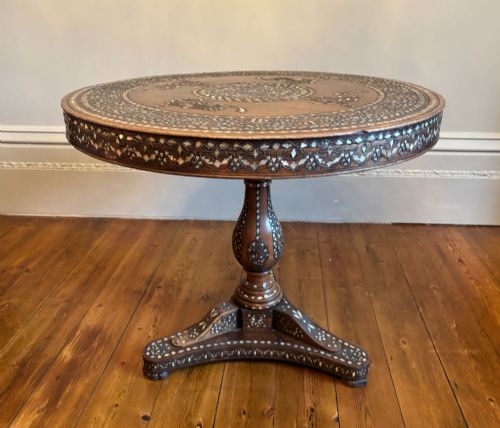
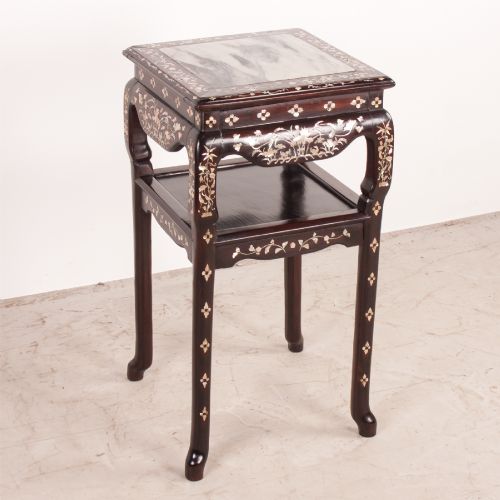
An oriental pearl inlaid table encompasses a variety of forms designed for domestic use, ranging from occasional tables and centre tables to plant stands and pedestal pieces. These items originate across different regions and traditions, including Chinese Qing Dynasty workshops, Anglo-Indian commissions, and Ottoman centres.
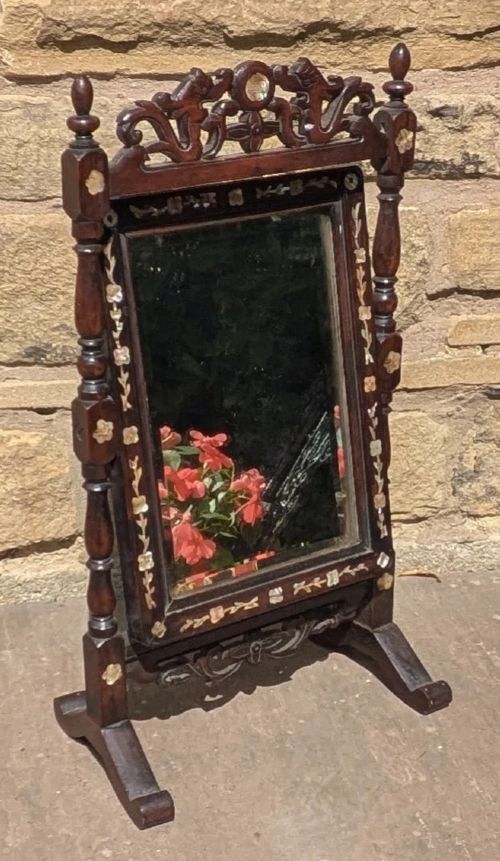
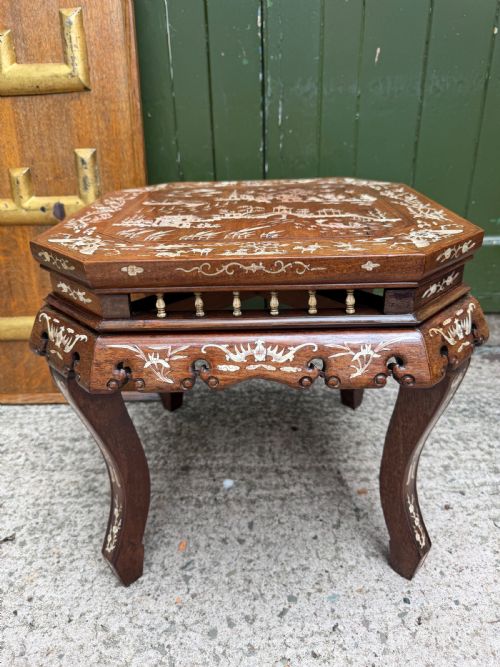
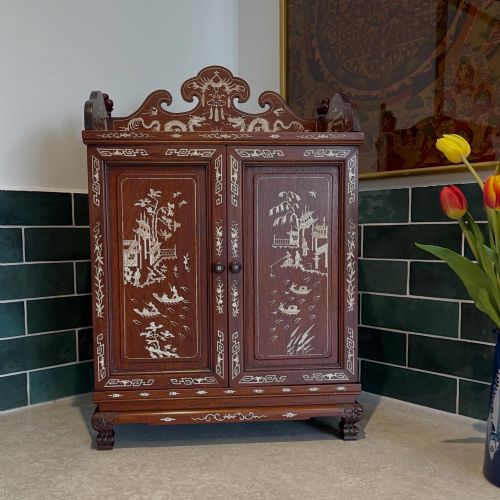
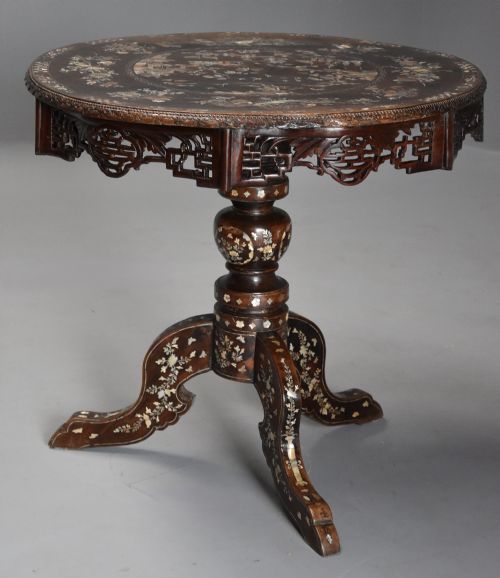
The version most commonly met on this page is the Chinese hardwood occasional or centre table, typically featuring dense timber surfaces decorated with intricate mother-of-pearl or bone motifs. Alongside tables, related forms such as table screens, mirrors, and cabinets appear, sharing the same decorative vocabulary of inlaid shell and carved wood.
Dating primarily from the nineteenth century, Edwardian iterations, and around 1900, these pieces reflect distinct regional aesthetics whilst sharing a common reliance on contrasting dark woods and luminous shell inlay. The construction ranges from square and circular tops to barrel or drum-shaped forms supported by carved legs.
Distinctions in craftsmanship and design
The calibre of an oriental pearl inlaid table depends heavily on the depth and complexity of the carving alongside the density of the inlay work. Finer examples display tightly secured pieces of shell with minimal filler, where every individual segment of mother-of-pearl or bone is shaped with sharp angles and clean margins.
The choice and preparation of the underlying hardwood also dictate the standard of the piece, with heavier, highly figured timbers offering greater durability and visual richness. Lesser examples might feature sparse inlay patterns set into softer woods with simpler, less defined structural turning.
Oriental Pearl Inlaid Table Retail Price Guide 2026
Typical asking prices for oriental pearl inlaid table among the pieces listed under this phrase on Sellingantiques today, from the lower quarter to the upper quarter. They describe what is for sale here now, not the wider market.
Certain tables feature drum-shaped frames designed to hold tea canisters.
The Oriental Pearl Inlaid Table Glossary
- Mother-of-pearl
- The iridescent inner layer of certain mollusc shells, utilised for its shimmering surface qualities. It is shaped into thin plaques for insertion into timber grooves.
- Hongmu
- A traditional Chinese term denoting dense, dark hardwoods used in quality furniture manufacturing. This heavy timber provides a stable substrate for intricate carving and inlay.
- Occasional table
- A small, portable table designed for specific, intermittent domestic tasks rather than central dining. These items function well beside seating or as display surfaces.
- Pedestal table
- A table supported by a central pillar or column resting on a footed base. This configuration allows for uninterrupted legroom around the perimeter.
Oriental Pearl Inlaid Table: Frequently Asked Questions
How are oriental pearl inlaid tables cleaned?
Maintenance requires dry dusting with a soft cloth to prevent particulate accumulation within the recesses of the inlay. Moisture should be avoided to protect the organic bond holding the shell and bone segments in place.
Applying specialised furniture wax occasionally helps preserve the sheen of the hardwood without clouding the iridescent surface of the pearl. Gentle care ensures the detailed contrasting materials remain secure within their channels.
Where should an oriental pearl inlaid table be placed?
These pieces function effectively as centre tables, occasional tables, or plant stands within a room where their reflective surfaces catch natural light. Positioning them away from direct sunlight and strong heat sources protects the timber from warping and prevents the adhesive beneath the inlay from drying.
Their decorative surfaces suit reception rooms, studies, or hallways where the detailed woodwork can be appreciated closely. Pairing them with simpler surroundings allows the intricate shell patterns to remain a distinct focal point.
How do I identify a nineteenth-century piece?
Nineteenth-century items typically exhibit hand-cut joinery methods and dense hardwoods such as hongmu or rosewood that feel noticeably heavy for their size. The mother-of-pearl or bone inlay is set by hand into individual chiselled beds rather than surface-glued.
Examining the underside and interior construction reveals tool marks and patination consistent with age. Regional stylistic traits, such as those from the Qing Dynasty or Anglo-Indian workshops, further assist in establishing the correct period.
What is the difference between an occasional table and a centre table?
Occasional tables are generally smaller, lighter, and designed to be moved easily around a domestic interior for specific, temporary uses. Centre tables are substantially larger, intended to stand permanently in the middle of a room as primary furniture.
Centre tables often feature finished detailing on all sides and heavier pedestal or multi-leg supports to anchor them spatially. Both forms utilise inlaid mother-of-pearl and hardwood construction, differing primarily in scale and placement.