


Oriental Nesting Tables
Oriental nesting tables are practical sets of graduating tables that slide together to save space while adding distinct period character to a room.
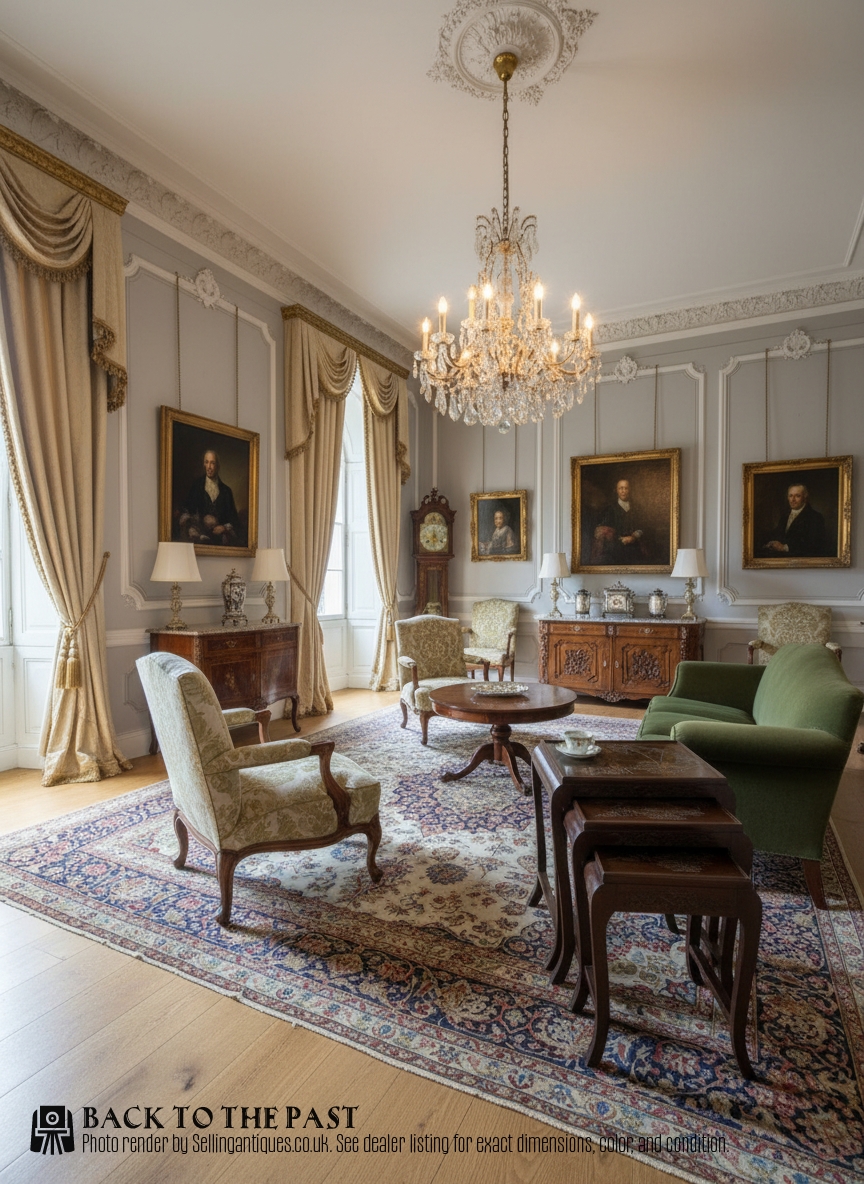
Oriental nesting tables
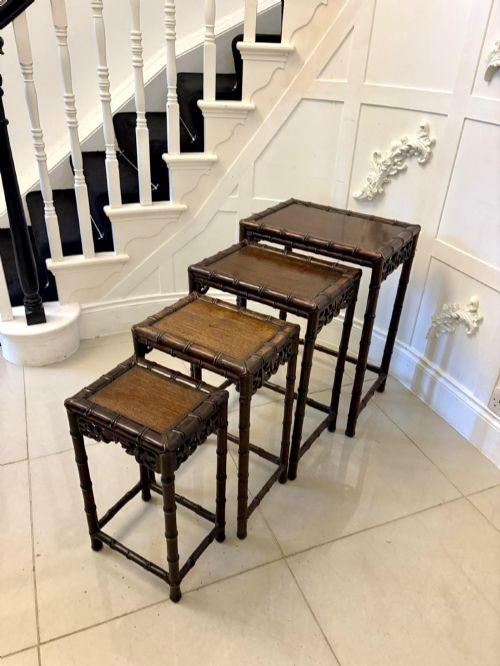
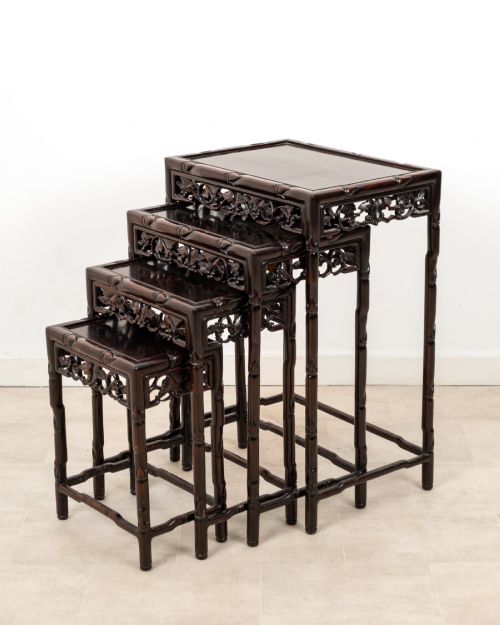
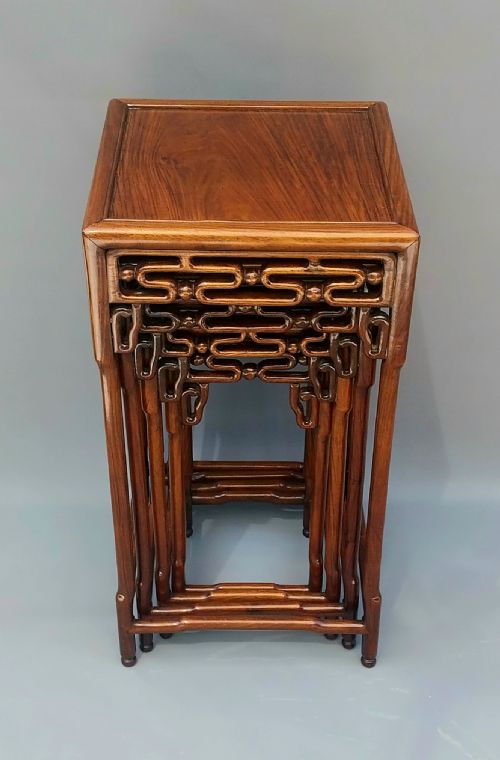
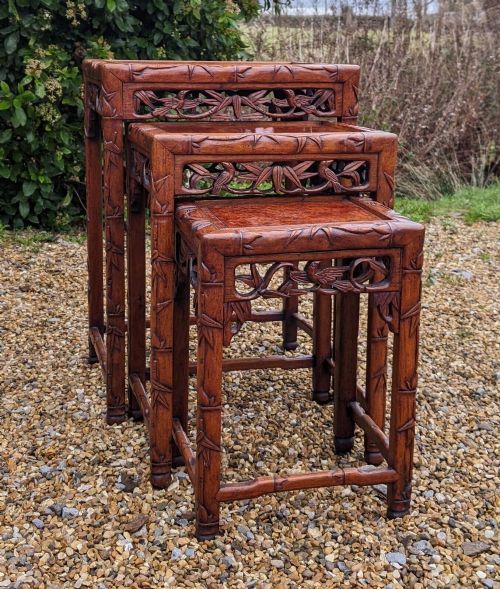
Oriental nesting tables comprise graduating sets of three or four tables designed to slide neatly beneath one another. When you search for oriental nesting tables, you encounter sets spanning the nineteenth century, nineteen hundred, and nineteen twenty.
The forms on this page include nests of coffee tables and standard graduating sets of four tables. These pieces originate from traditions encompassing Qing Dynasty, Chinese Export, Anglo-Indian, Chinese Oriental, and Chinoiserie styles.
The most common versions you meet are sets of hardwood tables that slide together for storage. They provide versatile surface space that deploys quickly when entertaining guests.
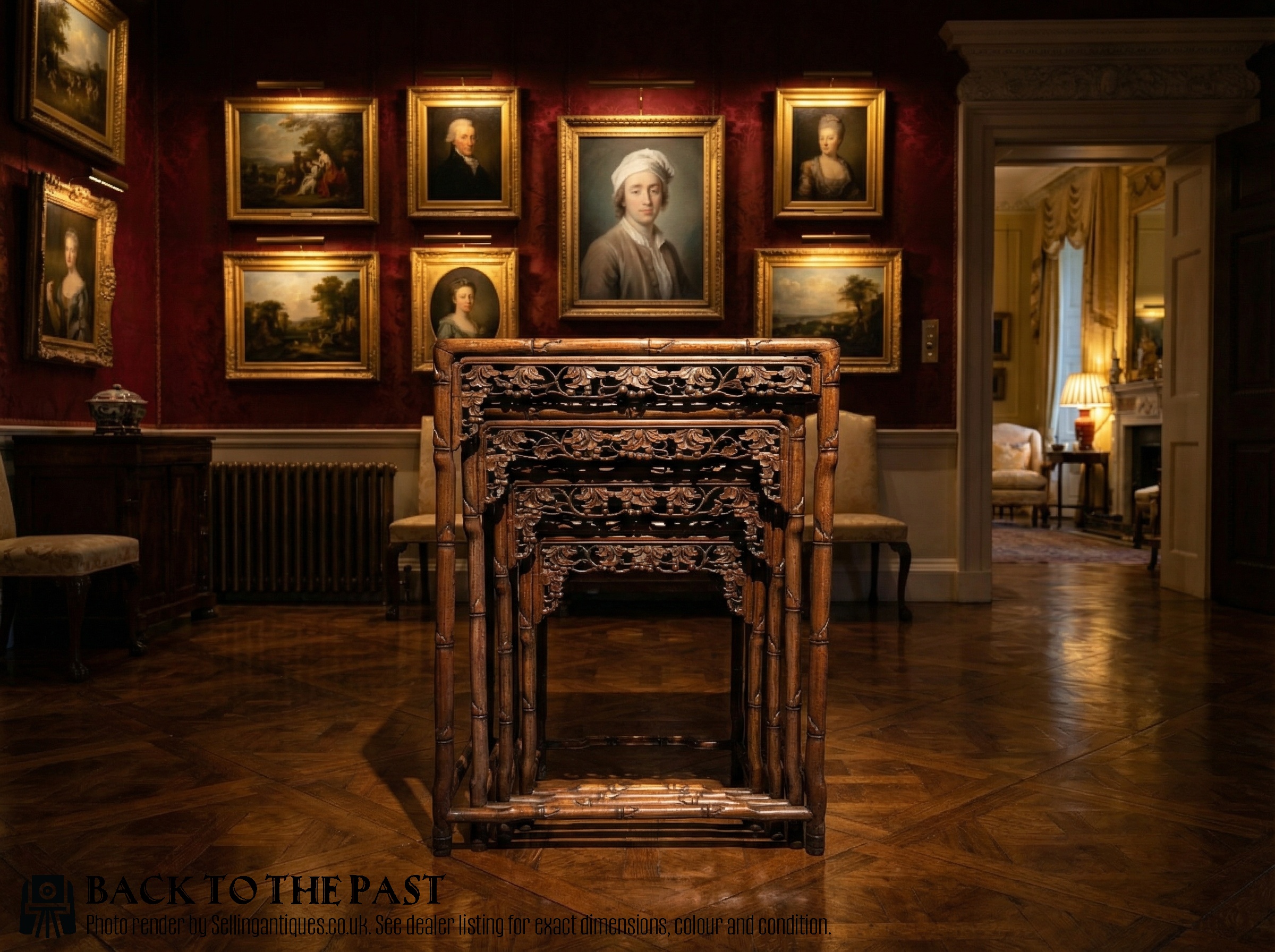
Construction and Materials
These pieces utilise dense timbers including hardwood, rosewood, teak, and ebonised wood. Workshops selected these strong materials to support the interlocking frames and daily use.
Surface treatments feature traditional techniques such as lacquer and gilded paint. Artisans also applied carved decoration directly into the structural timber of the tables.
Retail Price Guide 2026
Typical UK retail prices for oriental nesting tables, calculated from the Sellingantiques database of over a million retail prices indexed since 2003. This retail price guide relies exclusively on Sellingantiques data; no external sources or auction records are used, so the figures do not describe the wider market.
Current listings feature pieces exclusively from the nineteenth century, nineteen hundred, and nineteen twenty.
Judging Quality
The standard of carving distinguishes finer sets from simpler examples. Crisp execution in the timberwork indicates superior workshop skill.
The choice of material sets the upper tier apart. Dense hardwoods and richly figured rosewood or teak provide both durability and visual depth.
The Oriental Nesting Tables Glossary
- Hardwood
- Dense timber derived from broad-leaved trees, used extensively for structural durability in these tables. It resists daily wear better than softer woods.
- Rosewood
- A heavily grained and richly coloured timber prized for fine furniture. Its natural figure adds considerable visual warmth.
- Teak
- A durable tropical hardwood known for its oily resistance and strength. It holds intricate carved detail remarkably well.
- Lacquer
- A protective and decorative coating applied in successive layers to create a smooth finish. It seals the wood while offering a deep sheen.
- Qing Dynasty
- The final imperial dynasty of China, spanning from sixteen forty-four to nineteen twelve. Pieces from this era reflect classical aesthetic codes.
Frequently Asked Questions
How were oriental nesting tables used?
These sets served primarily as versatile furniture for serving tea or displaying decorative objects in the home. The graduating design allowed extra surfaces to appear only when needed.
Owners stacked the tables together against a wall or beside seating when floor space was required. This space-saving utility made them popular in both traditional and colonial interiors.
How do I date these tables?
Dating relies on observing the timber types, construction methods, and stylistic cues present in the design. Nineteenth-century examples often display deeper patination and hand-carved details.
Later sets from the early twentieth century may show different finishing techniques or standardised sizing. Comparing the joinery helps clarify the period of production.
Are these tables sturdy enough for daily use?
The dense hardwoods and sturdy frames of these tables make them well-suited for everyday placement in a room. Their interlocking construction adds stability when the pieces rest on level floors.
Care should be taken with older lacquer or polished surfaces to prevent moisture marks. Using coasters helps preserve the historic finish during routine use.
What styles are common among these sets?
The listings feature diverse stylistic influences including Chinese Export, Anglo-Indian, and Chinoiserie designs. These traditions blend local craftsmanship with stylistic demands of western markets.
Qing Dynasty influences also appear in the carved motifs and structural proportions of the timber frames. Each style brings distinct decorative elements to the graduating sets.