


Oriental Lacquer Side Table
An oriental lacquer side table brings depth and decorative polish to a room, turning a simple corner surface into a focal point of colour and surface detail.
Oriental Lacquer Side Table
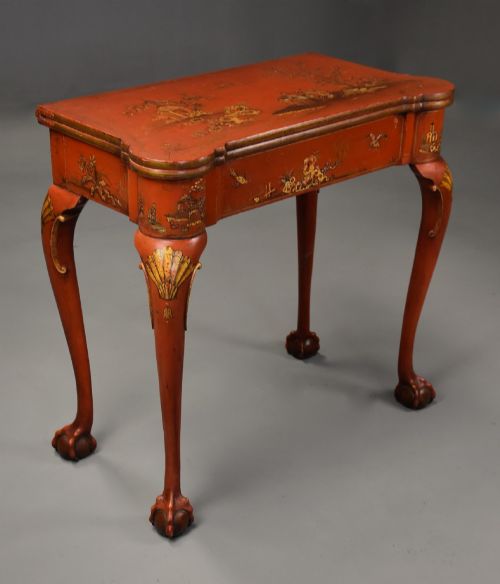
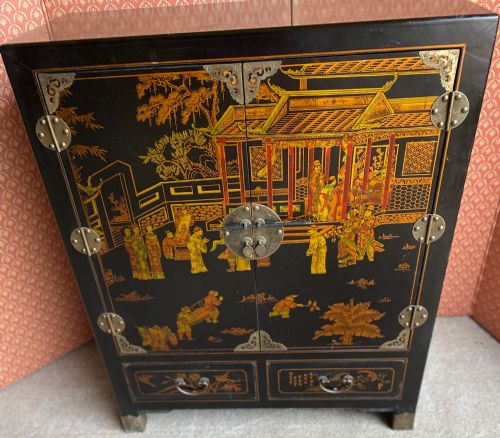
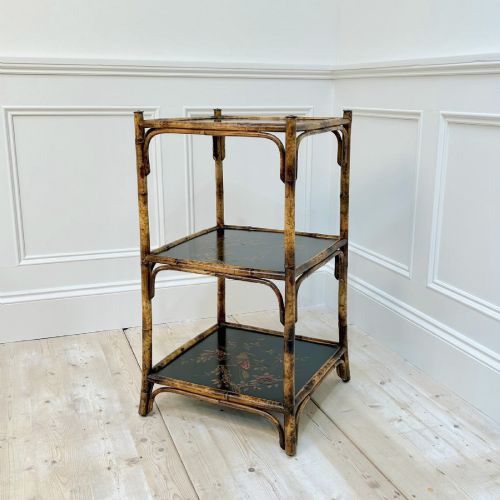
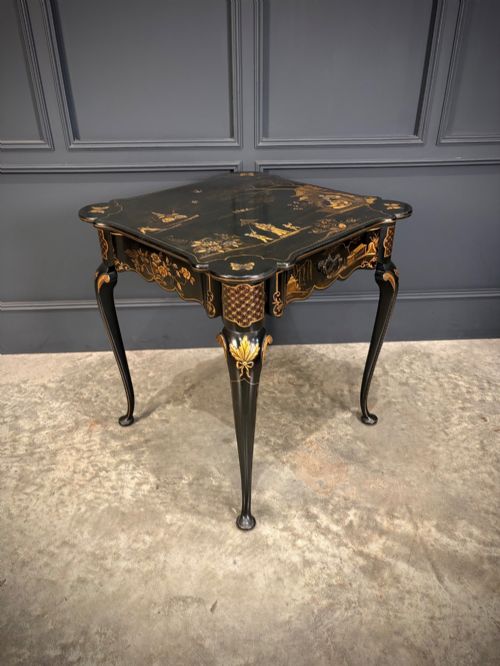
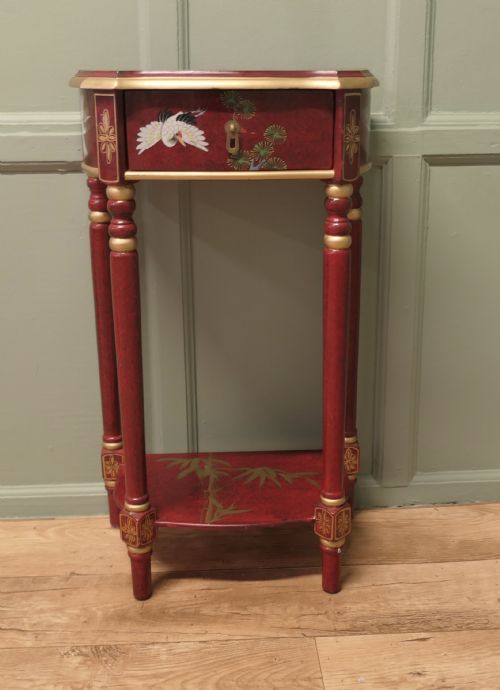
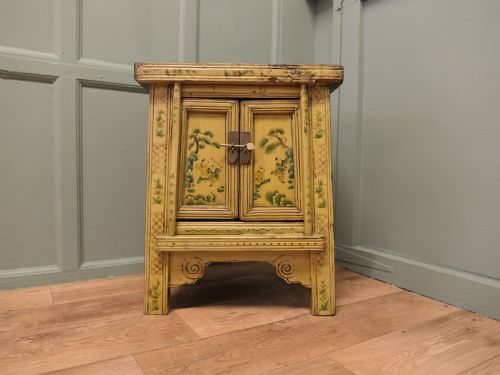
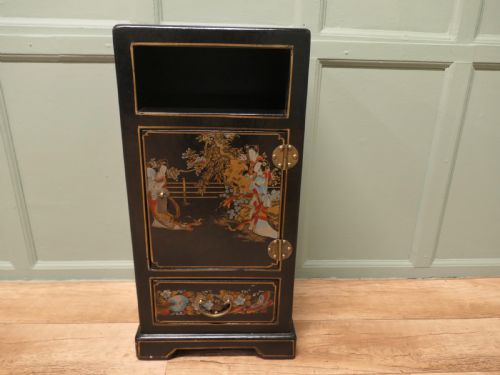
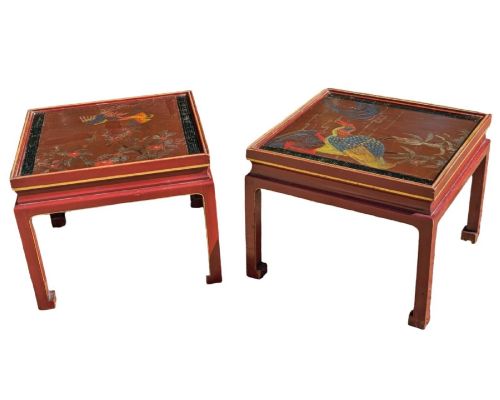
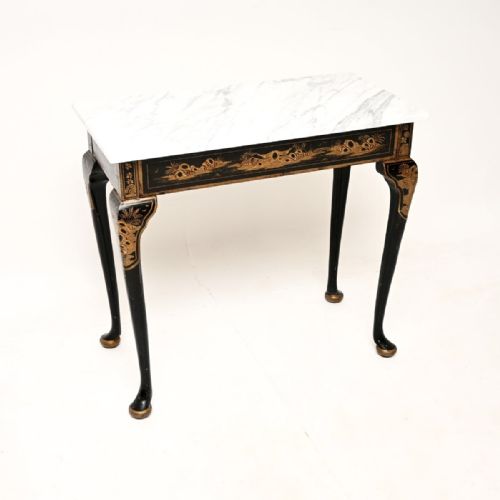
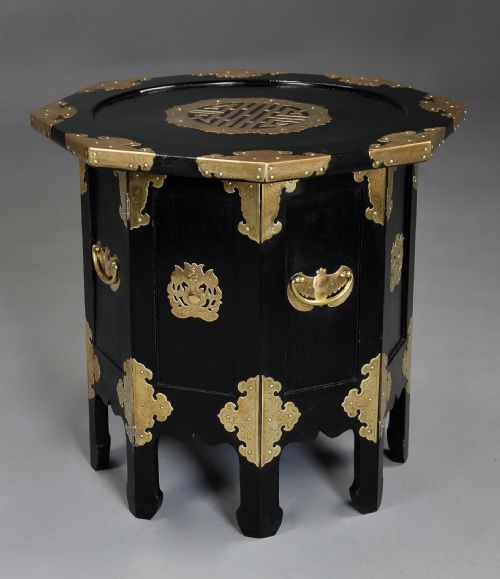
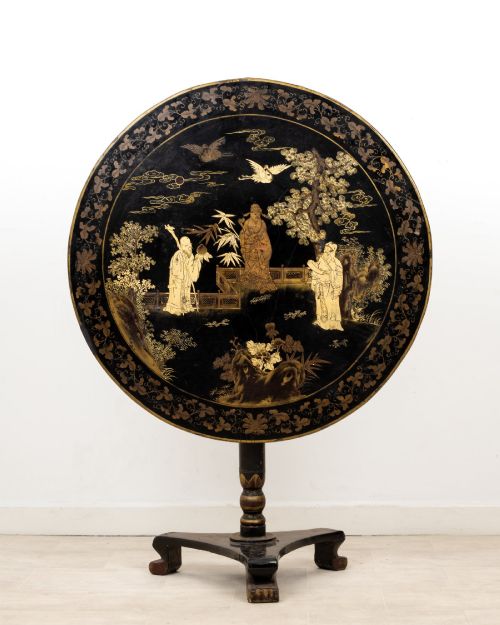
An oriental lacquer side table encompasses low tables, tilt-top occasional pieces, and compact stands produced across the nineteenth and early twentieth centuries. These tables bring distinct surface ornament into domestic spaces, appearing in black, red, and cream finishes.
The versions most commonly met on this page date from the Victorian, Edwardian, and interwar periods, frequently adopting Chinoiserie or Qing Dynasty decorative motifs. Makers of these pieces drew upon Chinese provincial, Anglo-Burmese, and Aesthetic Movement influences to shape everyday occasional furniture.
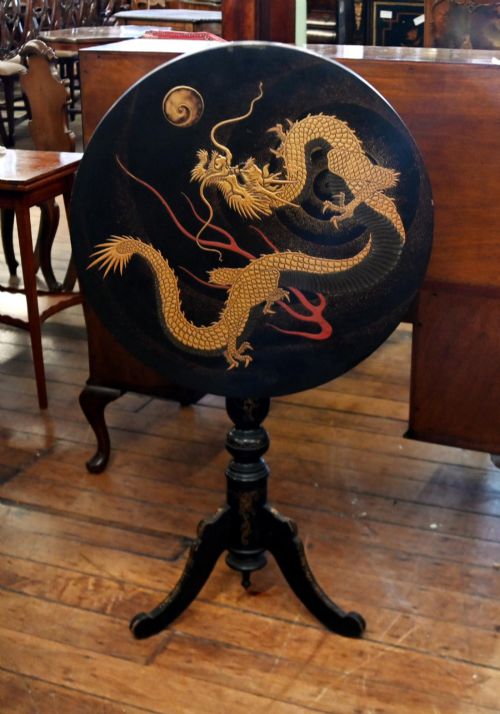
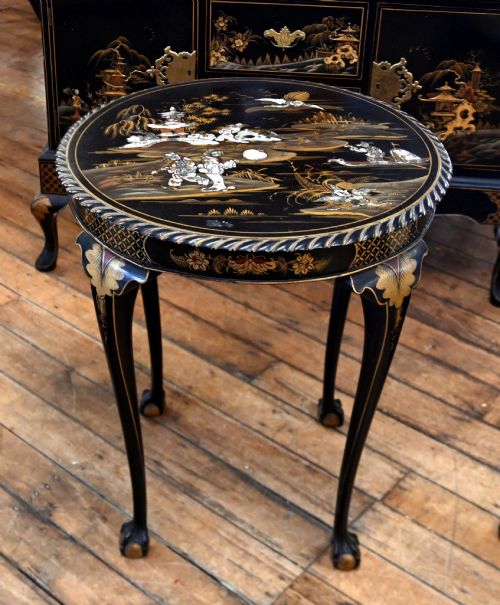
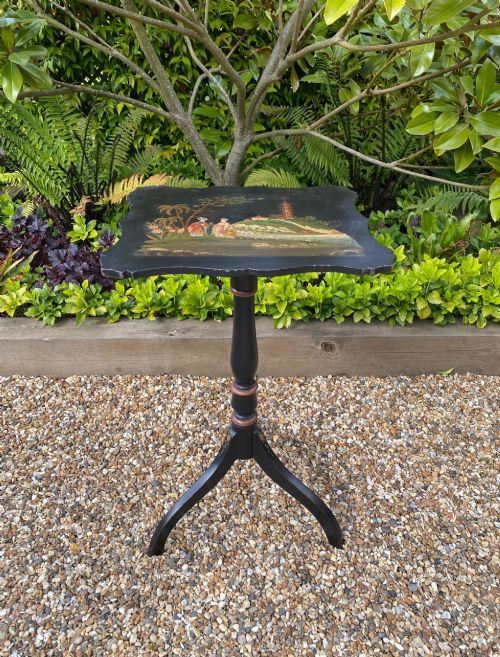
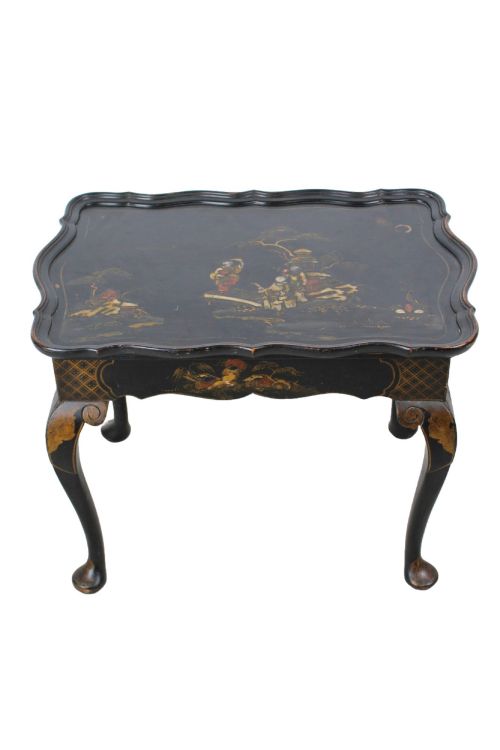
Forming part of a wider family that includes nests of tables, tray tops, and card tables, the oriental lacquer side table serves both practical placement and decorative display. Their varied silhouettes range from simple tripod bases to low rectangular tea-drinking tables.
Materials and construction
The construction relies upon solid timbers such as elm and tiger bamboo, providing a stable core for the application of layers of lacquer, paint, and gold leaf. Woodwork is joined to support both the decorative top surface and the supporting legs or stands.
Surfaces receive meticulous coats of black, red, or cream lacquer, upon which painted Chinoiserie scenes, figures, and floral details are executed. Gilt highlights and brass mounts are frequently integrated to catch the light and punctuate the dark or brightly coloured finishes.
Oriental Lacquer Side Table Retail Price Guide 2026
Typical asking prices for oriental lacquer side table among the pieces listed under this phrase on Sellingantiques today, from the lower quarter to the upper quarter. They describe what is for sale here now, not the wider market.
Listings feature oriental lacquer side tables spanning the nineteenth century through to the 1930s, utilising elm, tiger bamboo, brass, and gold leaf.
Evaluating quality and finish
Quality rests primarily in the depth of the lacquer layers and the precision of the hand-painted decoration, where finer examples display complex narrative scenes or botanical detail rather than repetitive stencilling. The integration of gold leaf and the crispness of carved wooden or bamboo elements set superior pieces apart.
Structural integrity also dictates value, particularly in the stability of tripod bases, tilt mechanisms, and joints on elm or tiger bamboo frames. Original undisturbed finishes demonstrate greater integrity than later over-painting or surface restoration.
Maison Bagues
The Oriental Lacquer Side Table Glossary
- Chinoiserie
- European theatrical interpretation of Chinese and East Asian artistic traditions, widely applied to furniture through painted lacquer scenes of figures, pavilions, and landscapes.
- Lacquer
- A durable resin finish built up in multiple thin coats on a wooden substrate, providing a smooth, lustrous surface that accepts paint and gold leaf.
- Tilt-top
- A tabletop hinged to a central pillar and tripod base, allowing the surface to fold vertically when not in use to save space.
- Etagere
- An open shelving unit or side stand designed for the display of small decorative objects and curiosities.
- Elm
- A resilient hardwood utilised in Chinese cabinet-making and table construction, valued for its distinctive grain pattern and strength.
Oriental Lacquer Side Table: Frequently Asked Questions
What is an oriental lacquer side table used for?
These tables provide a compact surface for lamps, books, or decorative objects while introducing vibrant colour and rich surface pattern to a room. Their modest scale allows them to fit easily beside seating or in hallways.
Historically, similar low tables and stands served specific domestic functions such as tea service or holding plants. Today, they function primarily as accent pieces that break up monotonous wood tones in an interior scheme.
How do I date an oriental lacquer side table?
Dating relies on examining the timber species, construction joints, and the specific style of the lacquer decoration. Pieces from the nineteenth century often show different wear patterns and framing methods compared to Edwardian or 1920s revivals.
Stylistic cues also help narrow the age, as Aesthetic Movement and Qing Dynasty influences appeared at different times. Comparing the hardware, such as brass feet or hinges, against known period manufacturing techniques provides further clarity.
Are these tables solid wood underneath?
Most pieces feature a wooden core, commonly utilising timbers such as elm or general framing woods beneath the built-up lacquer layers. The underlying construction must remain stable to prevent the brittle lacquer surface from cracking.
Some lighter occasional items incorporate bamboo or rootwood elements for their structural frames. The combination of timber substrate and layered resin creates a rigid panel suitable for daily domestic placement.
How do I care for antique lacquer?
Maintain lacquer surfaces by keeping them away from direct sunlight and excessive heat sources, which can cause the finish to dry out or crack. Dust gently with a soft, dry cloth without applying modern chemical polishes.
Avoid placing damp items directly onto the lacquer to prevent water marks or lifting of the delicate paint layers. Gentle handling preserves both the painted Chinoiserie details and the underlying wooden structure.