
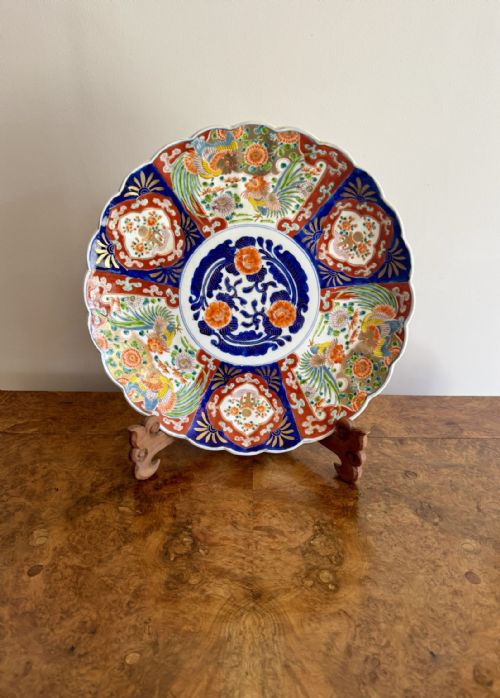




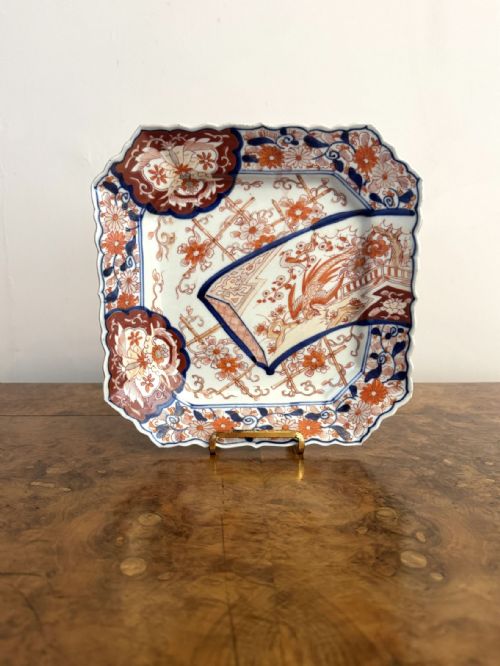
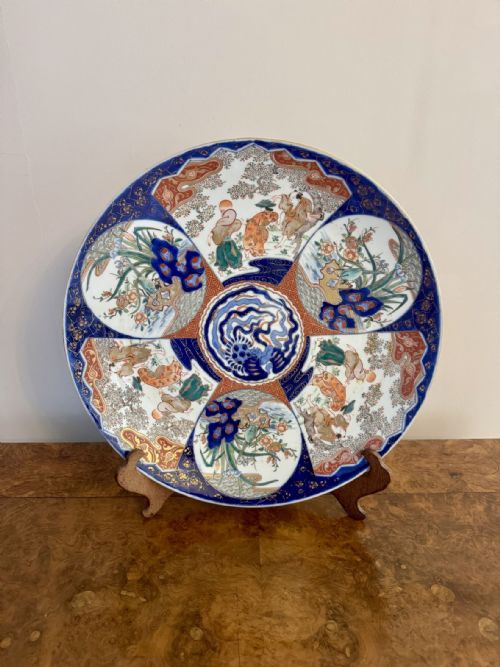

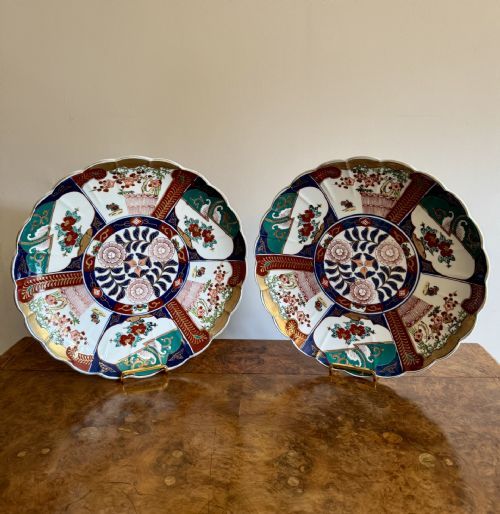


Oriental Imari Display Platter
An oriental imari display platter brings together cobalt underglaze and enamel decoration to anchor a room with rich, historic colour.
Oriental Imari Display Platter
An oriental imari display platter is a large ceramic dish designed primarily for presentation rather than dining use. When you search for this phrase, you meet substantial round chargers and decorative plates created for display on walls or surfaces.
The pieces on this page stem predominantly from the late nineteenth century and the early twentieth century, spanning the Victorian and Edwardian eras back to the Meiji period and Edo period. Japanese imari dominates the selection, alongside pieces associated with Chinese export traditions and Arita workshops.
Forms vary from traditional circular chargers to square, fan-shaped, scalloped, and oval plates. These items often feature hand-painted floral, bird, or figurative compositions, including depictions of the Seven Lucky Gods and koi carp.
Materials and Technique
Artisans formed these platters using ceramic and porcelain bodies coated in white glaze before applying decoration. Cobalt underglaze forms the dark blue foundation of the traditional palette.
Painters added iron-red enamel and gold leaf or gilding over the glaze in detailed layers. Subsequent low-temperature firings fixed the enamel and metallic highlights onto the surface.
Listings span the nineteenth and early twentieth centuries, including Victorian, Edwardian, Meiji, and Edo periods.
Judging Quality
Quality rests in the precision of the hand-painted brushwork and the complexity of the design. Superior examples show crisp lines in the cobalt underglaze and rich, well-preserved enamel and gold leaf detailing.
Unusual shapes, such as square, fan-shaped, or scalloped edges, set certain platters apart from standard circular chargers. The depth of the colour saturation and the clarity of motifs like koi carp or floral arrangements define the upper tiers of the selection.
The Oriental Imari Display Platter Glossary
- Charger
- A large decorative plate traditionally used for presentation rather than serving food. These items measure substantially more across than standard dining plates.
- Cobalt Underglaze
- A blue pigment applied to the ceramic body before glazing and firing. This technique protects the pigment beneath a glassy surface layer.
- Enamel
- Coloured glass paste applied over fired glaze and heated again to fuse. It provides the vibrant red and complementary tones characteristic of this ware.
- Meiji Period
- A Japanese historical era lasting from 1868 to 1912. Many pieces on the market date from the latter decades of this span.
- Edo Period
- The period in Japanese history spanning from 1603 to 1867. Earlier pieces from this time frame appear occasionally alongside later nineteenth-century wares.
- Gilding
- The application of gold leaf or gold paint to highlight specific design elements. It catches the light and contrasts with the underglaze blue.
Oriental Imari Display Platter: Frequently Asked Questions
How were oriental imari display platters used historically?
These platters served as decorative centrepieces in grand interiors rather than utilitarian tableware. Owners placed them on tables, sideboards, or mounted them on walls to showcase wealth and taste.
The rich palette of cobalt blue, iron red, and gold was intended to catch candlelight and daylight in reception rooms.
How do I display an imari charger safely?
Support heavy porcelain chargers with sturdy wall brackets designed specifically for deep ceramic plates. Ensure the weight rests securely in the base of the mount.
Alternatively, place them on specialist plate stands on stable surfaces away from high-traffic areas or table edges.
How do I tell Meiji period imari from earlier work?
Meiji period pieces often date from the late nineteenth century and reflect the opening of Japanese trade to Western markets. They typically display bright, dense enamel work and precise standardisation.
Edo period pieces originate earlier and can show slightly heavier potting or different iron-red tones, though visual styles evolved continuously.
What is the difference between a plate and a charger?
A charger is significantly larger in diameter than a standard dining or cabinet plate. Chargers were built to dominate a display space.
Plates in these collections include standard round forms as well as unusual square, oval, and fan shapes.