






Oriental Hardwood Ornament
An oriental hardwood ornament brings centuries of carved detail and traditional craftsmanship directly into a room.
Oriental Hardwood Ornament
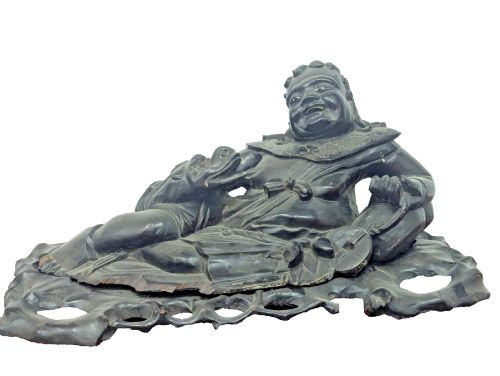
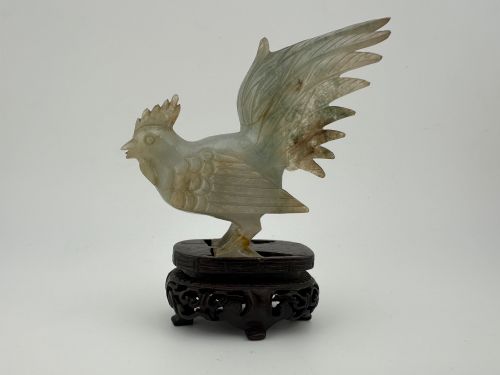
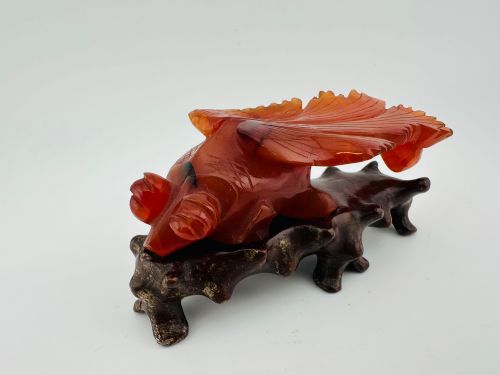
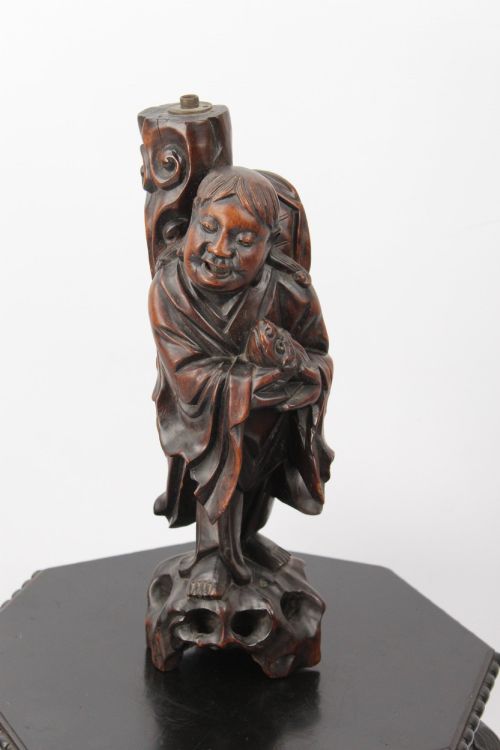
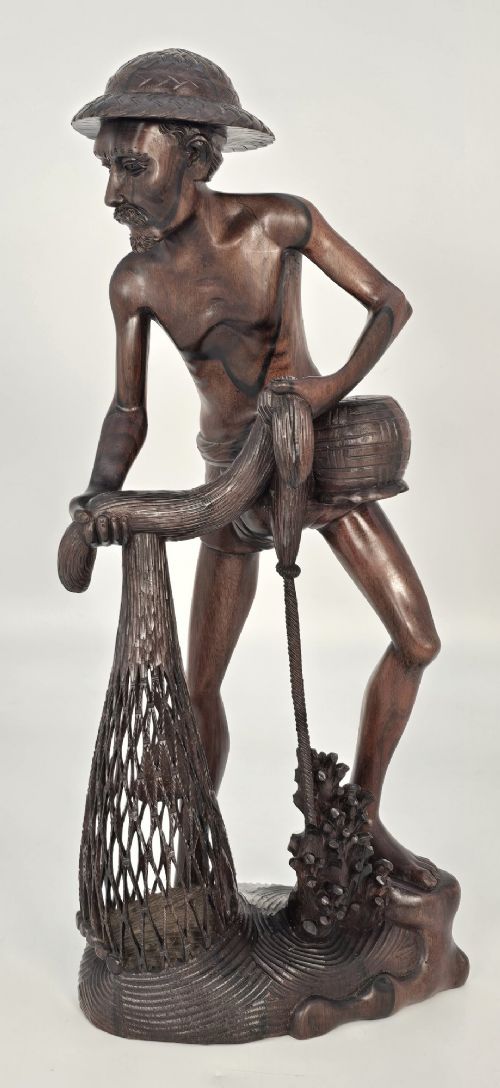
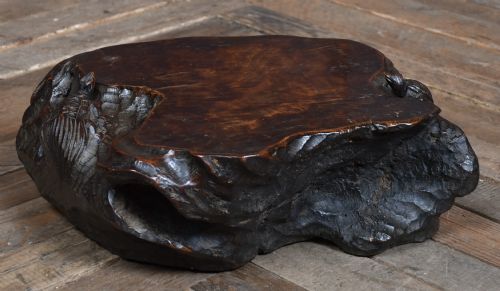
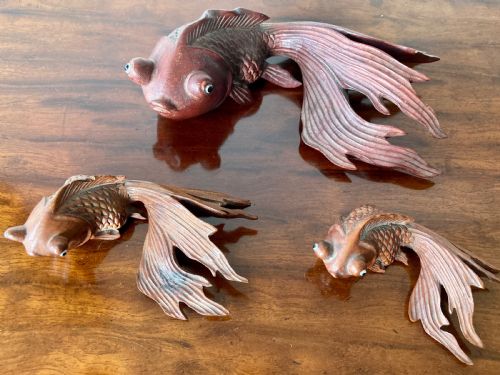
An oriental hardwood ornament comprises carved sculptures, figures, animals, and display stands originating from Chinese and Japanese traditions. Buyers searching for an oriental hardwood ornament encounter depictions of deities, fishermen, animals such as elephants and water buffaloes, and intricate bonsai stands.
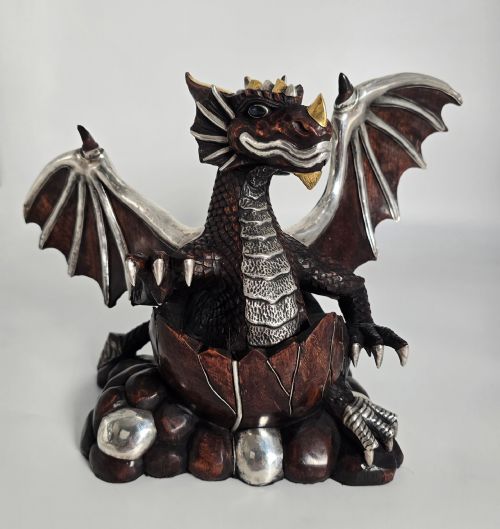
The pieces span the nineteenth century, Edwardian era, and the nineteen-thirties, reflecting Qing dynasty aesthetics and Japanese Meiji period artistry. Most examples found here are carved hardwood sculptures or stands, often incorporating mixed metals, glass, bone, or jadeite accents.
Materials and construction methods
Carvers shaped dense oriental hardwoods, including root wood, using hand chisels and cutting tools to achieve deep relief and smooth contours. These wooden forms frequently incorporate mounted elements of brass, silvered metal, bone, and jadeite.
Makers integrated natural grain patterns into the subject matter, such as rendering turtle shells, mountain landscapes, or the folds of robes. Stands were constructed to securely support separate figures, landscape sculptures, and table screens.
Oriental Hardwood Ornament Retail Price Guide 2026
Typical asking prices for oriental hardwood ornament among the pieces listed under this phrase on Sellingantiques today, from the lower quarter to the upper quarter. They describe what is for sale here now, not the wider market.
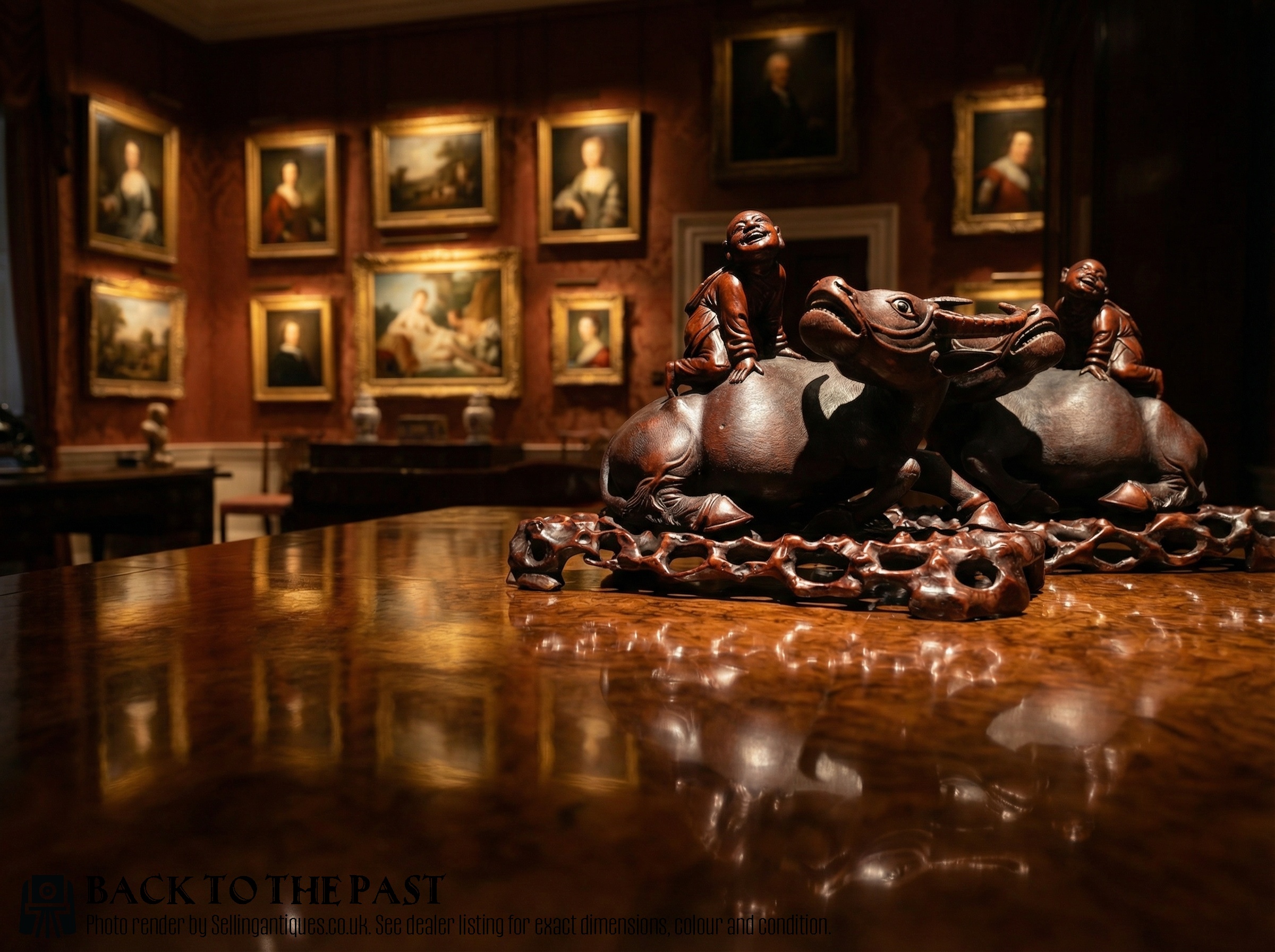
Several water buffaloes and elephants stand ready for duty, requiring no grass and causing no domestic trouble whatsoever.
Distinctions in quality and execution
The standard of carving defines the distinction between standard items and exceptional works, particularly in the rendering of facial expressions, drapery, and anatomical detail on figures and animals. Complex compositions, such as large scale Buddha figures or detailed landscape mounts, demonstrate higher levels of artisan skill.
The preservation of the original wood surface, the integration of mounted mixed metals or jadeite, and the stability of associated stands influence the character of each piece. Finer examples maintain crisp undercut details and complete components without intrusive replacement parts.
The Oriental Hardwood Ornament Glossary
- Hardwood
- Dense, durable timber utilised for intricate carving and structural stability in decorative objects. It resists warping and takes a fine polished finish.
- Meiji Period
- A Japanese historical era lasting from eighteen sixty-eight to nineteen twelve, known for high levels of realism and technical mastery in carved okimono and sculptures.
- Qing Dynasty
- The final imperial dynasty of China, spanning from sixteen-fourteen to nineteen twelve, whose artistic style heavily influences traditional hardwood carvings and figures.
- Bonsai Stand
- A specialised wooden platform designed to elevate and display miniature trees, scholar stones, or small decorative sculptures.
- Okimono
- A Japanese term for a traditional decorative statuette or ornament intended for display on a household shelf or tokonoma.
Oriental Hardwood Ornament: Frequently Asked Questions
How do I date an antique wooden carving?
Dating relies on stylistic markers associated with periods like the Qing dynasty or the Japanese Meiji era, alongside the natural ageing of the timber. Tool marks, wood shrinkage, and wear patterns also help establish the approximate era of manufacture.
Examining secondary materials such as mounted brass, bone, or mixed metal elements provides additional chronological context. Comparing construction methods with documented examples from the nineteenth century aids accurate attribution.
Where should I place a carved wooden figure?
These sculptures suit stable indoor environments away from direct sunlight and sudden temperature shifts that can affect the hardwood. Placing them on sturdy sideboards, mantels, or dedicated display stands ensures they remain secure.
Positioning them where lighting highlights the deep relief carving allows the intricate details of figures and animals to stand out. Ensuring adequate clearance protects delicate protruding elements like mounted metals or carved flora.
How do I care for oriental hardwood sculptures?
Maintenance involves gentle dusting with a soft, dry cloth to prevent particulate buildup within the carved crevices. Avoid using liquid polishes, solvents, or abrasive cleaners that can strip the original finish and dry out the timber.
Maintaining stable humidity levels in the room prevents the hardwood from splitting or cracking over time. Periodic inspection of any mounted elements ensures that mixed metals or jadeite inserts remain secure.